

 " alt="How to Choose a Reliable Hydraulic Hammer Distributor in Australia">

Most contractors compare breaker specs for hours. Few check who is actually selling them the thing. That habit alone costs real money. Two identical hydraulic hammers, bought from two different distributors, can behave like entirely different machines once they hit a real job site. One keeps working through a six-month quarry job. The other sits idle for three weeks because a chisel pin gets stuck in customs.
Australian conditions punish supplier mistakes fast. Sites stretch across vast distances, temperatures swing hard, and skilled labour stays scarce in most regions. A wrong distributor choice does not just cost money, either. It costs entire weeks of productive site time. So the supplier deserves as much scrutiny as the breaker itself.
The Distributor Shapes the Outcome, Not Just the Hammer
A hydraulic hammer is only half the equation. Support after the sale decides whether that purchase actually pays off. A distributor who understands flow rates, pressure ranges, and carrier weight will steer buyers toward the right fit every time. A distributor who just wants to close the sale will not bother asking those questions at all.
Plenty of contractors end up with a breaker that technically bolts onto their excavator. It never performs the way it should. Sometimes it is underpowered for the rock being broken. Sometimes it is oversized and burns through hydraulic components faster than expected. That mismatch traces straight back to a distributor who skipped the compatibility conversation entirely.
Range and Carrier Compatibility Tell You a Lot
A distributor worth trusting stocks across the full spread. That means mini-excavators right through to the 100-tonne machines running in quarries and mines. Narrow ranges are a red flag. If a supplier only carries mid-tier models, both small demolition crews and large mining operations end up settling for the wrong fit.
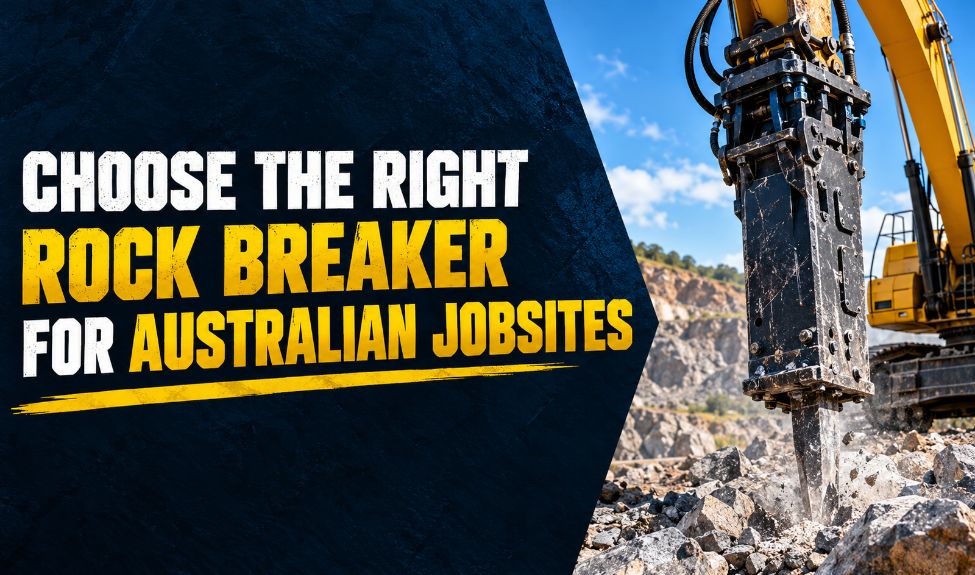
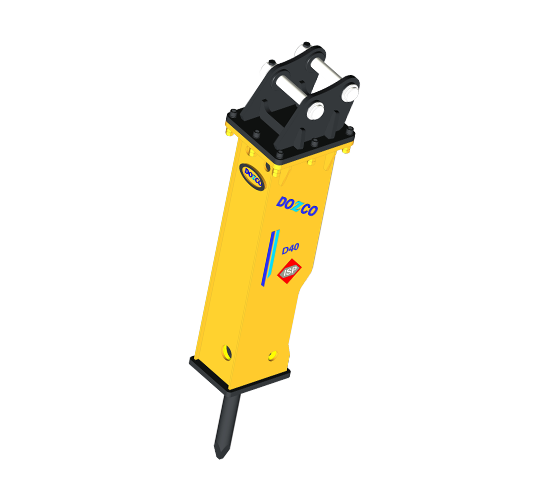
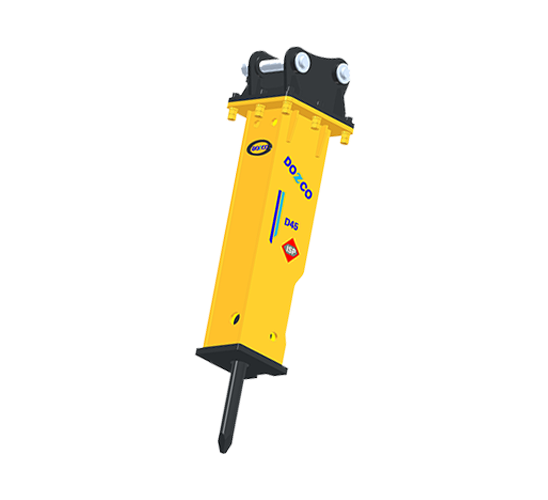
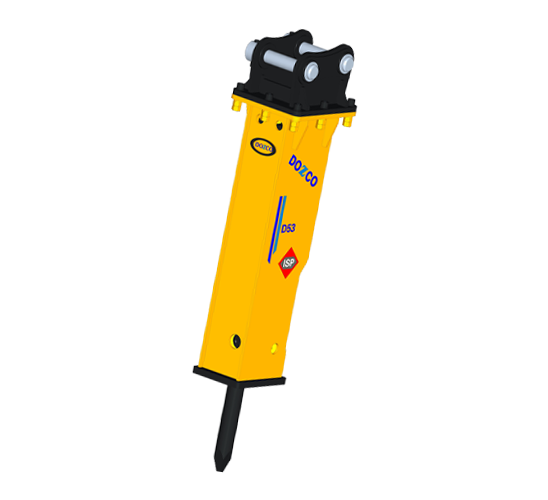
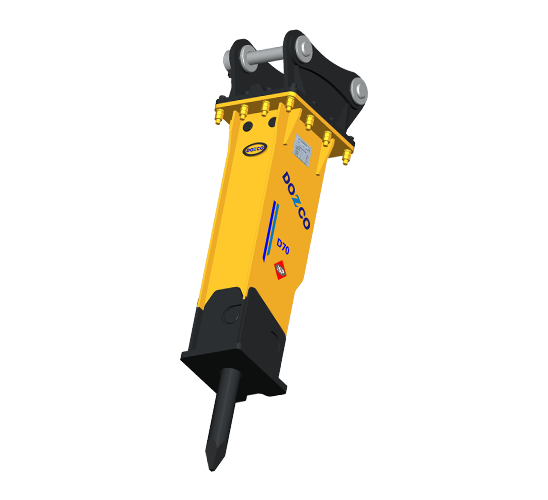
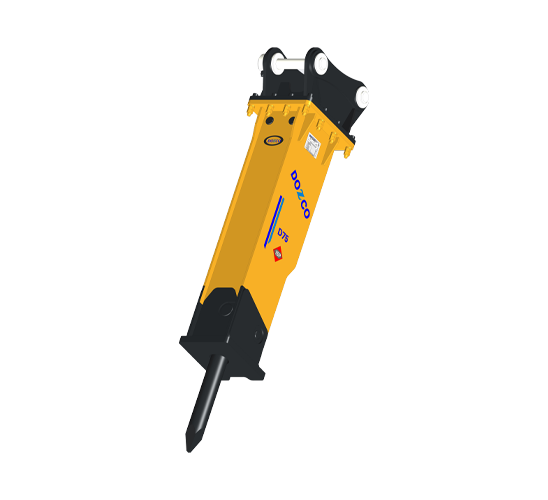
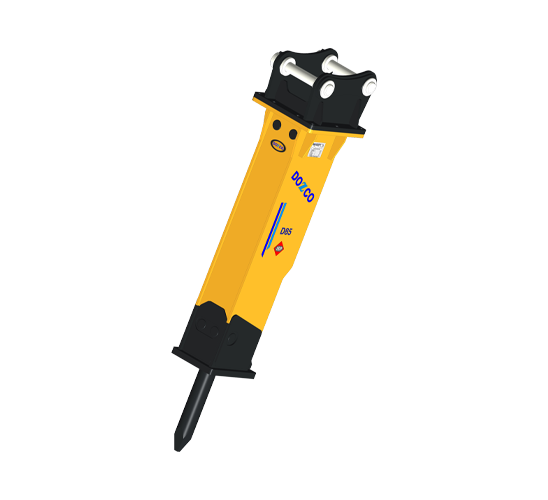
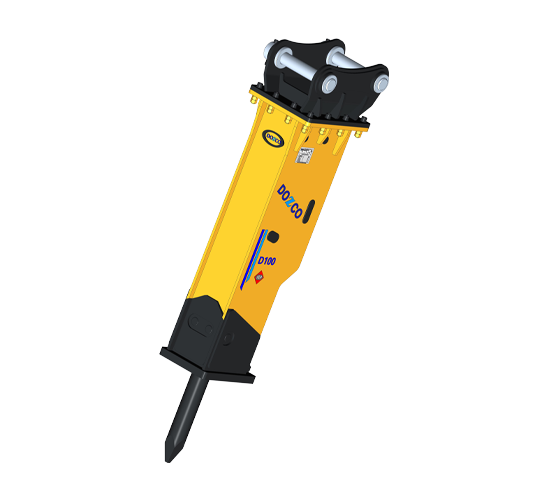
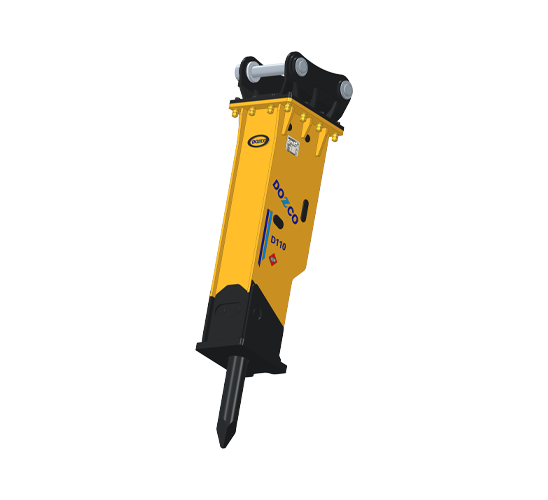
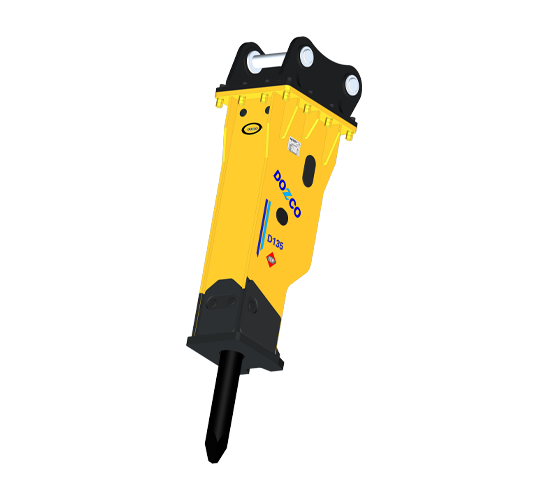
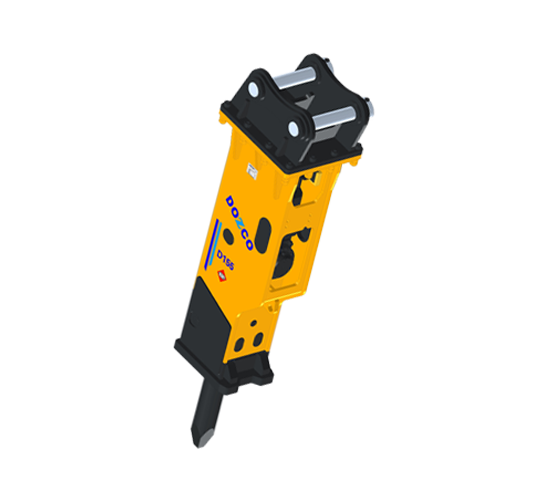
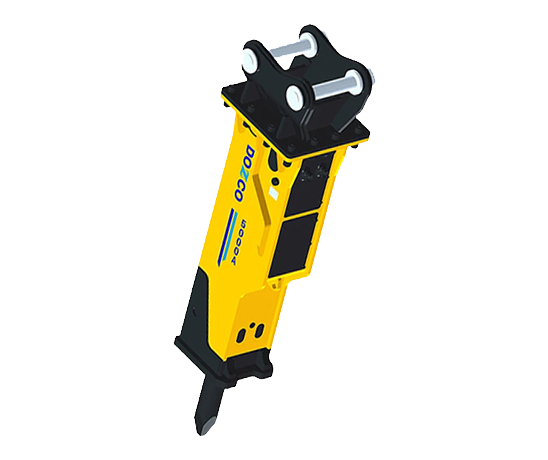
DOZCO Australia splits its hydraulic breakers for excavators into light, medium, and heavy ranges for this exact reason. The breaker gets matched to the carrier, not the other way around. Mounting compatibility across CAT, Komatsu, Volvo, and Hitachi machines matters just as much. Without it, buyers end up fabricating custom brackets, and that adds cost nobody planned for.
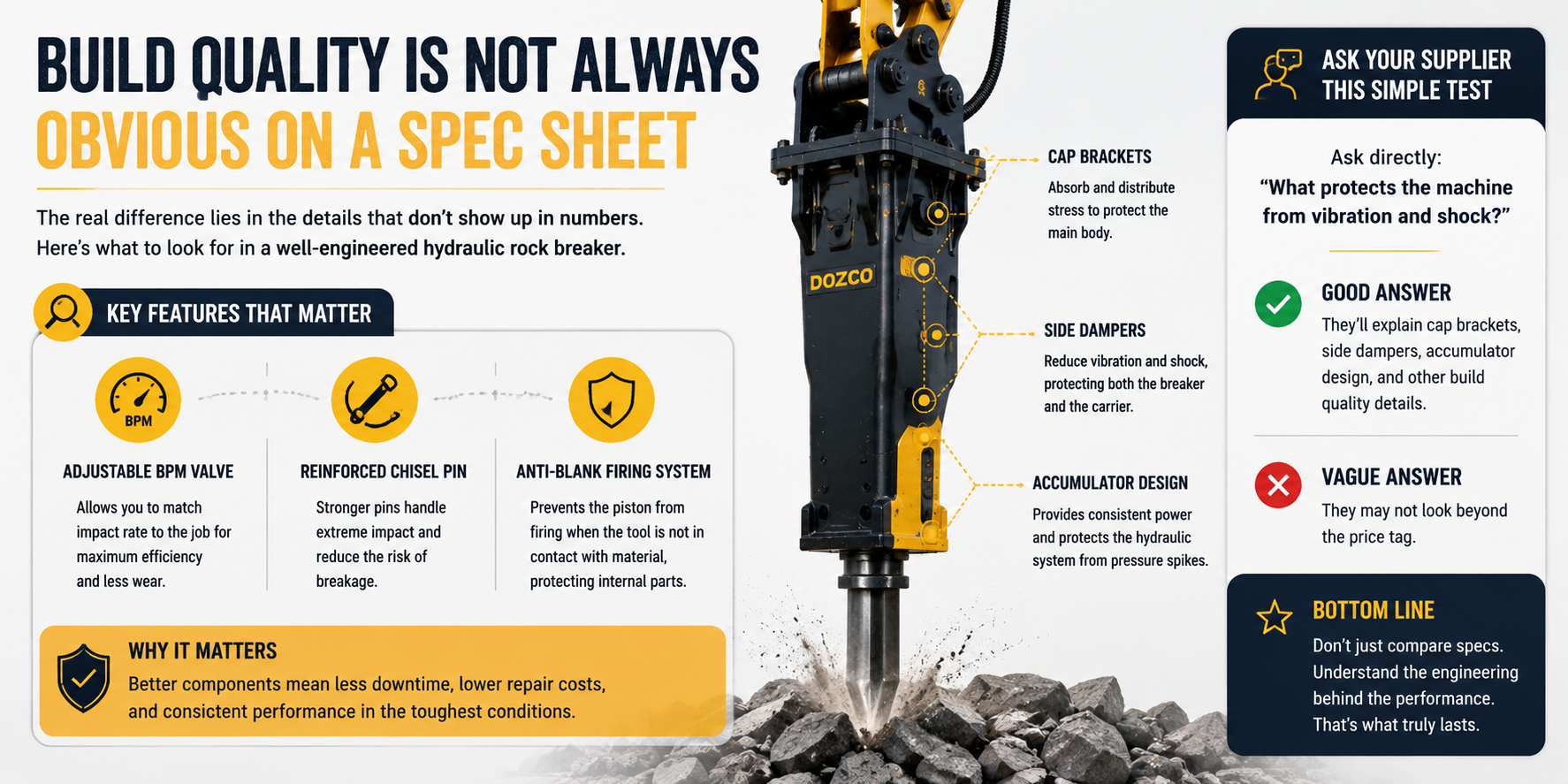
Build Quality Is Not Always Obvious on a Spec Sheet
Some breakers cut corners in places buyers will not notice until month eight. Damping systems wear out early on cheaper units. Seals fail under repeated impact stress. A properly engineered hydraulic rock breaker carries specific features. Look for an adjustable BPM valve, a reinforced chisel pin, and ideally an Anti-Blank Firing system that stops the piston firing when the tool sits away from material.
Try this test on any supplier. Ask them directly what protects the machine from vibration and shock. Watch closely how they actually answer. Vague responses usually mean they have not looked much past the price tag. Distributors who genuinely know their products will talk through cap brackets, side dampers, and accumulator design without hesitation.
Local Parts Availability Changes Everything
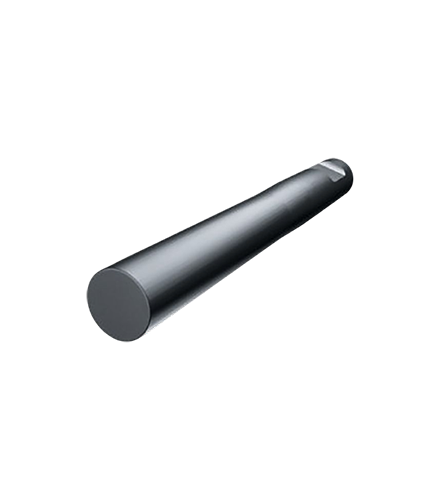
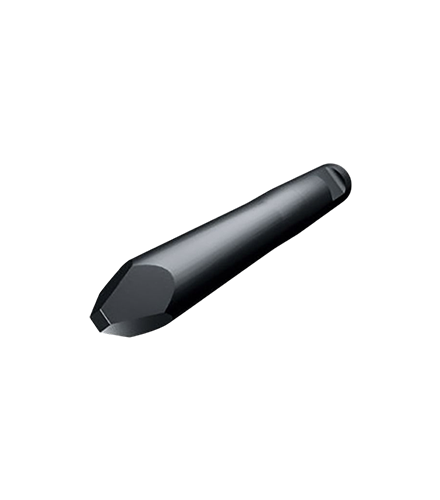
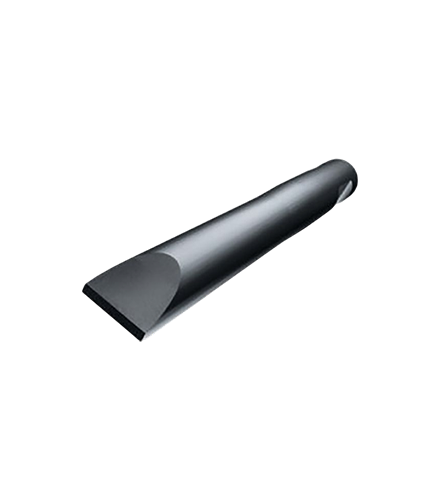
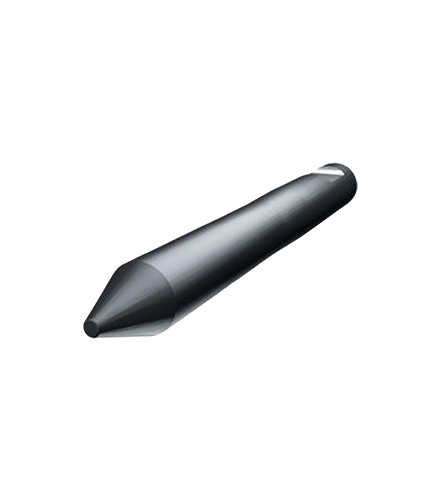
Many Australian job sites sit hours from the nearest service depot. When a breaker fails out there, an overseas parts shipment can stall the whole project for days. Sometimes it stalls things for weeks. Before signing with any excavator hammer distributor, ask a direct question. Do chisels, pins, and seals sit in local stock, or do they get ordered in only when needed?
Suppliers holding genuine inventory in Australian warehouses cut that risk down substantially. A local team that actually answers the phone helps too. Clear warranty terms and free delivery might sound like small details. They usually signal a distributor thinking well past the first invoice though.
Questions Worth Asking Before Signing Anything
A handful of direct questions surface the real answer fast:
- Is parts inventory held locally, or does everything ship in from overseas on request?
- What does the warranty actually cover, including wearable parts like tools and pins?
- Will they match a hydraulic hammer to your flow, pressure, and tonnage figures specifically?
- Have they serviced mining, quarrying, or civil construction clients in Australia before?
- Is Anti-Blank Firing standard, or does it come as an extra cost?
Suppliers who answer these without dodging are usually worth a long-term relationship. That kind of transparency is exactly what separates a genuine hydraulic hammer partner from a one-off vendor.
Where DOZCO Australia Fits Into This
DOZCO Australia checks most of these boxes by design. The company operates out of Melbourne with more than four decades of manufacturing experience behind it. It keeps over 25,000 parts in stock and works with contractors across mining, quarrying, construction, and demolition nationwide.
Its rock breakers span light, medium, and heavy ranges. Each is built with adjustable BPM, Anti-Blank Firing, and reinforced dampening suited to Australian heat, dust, and rough terrain. Local servicing and OEM-compatible mounting for major excavator brands round out the picture. That combination is exactly what a distributor relationship should look like well after the sale closes.
FAQs:
What should I look for in a hydraulic hammer distributor?
Local parts stock matters most. Honest warranty terms and real carrier compatibility come next. Find someone who can talk actual specs, not just recite a brochure.
How do I know a hydraulic rock breaker actually suits my excavator?
Match your carrier’s operating weight, hydraulic flow, and pressure against the breaker’s spec sheet first. A good supplier checks this with you before the sale, not after.
Why does local stock matter so much for an excavator hammer?
Remote sites cannot afford weeks of downtime waiting on an overseas part. Local inventory means the difference between a same-week fix and a stalled project.
Are all hydraulic breakers built to the same standard?
Not even close. Damping quality, seal life, and safety features like Anti-Blank Firing vary widely between brands, and that gap determines how long a unit actually lasts.
Does DOZCO Australia work with mining and quarrying clients?
Yes, along with civil construction and demolition crews. Breakers get sized to match the tonnage and terrain each sector genuinely deals with.