

 " alt="Seven Signs Your Rubber Tracks Are Reducing Machine Efficiency">

An excavator does not always tell you that its tracks are wearing out. Sometimes, you notice it in the way the machine works. Travel takes a little longer, the track slips on ground it handled easily before, or one side feels different when you turn.
These changes may look minor, but they can point to tread wear, incorrect track tension, poor sprocket engagement or wear in the rollers and idler. Since the track system transfers drive force from the final drive to the ground, its condition affects both travel performance and undercarriage load.
The condition of rubber tracks excavator operators use, for them, knowing these early signs can help identify a track problem before it turns into a larger issue.
Here are seven signs that the tracks may be affecting machine efficiency.
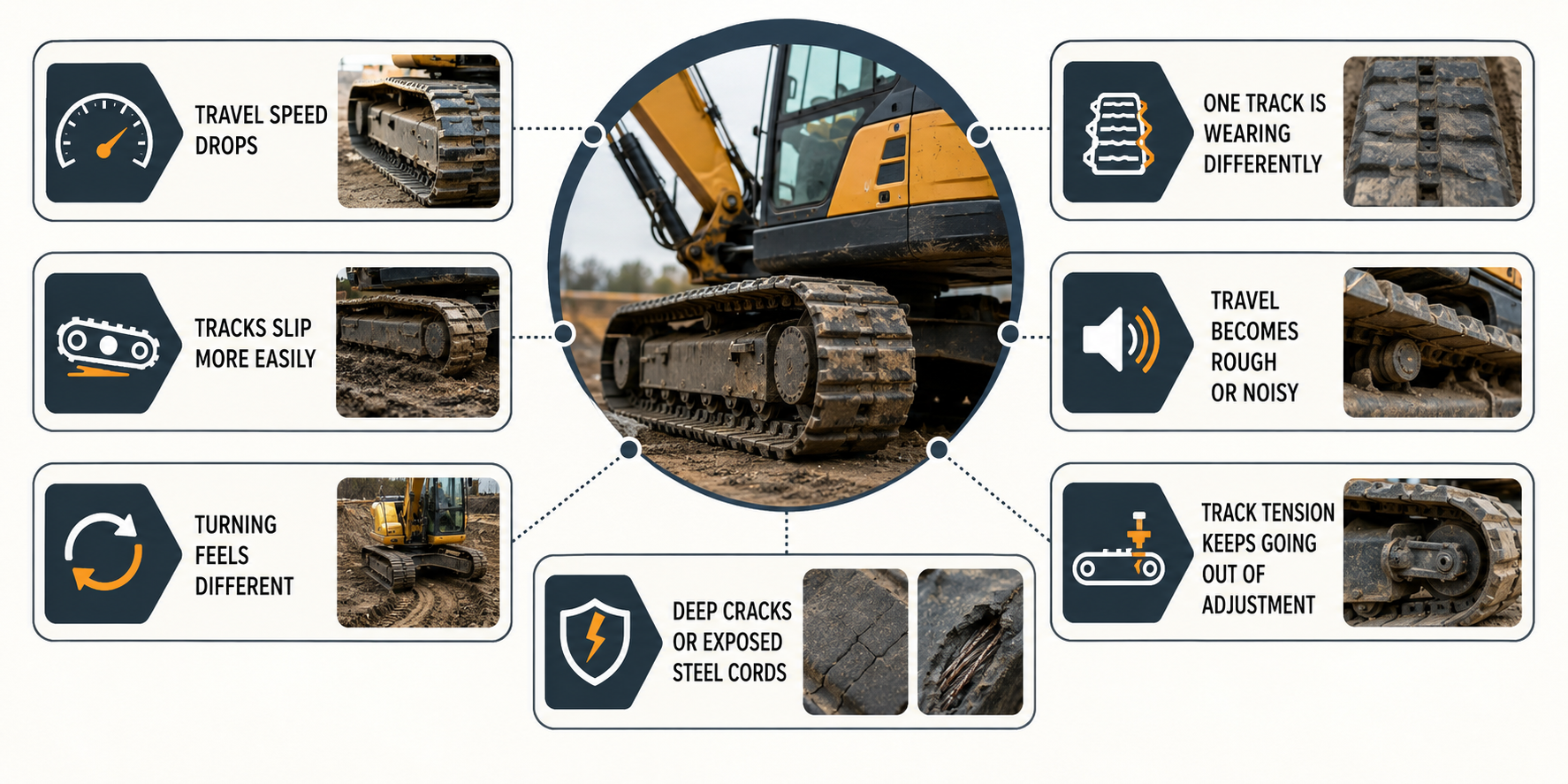
1. Travel Speed Drops
If the excavator has started travelling slower under the same working conditions, the track system is worth checking.
A track that is too tight creates more resistance as it runs around the sprocket, rollers and idler. A worn sprocket or damaged roller can have the same effect. Severe tread wear can also reduce the track’s ability to maintain proper contact with the ground.
The important point is to compare the machine with its normal travel performance. If the engine sounds normal and the hydraulic functions are working as expected, a change in travel speed deserves an undercarriage inspection.
2. The Tracks Slip More Easily
An operator usually notices traction problems first on loose soil, wet ground or slopes.
As rubber tracks wear, the tread lugs lose height and their ability to grip the ground reduces. The track can then spin more easily when the machine is travelling or climbing.
But worn tread is not always the only reason. Incorrect track tension, poor sprocket engagement and unsuitable ground conditions can also contribute to track slip.
If the machine is slipping more than it normally does, check the complete track system rather than looking only at tread depth.
3. Turning Feels Different
A tracked excavator should respond similarly every time you make the same turn. If one direction starts feeling heavier or slower, compare the two track assemblies.
Unequal track tension can create different resistance between the sides. Uneven wear, a damaged roller, idler wear or sprocket wear can produce a similar effect.
This is a useful operator-level warning because you do not need to identify the failed component from the cab. A noticeable difference in turning behaviour is enough reason to inspect that side of the undercarriage.
4. One Track Is Wearing Differently
Some wear is normal. A clear difference between the two tracks is not something to ignore.
Check the tread lugs as well as the inner and outer edges of the track. Uneven wear can develop when the track is not running correctly through the undercarriage.
A worn sprocket can affect track engagement. A damaged roller or idler can change how the track runs. Incorrect tension can also change the load distribution across the track.
This matters when replacing excavator tracks. If the reason for the abnormal wear is not corrected, a new track can develop the same wear pattern.
5. Travel Becomes Rough or Noisy
You normally know how your machine feels when it travels. If it starts producing a repeated bump, vibration or unusual noise, pay attention to it.
Damaged rubber, uneven tread wear and track deformation can affect the way the track contacts the ground. A worn or seized roller can also create resistance as the track passes over it.
Notice whether the vibration or noise appears only during travel and whether it changes with speed or direction. That information can help identify whether the problem is related to the track or another part of the travel system.
6. Track Tension Keeps Going Out of Adjustment
Correct track tension is important for both track guidance and component life.
Too much slack allows excessive track movement and increases the risk of derailment. Too little slack increases resistance and puts additional load on the undercarriage.
If you have to keep adjusting the track because the tension does not stay within the manufacturer’s specified range, there may be a problem with the track adjuster, seals or another undercarriage component.
Check track sag or deflection using the machine manufacturer’s procedure. Do not set tension based only on how loose or tight the track looks.
7. You Can See Deep Cracks or Exposed Steel Cords
A rubber track can show surface wear without being close to failure. Deep cracks, large cuts, tread separation and exposed steel cords are different.
Steel cords provide the track with its structural strength. Once they become exposed, the damaged area becomes more vulnerable to further deterioration from impact, flexing and abrasive material.
This is particularly important for rubber tracks for mini excavator applications because these machines commonly work around concrete, rocks and construction debris.
If the damage has reached the reinforcement, do not treat it as normal cosmetic wear.
What Operators Must Check Before Work: DOZCO’s Undercarriage Checklist
A quick walk-around can help catch most visible track problems:
- Tread lugs: Check for excessive wear, uneven lug height, deformation or missing tread sections.
- Sidewalls: Inspect for deep cuts, cracks, bulges or other signs of structural damage.
- Steel cords: Look for exposed or damaged steel reinforcement.
- Track surface: Check for tread separation, embedded stones and oil or grease contamination.
- Track tension: Measure track sag or deflection according to the excavator manufacturer’s specified procedure.
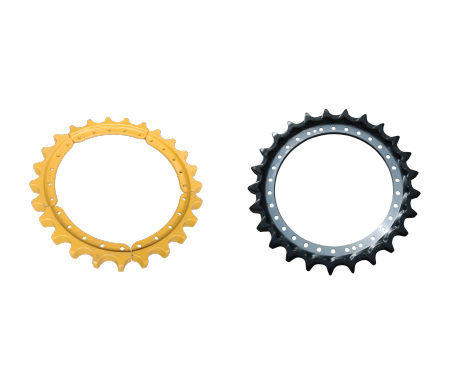
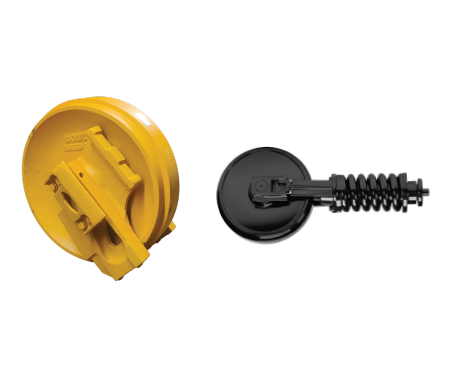
- Sprocket: Inspect sprocket teeth for abnormal wear and check proper engagement with the track.
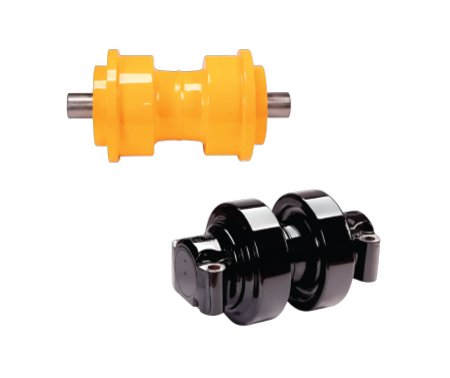
- Rollers: Check for damaged, seized or excessively worn rollers.
- Idler: Inspect the idler for abnormal wear, damage and smooth rotation.
- Track alignment: Check whether the track runs centrally through the undercarriage without abnormal lateral movement.
At DOZCO, we manufacture and supply OEM-compatible excavator and dozer undercarriage parts, including rollers, sprockets, idlers and other track-related components for construction, mining and earthmoving equipment.
Final Thoughts
If you operate an excavator regularly, you will know when the machine does not feel right. A small change in travel, turning or track movement can be the first clue that something needs attention.
Do not wait for the track to fail before checking it. Rubber track condition, track tension and undercarriage wear go together, and a problem in one area can affect the others.
A quick check before starting off can save you from dealing with a track problem in the middle of the job.
FAQs:
1. How often should rubber tracks be inspected on an excavator?
Ans. Inspect rubber tracks before each shift for visible damage, abnormal wear and track tension. A closer inspection is also useful when you notice changes in travel speed, traction, turning or vibration.
2. What causes rubber tracks to wear unevenly?
Ans. Uneven wear can result from incorrect track tension, worn sprocket teeth, damaged rollers or idlers, track misalignment, and working conditions that place more load on one side.
3. How do I know when rubber tracks need replacement?
Ans. Deep cracks, exposed steel cords, major cuts, tread separation and severe tread wear are common signs that a track needs replacement. Always compare the condition with the manufacturer’s service limits.
4. Are rubber tracks better than steel tracks for excavators?
Ans. Neither is universally better. Rubber tracks suit applications where lower ground damage and smoother travel are important, while steel tracks are better suited to harsh surfaces with high impact and abrasion.