

 ">
">

Australian excavator operators face a decision that quietly determines whether their undercarriage lasts two seasons or six. In 2023, a contractor on a Sydney metro utilities project switched a 5-tonne excavator from steel to rubber tracks mid-project — and avoided an estimated $18,000 in asphalt restoration costs. Meanwhile, a Pilbara iron ore site running rubber tracks on a 14-tonne machine through sharp quarry rock burned through two sets in under 800 hours. Same machine class. Entirely different outcome.
The track system is the single biggest variable in excavator undercarriage cost. Steel tracks can account for up to 50% of total maintenance costs on heavy excavators, with the undercarriage assembly representing up to 20% of the machine’s original purchase price. Getting this decision wrong from day one doesn’t just accelerate track wear — it cascades through every connected component in the undercarriage.
At DOZCO, we’ve manufactured excavator and dozer undercarriage parts since 1983, supporting mining, construction, and earthmoving operations across Australia for over four decades. This guide is built from what we’ve seen work — and fail — on Australian jobsites across every terrain type.
How Excavator Track Systems Handle Load and Ground Pressure
The track system is one of the most heavily loaded sections of an excavator undercarriage. Its job is not limited to machine movement alone. The entire assembly distributes machine weight, maintains traction, supports load during travel, and absorbs continuous ground impact during operation.
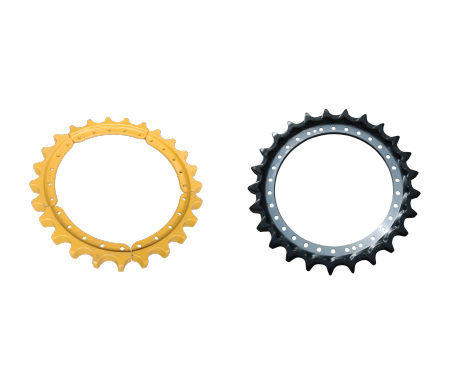
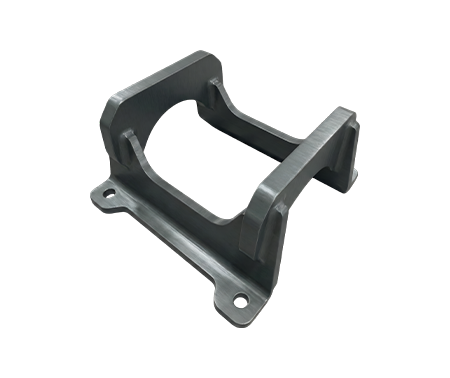
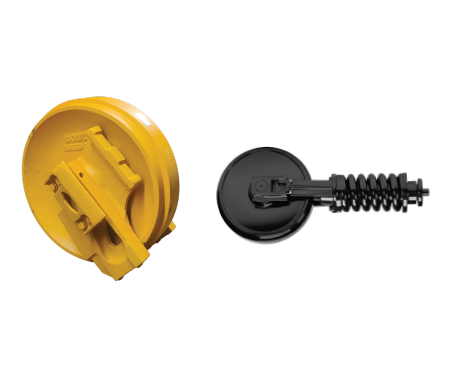
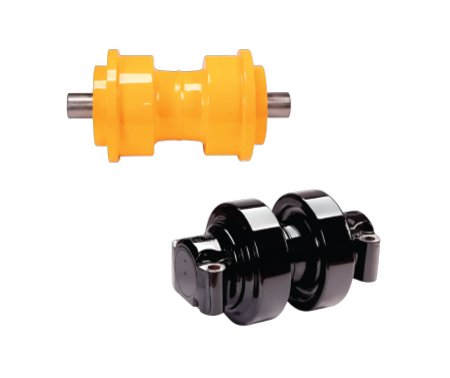
Every movement of the excavator transfers force through multiple undercarriage parts including the track roller assembly, sprockets and segments, idlers, and track link assembly. When the machine travels, the sprocket drives the track system forward while the rollers support machine weight underneath. The idler maintains track alignment and tension across the assembly.
The type of track installed changes how these forces distribute — and how quickly wear accumulates. There are two track systems available for excavators:
- Rubber Tracks — reinforced continuous rubber systems, typically suited to compact and mid-sized machines
- Steel Tracks — hardened steel chain link systems designed for heavy-duty, high-abrasion environments
What Are Rubber Excavator Tracks?
Rubber excavator tracks are reinforced continuous track systems commonly used on compact and mid-sized excavators operating in urban construction, landscaping, utility work, and low-impact earthmoving applications.
Unlike steel track assemblies, rubber tracks are manufactured using multiple reinforced layers that combine heavy-duty rubber compounds with embedded steel cords and forged steel inserts. This internal reinforcement carries machine load while maintaining flexibility during movement.
As the sprocket rotates, the internal steel inserts engage with the drive system and move the track across the ground surface. Because the outer surface is rubber-based, the track creates significantly lower surface damage compared to steel when operating on asphalt, concrete, paving blocks, or finished landscaping.
Rubber Track Tread Designs
One advantage rubber tracks have over steel is tread variety. Where steel tracks offer essentially one grouser design (the standard crossbar), rubber tracks come in four configurations — each suited to different terrain conditions common across Australia:
1. Straight Bar Tread:
The most common rubber track tread on the market. Functions on the same principle as a steel grouser and performs well across most general applications, including commercial construction and residential excavation work.
2. Multi-Bar Tread:
Provides a smoother ride across multiple terrain types. Well-suited to mixed-surface environments and reduces surface disturbance. Useful on Australian agricultural projects where the machine moves between hard ground and soft paddock.
3. Staggered Block Tread:
Delivers improved traction while reducing impact on sensitive surfaces. A good choice for landscaping contractors who need grip on slopes without marking finished lawn or paving.
4. C-Lug Tread:
Identified by the C-configuration notched into the tread block. Offers the most advanced traction and turning capability across nearly every surface condition — including the loose sandy soils common to Queensland and WA coastal construction sites.
Advantages of Rubber Tracks
Minimal Surface Damage:
Rubber tracks create less marking on asphalt, concrete, paving blocks, and landscaped surfaces. On urban construction, utility, and residential projects, this directly reduces or eliminates surface restoration costs after excavation.
Reduced Vibration:
Rubber tracks absorb part of the vibration generated during machine travel. This reduces shock transfer across track roller assemblies, idlers, and bottom rollers — and significantly improves operator comfort over a full working day.
Better Suitability for Urban and Landscaping Projects:
Machines operating in residential construction zones, commercial properties, and landscaping projects need smoother movement and controlled ground interaction. Rubber tracks allow excavators to move across finished surfaces with lower risk of cracking, scratching, or surface displacement.
Lower Operating Noise:
Rubber tracks generate substantially less noise during travel. This is a practical consideration on Australian projects near hospitals, residential areas, and commercial zones where council noise restrictions apply.
Versatility Across Machine Types:
Rubber tracks can be used across compact excavators, compact track loaders, mini dumpers, crawler carriers, and other utility machines used in construction and landscaping.
Disadvantages of Rubber Tracks
Durability limitations:
On highly abrasive surfaces — quarry rock, demolition debris, ripped bitumen — rubber tracks wear significantly faster than steel and are more susceptible to cutting and chunking.
Traction on extreme terrain:
In deep mud, loose rock, and steep gradients, rubber provides less penetration than steel grousers.
Temperature sensitivity:
Rubber can become brittle in extreme cold and softer in prolonged heat — a factor worth considering in outback Australia where temperatures regularly exceed 45°C.
Repairability:
Unlike steel track links, a damaged rubber track cannot be partially repaired. If the track snaps or tears severely, the entire assembly must be replaced.
What are Steel Excavator Tracks?
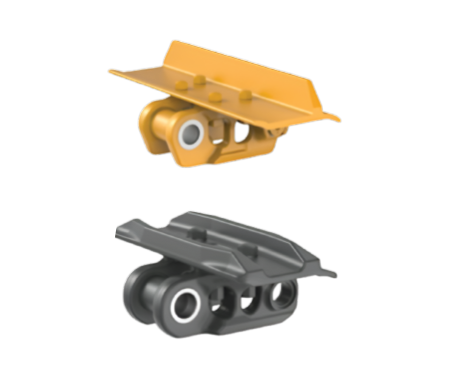
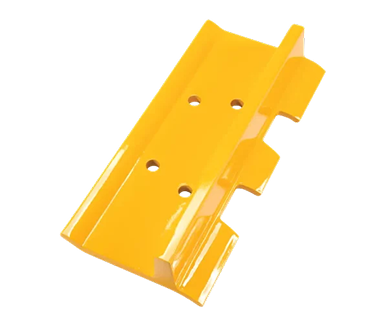
Steel tracks for excavators are heavy-duty undercarriage track systems designed for high-impact and high-abrasion operating environments. They are manufactured using hardened steel track link assemblies, pins, bushes, and track shoes to withstand continuous load, rough terrain, and harsh ground conditions.
Unlike rubber tracks, steel track systems are built for applications involving quarry operations, demolition work, mining, forestry, and large-scale earthmoving — where impact resistance and traction matter more than surface protection.
Steel’s weight also serves a structural function. On heavy excavators handling large loads high above the machine’s centre of gravity, the weight of steel tracks lowers the tipping point and improves machine stability. This counterweight function has no rubber equivalent.
Advantages of Steel Tracks
Superior Traction on Difficult Terrain:
Steel tracks provide stronger traction across muddy ground, loose soil, fractured rock, and uneven terrain. The grouser design improves ground penetration, allowing the machine to maintain grip during excavation, climbing, and heavy-load movement — critical on Australian mining, civil earthworks, and large-scale land clearing projects.
Longer Service Life Under Heavy Operation:
Steel undercarriage systems are engineered for continuous heavy-duty applications with high operating hours and abrasive conditions. In demolition, rock excavation, and large-scale earthmoving, a properly maintained set of steel tracks will substantially outlast rubber in the same application. See our guide on how to extend the life of excavator undercarriage parts in harsh conditions for maintenance practices that maximize service life regardless of track type.
Greater Stability During Excavation:
The rigid track assembly maintains more consistent machine balance on slopes, rough surfaces, and uneven ground. This matters when lifting with heavy attachments or operating in confined cut situations on Australian civil projects.
Higher Load Carrying Capacity:
Steel tracks distribute machine weight and working pressure more effectively during high-load applications. They are the correct choice for larger excavators, bulldozers, scrapers, and large crawler equipment working in demanding Australian resource sector conditions.
Disadvantages of Steel Tracks
Surface damage:
Steel tracks cause scratching, cracking, and surface displacement on asphalt, concrete, paving blocks, and landscaping. This makes them unsuitable for urban or residential projects where surface protection is required.
Higher noise output:
Steel-tracked machines are substantially louder during travel — a real constraint when operating near residential areas or on noise-restricted Australian construction sites.
Operator comfort:
Steel tracks transmit vibration and shock directly through the machine and into the operator over long working days.
Cost of replacement:
Steel undercarriage assemblies involve significantly higher initial investment than rubber equivalents.
Cost Comparison for Australian Jobsites: Rubber Tracks vs. Steel Tracks
On Australian jobsites, the cost difference between rubber and steel track systems becomes most visible over cumulative operating hours rather than at the initial purchase.
| Cost Factor | Rubber Tracks | Steel Tracks |
|---|---|---|
| Initial replacement cost | Lower | Higher |
| Service life (hard/abrasive terrain) | Shorter — faster replacement cycle | Longer — better value over time |
| Service life (urban/soft terrain) | Longer — full life achieved | Shortened by surface interaction |
| Surface restoration costs | Minimal | Potentially significant |
| Maintenance intensity | Lower | Higher (lubrication, tension adjustment) |
| Repair cost per incident | Full replacement required | Individual links replaceable |
| Undercarriage cascade wear (wrong application) | High if used on abrasive terrain | High if used on sealed surfaces |
The real cost risk on Australian jobsites is misapplication. Rubber excavator tracks operating continuously over sharp quarry rock often begin developing cuts, chunking, and internal cord damage much earlier than expected — often before 600–800 hours in severe conditions. Steel tracks working across sealed urban surfaces increase roller wear, create surface damage liability, and generate noise complaints that delay project schedules.
Because excavator undercarriage parts — including track roller assemblies, sprockets, idlers, and track link assemblies — operate under continuous load, wrong track selection creates cascading wear across the entire undercarriage. For a deeper look at how these components interact, see our guide on what a track link assembly is and why it matters in crawler machines. Choosing correctly from the start avoids premature replacement of components well beyond the tracks themselves — a point expanded on in our buying guide for quality undercarriage parts.
What If You Need Both? Rubber Pads for Steel-Tracked Machines
Many Australian operators run steel-tracked excavators across mining or earthworks sites, but periodically need to move across or work on sealed urban surfaces. Replacing the tracks entirely is expensive and time-consuming. The practical solution is rubber track pads — protective covers that mount over steel track shoes to provide surface protection without removing the underlying steel assembly.
Rubber pads are track shoe covers made from durable rubber compounds. They mount directly over existing steel track links and are available in three fitting configurations (TVH — Rubber versus Steel Tracks):
Bolt-On Pads Mounted directly onto the steel track plate. A durable, cost-effective solution for machines that periodically access sealed surfaces. No steel plate removal required.
Chain-On Pads Steel plates are removed before fitting. The rubber surrounds the steel section of the track, minimising surface contact and providing the best protection for delicate asphalt or concrete. Preferred for extended urban operation.
Clip-On Pads Slid sideways onto the steel plates and secured with bracket clips. Contains more rubber than bolt-on variants, is heavier, and provides greater durability. Best for machines moving frequently between open sites and protected urban surfaces.
For Australian contractors operating across both Pilbara-style mining conditions and urban project environments, rubber pads offer a practical middle ground that avoids maintaining two separate track configurations.
Quick Decision Guide: Rubber vs. Steel for Australian Conditions
| Choose Rubber Tracks If… | Choose Steel Tracks If… |
|---|---|
| Operating on asphalt, concrete, or paving | Working in quarry, mining, or demolition conditions |
| Working in residential or CBD construction zones | Operating on steep gradients or unstable terrain |
| Council noise restrictions apply | Machine handles heavy loads requiring low centre of gravity |
| Landscaping or utility work on finished surfaces | Operating in deep mud, loose rock, or ripped ground |
| Machine is compact or mid-sized (under 8T) | Running long continuous hours in abrasive conditions |
| Surface restoration costs would exceed track cost | Machine is a large excavator, dozer, or crawler (8T+) |
| Moving across mixed urban/soft terrain | Remote sites where link-by-link repairability matters |
Get the Right Undercarriage Setup for Your Australian Jobsite
Wrong track selection costs more than the tracks. It accelerates wear across your entire undercarriage — rollers, sprockets, idlers, and track link assemblies — and creates the kind of cumulative maintenance cost that compounds quietly until it becomes a machine-down situation.
DOZCO has been manufacturing OEM-compatible excavator and dozer undercarriage parts since 1983. Our components are designed for assured fitment and interchangeability across all major machine brands operating in Australia’s most demanding conditions — from Pilbara mining to urban Sydney civil work.
Frequently Asked Questions
How do I know if my excavator needs steel tracks instead of rubber tracks?
If your excavator operates continuously on quarry rock, demolition debris, steep terrain, or abrasive surfaces, steel tracks are the better option. Rubber excavator tracks wear significantly faster under these conditions due to constant impact and friction. As a general benchmark, rubber tracks on highly abrasive sites can wear out in under 800 operating hours — well below their rated life.
2. Which undercarriage parts wear first when the wrong track system is used?
When the track system doesn’t suit the operating environment, wear increases across track roller assemblies, sprockets, idlers, and track link assemblies due to uneven load distribution and excessive vibration. Our blog on excavator idler wheel failure and maintenance covers how misapplication accelerates these specific failures on Australian sites.
3. Can steel tracks damage construction surfaces?
Yes. Steel tracks can create scratches, cracks, and displacement on asphalt, concrete, paving blocks, and finished landscaping. For projects where surface protection matters, rubber tracks or rubber bolt-on pads over steel tracks are the correct solution.
4. What increases undercarriage replacement cost the most?
Continuous operation with incorrect track tension, poor maintenance scheduling, and unsuitable track selection drive replacement costs higher faster than almost anything else. Running rubber tracks on abrasive sites and steel tracks on sealed surfaces are the two most common misapplication errors on Australian jobsites. Our article on the cost of using non-genuine excavator spare parts also explains how component quality affects total undercarriage cost over time.
5. Can operators switch from rubber tracks to steel tracks on the same excavator?
Some excavators support both rubber and steel track configurations, but compatibility depends on machine model, undercarriage design, roller setup, and operating weight. For machines that regularly transition between harsh terrain and urban surfaces, rubber track pads fitted over steel track shoes are a practical alternative to full track conversion.
6. How do I choose the right rubber track tread for my application?
Straight bar tread suits most general applications. Multi-bar tread is better for mixed surfaces and agricultural use. Staggered block works well for landscaping on slopes. C-lug provides maximum traction and turning performance for varied terrain including Australian coastal sandy soils.