

 " alt="How to Spot Undercarriage Wear Before It Leads to Costly Failures">

Most undercarriage failures do not begin with a broken component. They begin while the machine is still operating normally — with wear silently progressing beneath the surface. Knowing the early signs can save thousands in repair costs and prevent unexpected downtime.
How Undercarriage Wear Actually Begins
The excavator continues tracking. The dozer still pushes material without any immediate loss in production. But underneath the machine, wear has already started progressing across the system.
A roller begins losing lubrication internally. Pin and bushing surfaces slowly wear against each other under load. Track pitch starts increasing. Sprocket engagement becomes unstable. Track tension no longer reacts consistently across rough ground conditions. None of these issues stop the machine immediately, which is exactly why they often remain unnoticed during the early stages.
By the time rough travel, abnormal vibration, or visible track instability becomes obvious, wear has usually already spread across multiple undercarriage parts simultaneously.
In most cases, undercarriage wear does not start from one major impact or sudden mechanical failure — it starts from continuous day-to-day operation under load. Every time the machine travels, turns, tracks across rock, or pushes material, the undercarriage absorbs stress through constant metal-to-metal interaction. Pins rotate inside bushings, rollers move under machine weight, and sprockets engage the track chain repeatedly throughout each operating shift.
The process becomes much faster in harsh working conditions. Dust enters moving areas, compacted material increases resistance inside the track frame, and incorrect track tension places additional stress across the system. Machines operating with excessive track tension often show reduced track flexibility and stiff movement during travel. On the other hand, loose tracks may develop excessive sag, unstable alignment, or abnormal side movement while operating across uneven terrain.
This is one of the main reasons undercarriage costs become difficult to control in mining, quarrying, construction, and earthmoving operations. Monitoring wear continuously rather than waiting for visible failure is the most reliable way to avoid multiple component replacements at once.
7 Types of Undercarriage Wear to Watch For
The wear patterns below are the most common across excavator and dozer undercarriage systems. Each one starts gradually — but all of them accelerate quickly once the early window for intervention has passed.
1. Lower Roller Tread Wear
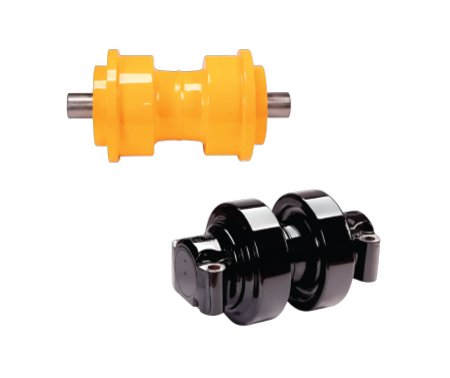
Lower roller tread wear develops through continuous contact between the roller tread surface and the track links under operating load. In abrasive ground conditions, the wear rate increases significantly due to constant friction, compacted material buildup, and incorrect track tension.
As tread wear increases, roller flange height gradually rises relative to the worn tread surface. Once this clearance decreases beyond normal operating limits, interference begins developing between surrounding components. If the wear progression continues unchecked, load distribution across the excavator undercarriage becomes increasingly uneven, and wear starts accelerating across bushings, links, and surrounding roller assemblies.
2. Lower Roller Flange Side Wear
Lower roller flange side wear is commonly associated with continuous side loading across the track assembly. This usually develops during prolonged sidehill operation, repeated turning in one direction, pivot turning, track misalignment, or unstable “snaky” chain movement.
Under these operating conditions, side thrust load increases continuously between the roller flanges and link side faces. Instead of maintaining centered chain movement, the track assembly begins shifting laterally during operation. As side wear increases, the roller gradually loses its ability to guide the chain correctly through the undercarriage system.
3. Flat Spotted Rollers
Flat spotted rollers develop when normal roller rotation becomes interrupted under operating load. This commonly occurs due to internal seizure, lubrication failure, frozen packing material, or excessive localized wear inside the roller assembly.
Instead of rotating smoothly along the track chain, certain sections of the roller begin absorbing repeated impact at the same contact point during travel. As localized impact loading increases, vibration levels throughout the undercarriage also begin increasing. If flat spotted rollers continue operating, the repeated impact loading starts accelerating wear progression across links, bushings, and surrounding components.
4. Link Rail Scalloped Wear
Link rail scalloped wear develops when different sections of the link rail operate under uneven surface pressure over extended operating hours. As the track chain travels through rollers and around the front idler, specific areas of the rail surface remain under higher concentrated loading than adjacent sections. This gradually creates irregular scalloped wear patterns across the rail tread surface, which become more visible as link rail height decreases unevenly across the chain assembly.
5. Excessive Link Side Rail Wear
Excessive link side rail wear rarely develops under normal operating alignment. In most cases, it is associated with prolonged sidehill operation, repeated pivot turns, continuous turning in one direction, or track chain misalignment.
Under these conditions, continuous side contact develops between the link rail surfaces, roller flanges, sprocket side faces, and idler flanges. As rail width decreases, operating pressure across the remaining rail surface increases significantly, accelerating wear progression across both the links and roller assemblies.
6. Pin Galling
Pin galling occurs when the lubrication film between the pin and bushing fails under operating load, allowing direct metal-to-metal contact inside the joint assembly. Once lubrication breakdown occurs, scoring marks gradually begin developing along the pin surface due to repeated sliding contact under pressure.
Incorrect track tension, abrasive operating environments, and unsuitable shoe selection together increase the likelihood of lubrication failure developing inside the chain assembly. Although early-stage galling may initially appear cosmetic, continued operation under metal-to-metal contact gradually increases internal wear throughout the pin and bushing system.
7. Forward and Reverse Bushing Wear
Bushings remain under continuous sliding contact against sprocket teeth during both forward and reverse travel. This repeated contact gradually reduces bushing wall thickness and changes overall chain pitch geometry.
As chain pitch elongation increases, sprocket engagement becomes progressively less accurate. Load transfer between the sprocket and bushings becomes concentrated across smaller contact areas, increasing impact stress throughout the chain assembly. If wear progression continues unchecked, bushings become increasingly vulnerable to cracking, and overall undercarriage wear accelerates rapidly across connected components.
Undercarriage Maintenance Guidelines: What to Do Every 10 Hours
At DOZCO, we have been manufacturing excavator and dozer undercarriage parts since 1983, supporting the mining, construction, and earthmoving industries for over four decades. All our parts are OEM-compatible with assurance given on fitment and interchangeability.
We recommend operators perform a complete undercarriage walk-around inspection every 10 service hours or during daily machine checks. Issues such as oil leakage, abnormal track sag, rough tracking movement, loose components, irregular sprocket wear, or excessive material packing can often be identified during these inspections before wear starts spreading across connected parts.
Track tension should also be checked and adjusted regularly. Both excessive tension and loose track conditions increase stress across rollers, bushings, idlers, sprockets, and link assemblies during operation.
A simple daily checklist covers most early warning signs:
- Check for oil leakage around roller seals and idler seals
- Inspect track sag — correct tension per manufacturer specification
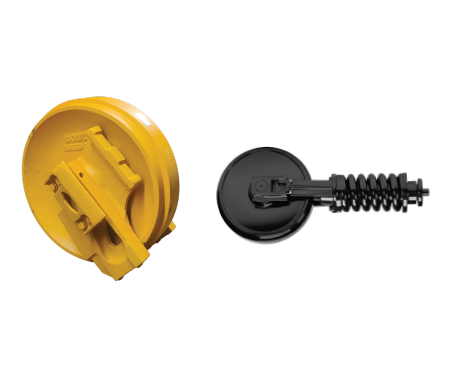
- Look for abnormal wear patterns on sprocket teeth
- Check for material packing inside the track frame
- Listen for cyclic vibration or rough tracking movement during operation
- Inspect track link assemblies for scalloping, side rail wear, or pitch elongation
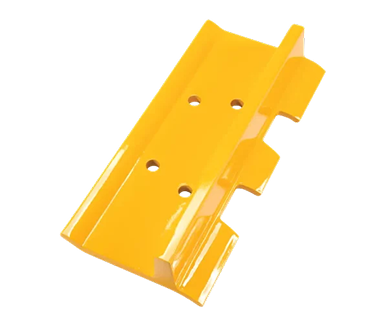
- Check track shoe bolts for looseness and inspect shoe plates for cracking
By identifying early wear patterns before they develop into larger undercarriage replacement cycles, operations in mining, quarrying, construction, and earthmoving can avoid unexpected machine downtime and unplanned budget demands. For a deeper look at extending component life, see our guide on extending excavator undercarriage life in harsh conditions and our complete undercarriage maintenance guide.
Wrapping Up
Undercarriage wear is easier and less expensive to manage when problems are identified early. Regular inspections, correct track tension, and basic maintenance checks help reduce unnecessary stress across the entire system.
If wear is ignored for too long, multiple undercarriage parts may need replacement at the same time instead of just one damaged component. Since excavator OEM undercarriage parts carry a significant cost, poor maintenance can quickly lead to higher repair bills, longer downtime, and major replacement work that could have been avoided.
The seven wear types covered above — from roller tread loss to bushing wear — all follow the same pattern: slow and invisible early on, expensive and disruptive once they reach the failure stage. A 10-minute daily walk-around is the most cost-effective tool an operator has.
Frequently Asked Questions
What are the earliest signs of undercarriage wear?
Early signs usually include uneven track movement, abnormal vibration, rough tracking, oil leakage around rollers, excessive track sag, or unusual wear patterns on sprockets and links. These problems often appear before major component failure takes place.
Is undercarriage wear normal in excavators and dozers?
Yes. Undercarriage parts operate under continuous load and constant ground contact, so gradual wear is normal over time. However, poor maintenance and incorrect operating conditions can increase wear much faster than expected.
Can incorrect track tension damage the entire undercarriage system?
Yes. Loose tracks increase movement between chain components, while over-tightened tracks create excessive load on rollers, bushings, idlers, and sprockets. Both conditions accelerate overall undercarriage wear and should be corrected immediately.
Why does the excavator vibrate more when the undercarriage starts wearing?
As components wear unevenly, load distribution across the track system becomes unstable. This often leads to rough tracking, vibration, and irregular chain movement during travel — particularly noticeable with flat spotted rollers or scalloped link rail wear.
How often should undercarriage inspections be performed?
Basic walk-around inspections should ideally be performed daily or every 10 service hours. Regular inspection helps identify wear patterns early before they develop into larger undercarriage replacement and downtime issues. For detailed guidance, see our undercarriage maintenance guide.
How expensive can replacing undercarriage parts become?
Undercarriage replacement can become a major operating expense because multiple connected parts often wear together. If wear is ignored for too long, components such as rollers, sprockets, links, bushings, and idlers may all require replacement at the same time, along with additional downtime and labour costs. For more on making smart part decisions, read our buying guide for quality undercarriage parts.