

 ">
">

Excavator attachments are purpose-built tools that mount onto an excavator’s arm to extend its capability beyond basic digging. The most common types include hydraulic rock breakers, excavator buckets, vibro rippers, cutter attachments, augers, grapples, pulverisers, and clamshell buckets. Each attachment is matched to a specific task — from breaking concrete to drilling fence post holes — and choosing the right one directly impacts site productivity and operating costs.
On many Australian job sites, the excavator is usually the first machine to arrive and the last one to leave. But in most projects, the machine itself is only part of the equation. What actually changes the way work gets done is the attachment fitted to it.
A contractor clearing rock in Western Australia will not use the same setup as a civil crew laying drainage lines in Melbourne or a demolition team working inside a restricted urban site in Sydney. The base machine may remain the same, but the attachment determines whether the excavator breaks concrete, compacts soil, lifts materials, drills holes, handles scrap, or performs precision trenching.
This is why attachment selection has become more operational than optional. Contractors today are under constant pressure to reduce idle equipment, control operating costs, and complete multiple site activities without increasing fleet size. Using specialised excavator attachments allows one machine to perform several tasks that would otherwise require separate equipment and additional labour.
However, not every attachment suits every project condition. In this guide, we will break down eight widely used excavator attachments and explain their applications across Australian construction, mining, demolition, and earthmoving projects.
What Are Excavator Attachments?
Excavator attachments are specialised hydraulic or mechanical tools connected to an excavator through a quick coupler or pin mounting system. These attachments allow the machine to perform different site operations beyond standard digging and trenching.
Depending on the attachment installed, an excavator can be used for demolition, rock breaking, auger drilling, material handling, compaction, crushing, ripping, and sorting. This increases machine utilisation and reduces the need for multiple dedicated equipment units on site.
Why the Right Excavator Attachment Matters on Australian Job Sites
Australian job sites expose excavators to very different operating conditions. Contractors in Western Australia often work through rocky outcrops, while projects in Victoria deal with hard basalt layers and demolition crews in Sydney handle reinforced concrete structures. Each condition places different demands on the excavator and its attachment.
Contractors must match the attachment to the application to maintain efficient machine performance. An unsuitable attachment can restrict hydraulic efficiency, increase cycle times, and place excess load on the boom, arm, and linkage components. But the most hefty thrash would be on the cost of repairing the attachment post work.
8 Types of Excavator Attachments and What They Do
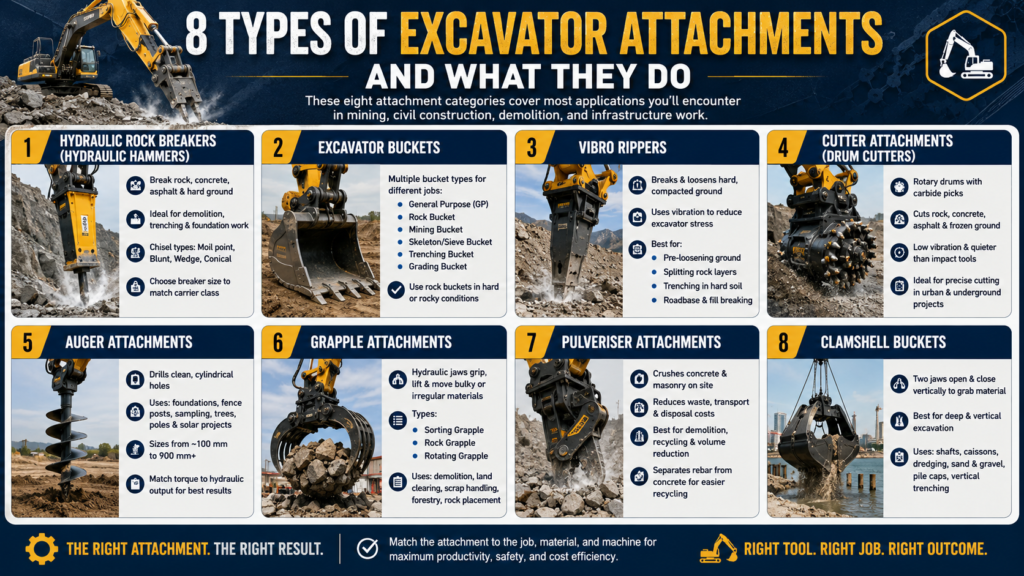
The eight attachment categories below cover most applications you’ll encounter in mining, civil construction, demolition, and infrastructure work.
1. Hydraulic Rock Breakers (Hydraulic Hammers)
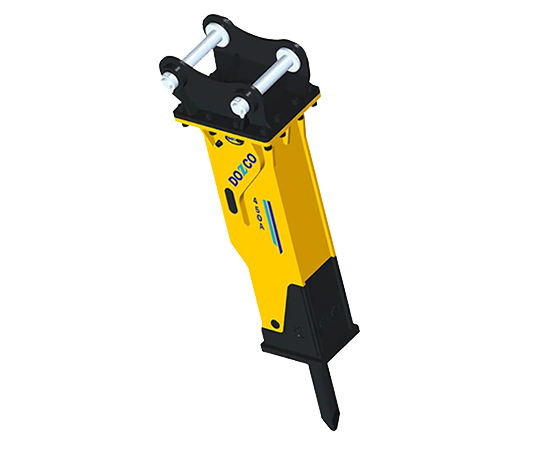
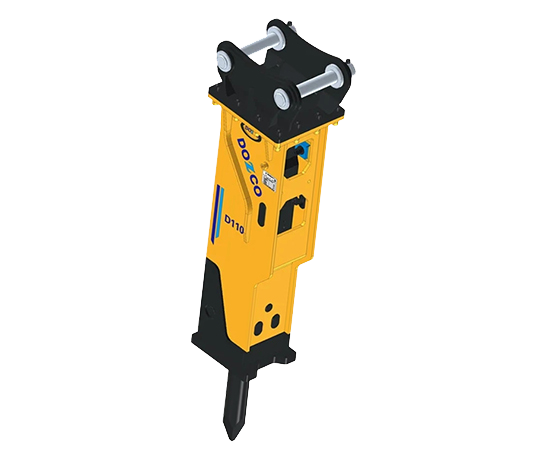
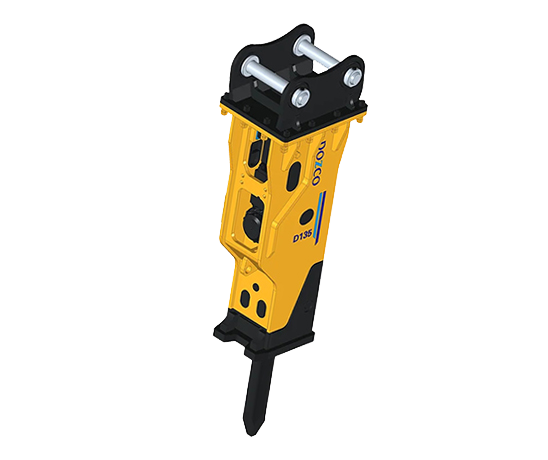
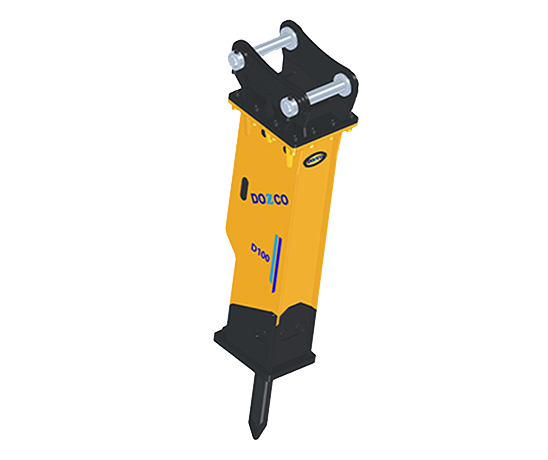
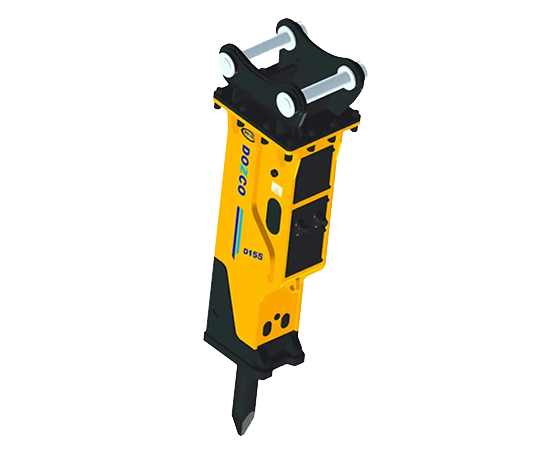
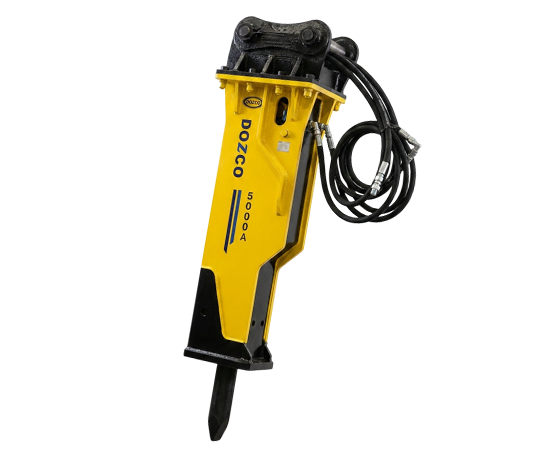
Hydraulic rock breakers are among the most widely used excavator attachments across Australian construction, quarrying, and mining projects. Also known as hydraulic hammers or excavator jack hammers, these attachments are built to break through rock, reinforced concrete, asphalt, and compact ground where standard buckets are no longer effective.
The attachment works by using hydraulic oil flow from the excavator to drive an internal piston. This piston repeatedly strikes a steel tool attached at the bottom of the breaker, generating concentrated impact force against the material surface. Because the energy is focused into a small contact area, hydraulic breakers can fracture dense materials much faster than conventional mechanical methods.
Hydraulic breakers are commonly used for:
- Rock breaking in mining and quarry operations
- Demolition of reinforced concrete structures
- Trench excavation in hard ground conditions
- Asphalt and pavement removal
- Foundation breaking in restricted urban projects
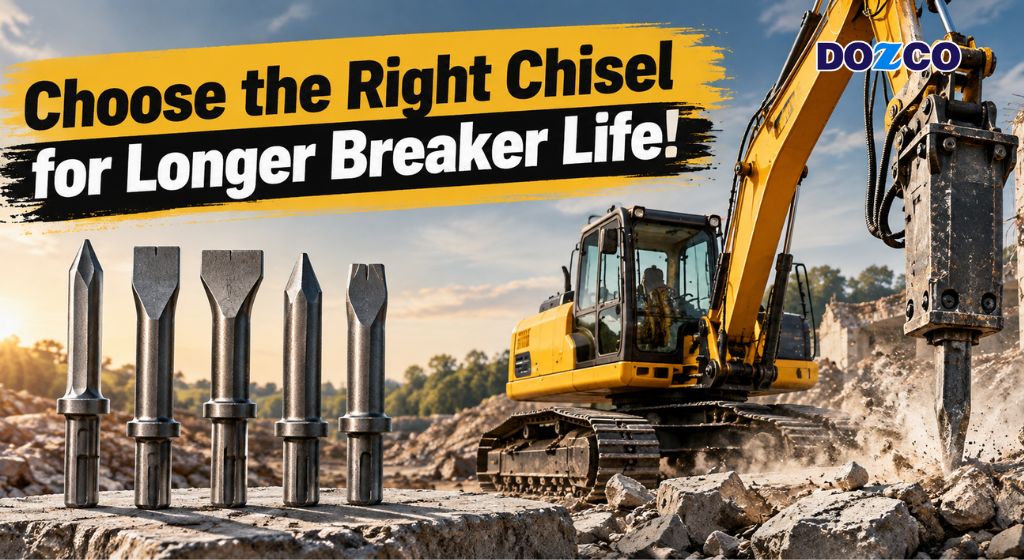
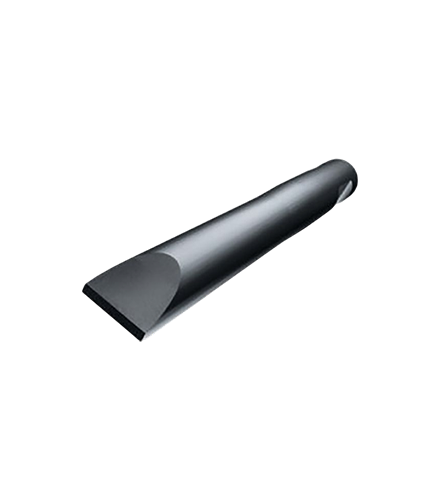
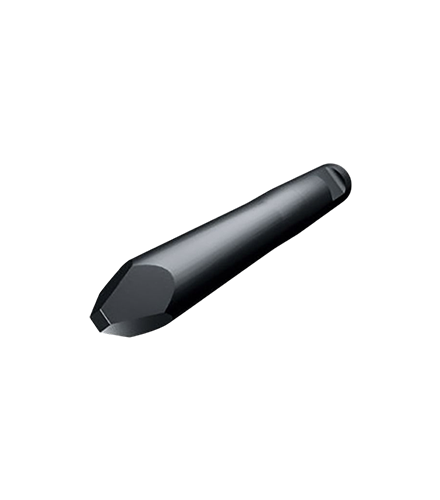
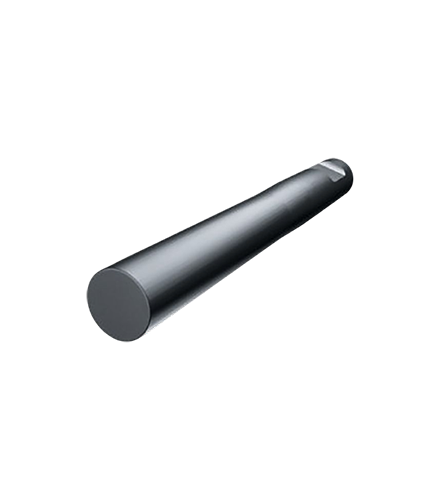
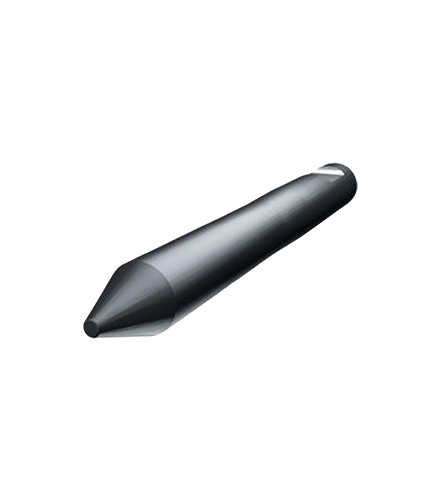
Chisel types for hydraulic hammers: The chisel (also called the tool or moil) determines how energy is distributed:
- Moil point — concentrates force into a narrow tip. Best for cracking solid rock.
- Blunt tool — broad face spreads impact, good for crushing brittle material.
- Wedge chisel — tapered edge that pushes cracks open sideways. Useful for controlled splitting.
- Conical chisel — cone-shaped tip that penetrates dense or reinforced materials.
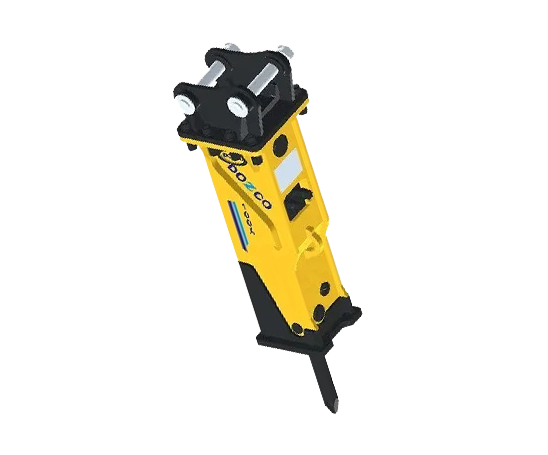
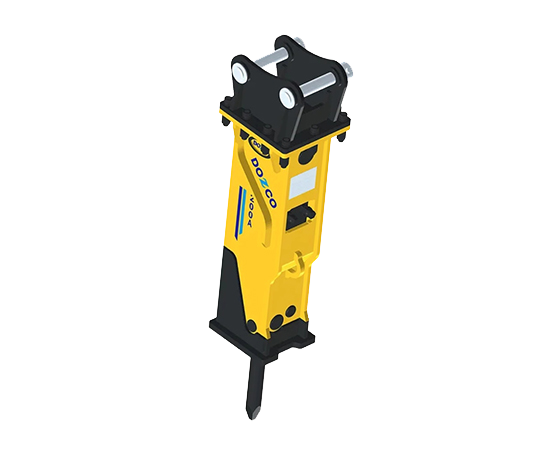
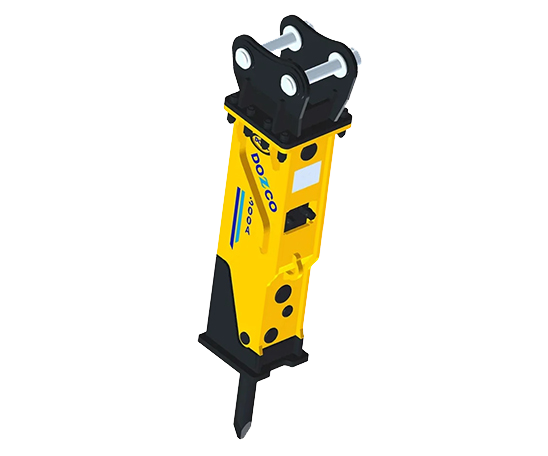
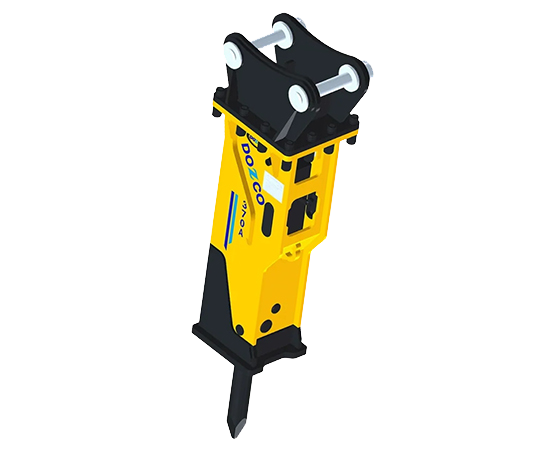
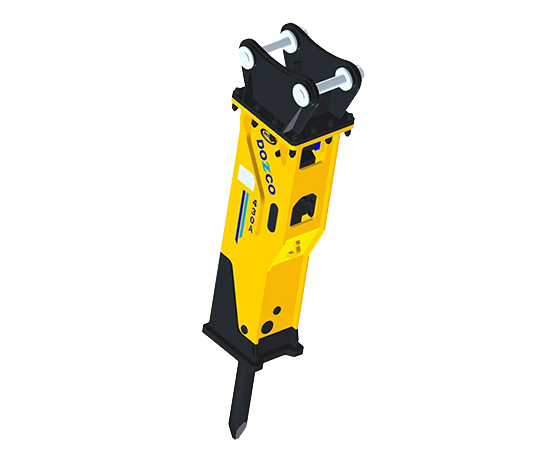
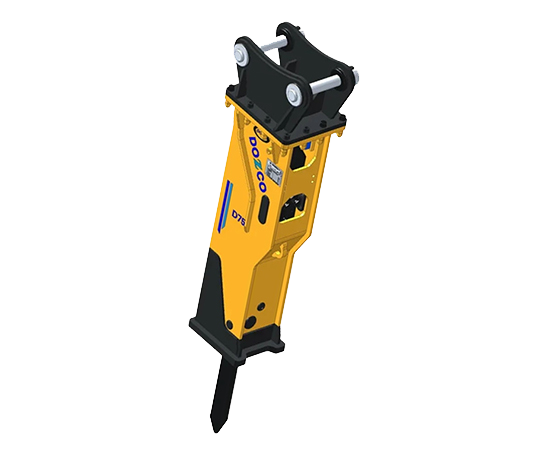
Choosing the right breaker size: Match the breaker’s operating weight to your carrier class. A lightweight model like the DOZCO D75 (suited to 0.5–4 tonne excavators) is ideal for concrete kerbing and small demolition in confined spaces. For serious mining and quarrying, a heavy-range unit like the DOZCO D155 or D5000A handles carriers from 26 to 100 tonnes.
DOZCO’s full range of hydraulic rock breakers covers every carrier class from mini-excavators to large mining machines, with CE-certified builds and OEM-compatible mounting options for CAT, Komatsu, Volvo, Hitachi, and more.
For a deep dive into selection and operation, read Which Rock Breaker Should You Choose for Your Machine?
2. Excavator Buckets
Excavator buckets are the most commonly used attachments across construction, mining, earthmoving, and civil infrastructure projects. Although they are primarily associated with digging operations, different bucket designs are built to handle specific ground conditions, material densities, and site applications.
Types of excavator buckets:
- General Purpose (GP) Bucket — used for digging soil, clay, and loose material in standard ground conditions.
- Rock Bucket — built with reinforced plates and heavy-duty teeth for hard ground, rocks, and boulder work.
- Mining Bucket — designed with a deep profile for high-volume material handling in mining and quarry operations.
- Skeleton/Sieve Bucket — uses an open mesh base to separate fine material from larger debris during screening and clean-up work.
- Trenching Bucket — narrow bucket used for precise trench excavation in utility and pipeline projects.
- Grading Bucket — wide flat-edged bucket used for leveling, finishing, and backfilling surfaces.
When to use a rock bucket vs a standard bucket: Standard GP buckets are suitable for loose soil and normal excavation conditions, but hard or rocky terrain causes faster wear on bucket edges and teeth. Rock buckets use reinforced side plates, hardened teeth, and abrasion-resistant steel to handle higher impact and abrasive ground conditions more effectively
3. Vibro Rippers
A vibro ripper is an excavator attachment used to break through hard and compacted ground that cannot be handled easily with a standard bucket. The attachment uses a single or multi-shank design combined with vibration to penetrate materials such as shale, weathered rock, frozen soil, and compacted surfaces.
The vibrating action helps fracture the material while reducing the digging force required from the excavator. This lowers stress on the boom, arm, and linkage components during operation and reduces attachment wear in hard ground conditions.
Vibro rippers are commonly used where the material is too hard for standard excavation work but does not require a hydraulic breaker.
Best applications for vibro rippers:
- Pre-loosening hard ground before bucket excavation
- Splitting rock layers during quarry preparation
- Breaking compacted fill and old roadbase material
- Trenching for underground utilities in hard soil conditions
- Preparing pipeline and cable routes through compact ground
Tip: Vibro ripper vs hydraulic breaker — which should you use? Hydraulic breakers use high-impact force to break hard rock and concrete at a fixed point. Vibro rippers use vibration and ripping action to loosen layered rock, compacted ground, and fractured material over a wider area.
Many projects use both attachments together. The breaker creates initial cracks in the material, while the vibro ripper separates and removes the loosened layers.
4. Cutter Attachments (Drum Cutters)
Cutter attachments, also known as drum cutters or rotary cutters, are excavator attachments used for controlled cutting and surface excavation work. The attachment uses rotating drums fitted with carbide-tipped picks to cut through rock, concrete, asphalt, frozen ground, and compact soil.
Where cutter attachments excel:
- Tunnel profiling and underground excavation work
- Precision trenching in vibration-sensitive urban areas
- Concrete surface milling and profiling
- Asphalt cutting and road surface removal
- Selective demolition near adjacent structures or utilities
Cutter attachments are widely used in urban civil and infrastructure projects where strict noise and vibration limits apply. Their continuous rotary cutting action produces lower vibration and quieter operation compared to impact-based attachments such as hydraulic breakers.
5. Auger Attachments
An auger is a rotating drilling tool with a spiral-shaped flight used to dig clean cylindrical holes into the ground. In excavator applications, the auger is powered by the machine’s hydraulic system
Common uses for excavator augers:
- Drilling foundation piers and bored footings
- Fence post and sign post installation
- Soil sampling and geotechnical investigation work
- Tree planting and utility pole installation
- Foundation drilling for solar farms and communication towers
Auger sizing considerations: Excavator augers are available in different diameters depending on the drilling requirement, ranging from around 100 mm for small post holes to 900 mm or larger for structural pier work. Bit selection also depends on ground conditions. Standard flight augers are used for soft soil, while rock augers fitted with carbide teeth are better suited for hard and abrasive ground.
The auger’s torque requirement must match the excavator’s hydraulic output as an incorrect match can overload the drive system, reduce drilling performance, or can even stall the auger during operation.
6. Grapple Attachments
A grapple is a hydraulically operated excavator attachment fitted with movable jaws designed for gripping, lifting, and handling irregular or bulky materials. The attachment uses hydraulic cylinders to control jaw movement, allowing the excavator to secure and reposition materials that are difficult to handle with conventional digging attachments.
Types of grapples:
- Sorting Grapple — fitted with multiple tines for handling demolition waste, timber, scrap metal, and mixed debris during sorting and material separation work.
- Rock Grapple — built with heavy-duty jaws and a wider opening for gripping and handling large rocks, boulders, and bulky materials in quarry and earthmoving operations.
- Rotating Grapple — equipped with a hydraulic rotary actuator that allows the attachment to rotate independently, improving material positioning and handling without moving the excavator.
Where grapples are used:
- Demolition and site clean-up operations involving concrete rubble, reinforcement steel, and timber
- Landscaping and land clearing work
- Scrap handling and material movement in recycling yards
- Log handling in forestry operations
- Rock placement and material positioning in coastal protection and drainage projects
7. Pulveriser Attachments
A pulveriser, also known as a concrete pulveriser or crusher attachment, uses hydraulically powered crushing jaws to break down demolished concrete, masonry, and reinforced material into smaller reusable aggregate on site.
Pulverisers are widely used in Australian demolition and infrastructure projects where large volumes of concrete waste are generated. By processing material at the site itself, the attachment reduces waste transport requirements, lowers disposal costs, and decreases the use of skip bins and external crushing operations.
Best applications for pulverisers:
- Building and structural demolition
- Bridge and infrastructure deconstruction
- Material recycling in urban construction projects
- Processing concrete rubble for roadbase and fill material
- Volume reduction of demolition waste
Note: Pulverisers are also used for processing reinforced concrete. The crushing jaws separate embedded rebar from the concrete, making both materials easier to sort, handle, and recycle after demolition.
8. Clamshell Buckets
A clamshell bucket is a material handling and excavation attachment fitted with two hinged jaws that open and close vertically to collect material from below. The attachment operates through a hydraulic or cable-controlled mechanism and is lowered into the excavation area before the jaws close around the material.
Common Applications of Clamshell Buckets
- Deep excavation in shafts, caissons, and foundation pits
- Dredging and waterway maintenance operations
- Handling sand, gravel, grain, and other loose materials
- Pile cap and vertical foundation excavation
- Vertical trenching in restricted urban construction sites
Clamshell buckets are commonly used in applications where a standard excavator bucket cannot reach or operate effectively. Their vertical digging action allows material removal from deep and narrow excavations while keeping the carrier machine positioned away from the excavation edge.
Here’s How to Match Excavator Attachments to Different Site Applications
| Task | Best Attachment |
| Breaking rock or concrete | Hydraulic rock breaker |
| Digging in hard ground | Rock bucket |
| Pre-loosening strata before digging | Vibro ripper |
| Precision cutting with low vibration | Cutter attachment |
| Boring holes for posts or piers | Auger |
| Sorting demolition debris | Grapple |
| Crushing and recycling concrete | Pulveriser |
| Deep shaft or dredge excavation | Clamshell bucket |
| Standard earthmoving | General purpose bucket |
How to Choose the Right Excavator Attachment
- Match the attachment to the carrier size. Each attachment is built for a specific excavator weight class. Using a heavy attachment on a smaller machine can put extra load on the boom and hydraulic system and reduce productivity. Check the manufacturer’s specs before ordering.
- Check Hydraulic Flow and Pressure. Attachments such as augers, cutters, and grapples require specific hydraulic flow and pressure levels. The excavator’s auxiliary hydraulic circuit must match the attachment requirement for proper operation.
- Select the Attachment for the Material Type. Hard and abrasive ground conditions require reinforced heavy-duty attachments, while standard-duty attachments are suitable for softer ground and general excavation work.
- Consider the Site Restrictions. Projects with vibration and noise restrictions may require lower-impact attachments such as drum cutters instead of hydraulic breakers.
- Choose a Supplier with Local Support In Australia’s construction and mining industry, equipment downtime can delay project work and increase operating costs. Choosing a supplier with local stock, technical support, and readily available spare parts. This can help reduce on-site delays during maintenance and repairs.
Why Australian Contractors Choose DOZCO for Excavator Attachments
DOZCO has 40+ years of manufacturing experience and operates as an ISO 9001:2015 certified production facility. All attachments undergo multi-stage quality testing before dispatch.
Our products are OEM-compatible with major excavator brands including CAT, Komatsu, Hitachi, Volvo, Liebherr, Kobelco, Doosan, Hyundai, and more.
We also have support teams in Melbourne and Brisbane providing local technical assistance, parts availability, and installation support across Australia. Our range includes hydraulic rock breakers, and a full suite of rock breaker tools (chisels) to suit every site condition.
Wrapping Up
The choice of excavator attachment can completely change how a machine performs on site. Different jobs need different tools, and using the correct attachment helps sitework to be done more smoothly, in less time, and without any unnecessary wear. Therefore, equipping the right excavator attachment setup also helps contractors get more value from the excavator across different site conditions and applications.
Frequently Asked Questions About Excavator Attachments
What is the most common excavator attachment?
The general purpose digging bucket is the most widely used excavator attachment. For demolition and hard rock work, hydraulic breakers for excavators come a very close second.
How do hydraulic breakers work on excavators?
Hydraulic breakers use the carrier machine’s hydraulic system to pressurise a chamber and drive a piston at rapid speed. The piston strikes the chisel tool, which delivers the impact force to the target material. Modern units operate at up to 800 blows per minute (BPM), depending on the model and carrier flow.
Can I use the same attachment on different excavator brands?
Yes — provided the attachment is manufactured with OEM-compatible mounting dimensions. DOZCO’s attachments are engineered to suit carriers from CAT, Komatsu, Hitachi, Volvo, and other major brands. Always confirm hydraulic flow and pressure requirements match your machine before fitting.
What size hydraulic breaker do I need for my excavator?
Breaker selection is based on carrier weight class:
- 0.5–4 tonne excavator: light-plus range (e.g., DOZCO 100A, 200A, D75)
- 3–9 tonne: light range (e.g., DOZCO 300A, 370A, 430A, 450A)
- 10–26 tonne: medium range (e.g., DOZCO D110, D135)
- 26–100 tonne: heavy range (e.g., DOZCO D155, 5000A)
For detailed guidance, see How to Choose the Right Rock Breaker.
What’s the difference between a vibro ripper and a hydraulic breaker?
A hydraulic breaker delivers repeated impact blows at a single point — ideal for breaking through compact rock or concrete. A vibro ripper combines ripping force with vibration to fracture and loosen layered or stratified material across a wider area. They’re often used in sequence on the same site.
For more detail, search DOZCO’s blog for “Rock Breaker vs Vibro Ripper.”
How do I maintain excavator attachments?
Key maintenance steps include: daily greasing of pins and bushings, inspecting chisel tools for wear or cracking, checking hydraulic connections for leaks, and replacing worn wear plates on buckets before steel-to-steel contact occurs. DOZCO provides technical installation and maintenance support for all attachments.
Are DOZCO excavator attachments available across Australia?
Yes. DOZCO supplies and supports customers in Melbourne, Sydney, Perth, Brisbane, Adelaide, and across regional Australia. Contact the local team through dozco.com.au for stock availability and technical advice.