

 ">
">

We get this question all the time “Which grouser type should I put on my machine?”
It sounds simple. But get it wrong, and you’re looking at higher fuel bills, faster undercarriage wear, and machines bogging down on site. We’ve seen operators lose thousands of dollars simply because they used the wrong shoe for the job.
So we wrote this guide. No jargon. No fluff. Just practical, honest advice from people who build and supply track shoes every day.
Let’s start from the beginning.
What is a Grouser on a Track Shoe?
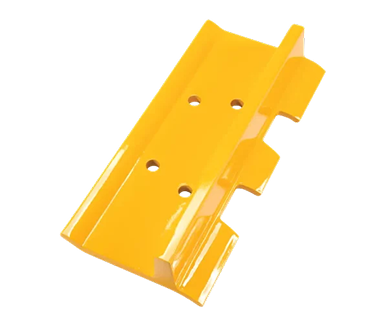
A grouser is the raised bar (or bars) on the bottom of a track shoe. It’s the part that digs into the ground. Without it, your machine would slide around like it’s on ice.
The grouser does three things on site:
- Bites into the ground to give the machine traction
- Spreads the machine’s weight across the surface
- Protects the undercarriage chain from direct ground contact
Now, the number of grousers on each shoe changes everything about how your machine performs. That’s where single, double, and triple grousers come in.
The Core Trade-Off You Need to Understand First
Before we break down each type, understand this one rule. It applies to every machine, every site, every application:
More grousers = more maneuverability. Fewer grousers = more traction.
This is the fundamental trade-off. Single grousers dig in deep and grip hard. Triple grousers spread load, reduce resistance, and help machines turn easily. Double grousers sit in the middle.
No grouser type is universally “best.” The best one depends on your ground conditions and what your machine needs to do.
Single Grouser Track Shoes: Maximum Traction, Minimum Turning
What They Look Like
A single grouser shoe has one tall, thick bar running across the shoe. The bar is deep and aggressive. When it hits the ground, it cuts in hard.
Where Single Grousers Work Best
Single grouser shoes are built for maximum penetration. They’re the go-to choice for:
- Bulldozing and pushing — When a dozer needs to shove material in a straight line, nothing grips like a single grouser.
- Hard, rocky ground — The tall bar cuts through rock and compacted soil where shorter grousers can’t get purchase.
- Steep slope work — High traction stops machines sliding backwards on grades.
- Pipeline laying — Contractors in pipeline work often use single or double grousers on steep slopes for exactly this reason.
- Rock drilling applications — Drill rigs need grip. Single grousers deliver it.
The Real Downside of Single Grousers on Site
Here’s what a lot of guides won’t tell you. Single grousers create enormous resistance when you try to turn. On hard ground, making a pivot turn with single grousers is brutally tough on the undercarriage. It stresses pins, bushings, and track links far more than any other shoe type.
If your machine turns a lot — think excavators that reposition constantly — single grousers will wear your undercarriage out faster. Much faster. Our guide on how to spot undercarriage wear early covers the signs to watch for.
Single grousers are also not suited for soft, boggy ground. The tall bar concentrates ground pressure at a single point. On mud or clay, the machine can sink rather than float.
Which Machines Use Single Grouser Shoes?
- Large bulldozers doing sustained, directional pushing
- Rock drilling rigs
- Pipeline machines on steep terrain
- Forestry machines in clearing and grubbing (straight runs, not a lot of turning)
Double Grouser Track Shoes: The Balanced Middle Ground
What They Look Like
Double grouser shoes have two parallel bars across the shoe. They’re shorter than a single grouser, but there are two of them. They offer more contact with the ground and less concentrated penetration.
Where Double Grousers Work Best
Double grousers are the workhorse of mining and heavy excavation sites. They balance grip and movement better than any other type. They suit:
- Mining excavators — Shovels and large excavators running in mixed terrain benefit from the balance double grousers provide.
- Road construction — You need stability on firm surfaces but still need to reposition regularly.
- Steep terrain with turning — Better turning resistance than singles, better traction than triples.
- Mixed-terrain sites — Sites that switch between hard packed dirt and looser material.
- Heavy-duty dozers on semi-abrasive ground — Double grouser extreme service variants handle tough conditions while still allowing machine movement.
The Honest Downside of Double Grousers
Double grousers wear faster than triples. Because more of the shoe contacts the ground, there’s more friction during turns. They also clog more easily in soft, sticky ground. When mud packs between the bars, you lose the traction advantage and the shoe becomes effectively useless.
They’re also not ideal on soft soil. The shoe isn’t wide enough to distribute weight like a triple grouser, and the bars aren’t tall enough to punch through like a single.
Which Machines Use Double Grouser Shoes?
- Mining shovels and large excavators
- Dozers working in abrasive but mixed conditions
- Track loaders in clearing, grubbing, or grading applications
- Machines working on grades that need grip without constantly straight-lining it
Triple Grouser Track Shoes: Best Maneuverability, Widest Use
What They Look Like
Triple grouser shoes have three shorter, parallel bars. They’re lower profile than single or double grousers. More of the shoe plate is in contact with the ground.
Where Triple Grousers Work Best
Triple grousers are the most commonly specified shoe on hydraulic excavators. Industry product managers at companies like Volvo refer to them as the standard, all-around choice for excavators for good reason. They excel at:
- General construction sites — Excavators repositioning frequently need the turning ease triples provide.
- Soft to medium ground — Three bars spread weight over a larger footprint, reducing ground pressure and preventing sinking.
- Urban construction — Less ground disturbance means less damage to surrounding surfaces.
- Agricultural and forestry work — Minimises soil compaction and surface damage.
- Quarries and surface mining — When machines need to move around the site constantly.
- Any application requiring frequent turns — Triples reduce turning resistance and cut undercarriage stress dramatically.
Why Triple Grousers Last Longer on Most Sites
This is the part most guides miss. Triple grousers wear more evenly than single or double types. The load spreads across three bars instead of one or two. There’s less stress concentration on any single point. That’s why triple grousers are generally gentler on the undercarriage over time.
When a machine constantly pivots and repositions — as excavators do — triple grousers reduce lateral scrubbing on the track chain. That means less pin and bushing wear. Lower maintenance costs over time.
There’s real data behind this too. A fleet trial switching from single grouser to triple grouser on excavators in sandy limestone conditions found a 22% reduction in track slippage, 9% lower fuel consumption, and a 30% extension in bushing life.
The Limits of Triple Grousers
Triple grousers sacrifice raw penetration power. On very hard, rocky, or highly abrasive ground, the shorter bars can’t bite as deep. Traction suffers. If you’re pushing heavy material in a straight line on hard rock, triples won’t match the grip a single grouser provides.
They also don’t perform as well on very steep slopes where maximum grip is critical.
Which Machines Use Triple Grouser Shoes?
- Hydraulic excavators (this is the industry standard)
- General-purpose machinery across construction, quarrying, and surface mining
- Compact track loaders in varied terrain
- Machines that turn frequently or operate in confined spaces
Side-by-Side Comparison: Single vs Double vs Triple Grouser
| Feature | Single Grouser | Double Grouser | Triple Grouser |
|---|---|---|---|
| Number of bars | 1 (tall, deep) | 2 (medium height) | 3 (low profile) |
| Ground penetration | Highest | Moderate | Lowest |
| Traction | Maximum | High | Moderate |
| Maneuverability | Lowest | Moderate | Highest |
| Turning resistance | Very high | Moderate | Lowest |
| Undercarriage wear | Highest (from turning) | Moderate | Lowest over time |
| Best on | Rock, hard ground, steep slopes | Mixed terrain, mining sites | Soft to medium, general construction |
| Worst on | Soft boggy ground, frequent turns | Soft sticky mud | Hard rock, straight pushing |
| Common machines | Dozers, drill rigs | Mining excavators, shovels | Hydraulic excavators, general plant |
| Typical wear life | Shorter in turning applications | Moderate | Longest in mixed conditions |
What Competitors Won’t Tell You: The Questions You Need to Ask First
Most guides stop at “here are the three types.” We won’t do that. Here are the real questions you need to answer before choosing a grouser type.
1. How Much Does My Machine Turn?
This is the biggest factor. If your machine repositions constantly, choose triples. Turning with single grousers on hard ground tears through undercarriage components fast. It’s one of the most common and expensive mistakes we see.
2. What Is My Primary Ground Type?
Don’t just think about what your site looks like today. Think about the seasonal range. A site that’s dry compacted dirt in summer can be deep mud in winter. If conditions vary widely, double or triple grousers usually offer the better long-term choice.
3. What Is My Machine’s Job on Site?
A machine that pushes material in straight runs has different needs from one that digs, swings, and repositions every few minutes. Match the grouser to the primary task, not the secondary one.
4. Am I Using the Right Shoe Width?
This is the rule that many operators overlook. Always use the narrowest shoe that still gives you adequate flotation. Wider shoes feel more stable, but they increase chain wear significantly. They flex more on rocky ground and stress track bolts harder. Going wider than necessary costs you money over time.
5. What Is the Abrasion Level of My Material?
Sand, gravel, and crushed rock are highly abrasive. They wear grouser bars down fast. In high-abrasion conditions, consider extreme service variants of whichever grouser type you choose. These have thicker plates, harder steel, and better wear resistance. The higher upfront cost is almost always worth it.
The Costly Mistakes We See on Site
We supply track shoes to sites across Australia. Here’s what we see going wrong regularly.
Mistake 1: Putting single grousers on an excavator Excavators turn constantly. Single grousers on an excavator in typical construction conditions will wear out your undercarriage far faster than triple grousers would. Read our guide on how to maintain your machine’s undercarriage to understand how shoe choice feeds into overall maintenance costs.
Mistake 2: Using triple grousers on a steep-slope dozer On steep, slippery grades where a dozer needs maximum grip, triple grousers simply can’t bite deep enough. The machine struggles, fuel consumption goes up, and productivity tanks.
Mistake 3: Going too wide on shoe width Wider shoes on rocky ground flex more, stress the track bolts harder, and wear the undercarriage faster. Use the narrowest shoe that floats the machine properly.
Mistake 4: Ignoring how ground conditions change across a job A site assessment at the start of a project doesn’t account for rain, seasonal change, or earthworks that alter the terrain. Review your shoe choice when site conditions shift significantly.
Mistake 5: Choosing on upfront cost alone A set costing $5,000 that lasts 3,000 hours works out at $1.67/hour. A $3,500 set lasting 1,800 hours costs $1.94/hour — the cheaper set is actually more expensive. Our buying guide for quality undercarriage parts covers this in more detail.
Grouser Types by Machine: A Quick Reference
Excavators
Triple grouser is the industry standard. Most OEM manufacturers specify triple grouser as the default for hydraulic excavators. It suits the constant repositioning, turning, and varied ground conditions excavators work in.
Bulldozers
Single or double grouser depending on the application. Straight pushing on hard or rocky ground? Single grouser. Mixed conditions with some turning? Double grouser. Extreme abrasion? Look at extreme service variants of either.
Mining Shovels
Double or extreme-service triple, depending on the site. Mining sites with abrasive, hard ground suit double grouser with a robust steel spec. Some large shovels use extreme-service triple for better undercarriage longevity.
Track Loaders
Double grouser is common, but triple grouser is increasingly preferred where machines turn frequently, such as loading, piling, or general site work. Single grouser works where the loader is primarily clearing and grubbing in straight runs.
Drill Rigs
Single grouser for grip. Drill rigs hold position and don’t turn much. Maximum bite is the priority.
Harvesters and Forestry Equipment
Triple grouser for minimal soil disturbance and ground pressure. Forestry equipment also often uses wider shoes to reduce compaction on sensitive soils.
Cranes and Lifting Equipment
Flat welded shoes or specialty shoes are used. Grousers can create instability for cranes that need a level, firm platform.
Extreme Service and Heavy Duty Variants: When Standard isn’t Enough
Standard, moderate, and extreme service are not just marketing labels. They describe real differences in material specification and plate thickness.
Standard service shoes suit typical construction conditions. Soft to moderate ground, regular rotation between tasks.
Moderate service shoes handle semi-abrasive conditions. Mixed terrain where the machine sees rock occasionally but isn’t running on abrasive surfaces all day.
Extreme service shoes are for high-abrasion, high-impact environments. Rock quarries, iron ore, hematite, granite. Thicker plates, taller grousers, harder steel. They cost more upfront but often reduce total undercarriage operating cost by 15–25% in harsh conditions.
Super extreme service shoes are specified for the most punishing mining environments. Very thick plate, superior steel hardness, built for maximum wear life in the toughest Australian mining conditions.
At Dozco, we manufacture shoes across all service levels. We match the spec to the site, not just the machine.
Does Track Shoe Choice Affect Fuel Consumption?
Yes, and more than most operators realise.
When a machine uses the wrong grouser type, it fights the ground instead of working with it. A machine that’s slipping uses more engine power to move. A machine turning against high grouser resistance burns more fuel.
Fuel consumption differences between the right and wrong shoe choice can be meaningful across a full operating season. In controlled fleet trials, switching to the appropriate grouser type has shown reductions in fuel consumption ranging from 7% to 9%. Across a large fleet working long hours, that’s a significant operating cost saving.
Clipped Corner Shoes: The Detail Most Guides Skip
We want to cover something competitors rarely mention: clipped corner shoes.
Across all three grouser types — single, double, and triple — you can get shoes with clipped (angled or rounded) corners. These help in two important ways:
- Easier turning — Clipped corners reduce the resistance when the shoe pivots during turns. The machine swings more freely.
- Less bending stress — Especially on wide shoes, clipped corners reduce the force that tries to bend the shoe during turns. This extends shoe life and reduces link breakage risk.
We supply clipped corner variants across our full grouser range. If your machine does a lot of turning or uses wide shoes, ask us about clipped corner options.
Mud Holes: Another Detail That Matters
Some track shoes come with trapezoidal holes in the shoe plate, called mud holes or trap holes. These let material pack through the shoe rather than building up between it and the chain.
In muddy conditions, mud holes can reduce chain packing and extend undercarriage service life. However, in very soft ground, mud holes can backfire. Material ejects upward through the hole directly into the link assembly, which accelerates wear.
The rule: mud holes work well on medium, sticky ground. Avoid them in extremely soft or loose material where the fine particles will be pushed up into the chain.
How to Choose: A Simple Decision Framework
Not sure which grouser type is right for your machine? Work through these questions:
Step 1: What is my primary ground type?
- Hard rock or compacted ground → lean toward single or double
- Mixed, moderate ground → double or triple
- Soft to medium, sticky or boggy → triple
Step 2: How much does my machine turn?
- Mostly straight-line work → single or double
- Moderate turning → double
- Constant repositioning and turning → triple
Step 3: What is the abrasion level?
- Low to moderate abrasion → standard or moderate service
- High abrasion (rock, ore, granite) → extreme or super extreme service
Step 4: What shoe width do I need?
- Use the narrowest shoe that floats the machine properly for your ground conditions
- Never go wider than necessary for a smoother ride — it costs you in the long run
Step 5: Are there special features I need?
- Frequent turns + wide shoes → consider clipped corners
- Sticky, medium mud → consider shoes with mud holes
- Crane or lifting application → consider flat or welded-plate shoes
DOZCO Track Shoes: Built for Australian Conditions
At Dozco, we don’t just sell track shoes. We manufacture them. Our shoes are built using premium steel with advanced heat treatment for longer wear life and high fatigue resistance.
We supply single, double, and triple grouser shoes across standard, moderate, extreme, and super extreme service specifications. We cover excavators, dozers, shovels, drill rigs, harvesters, and more across all major OEM brands including Caterpillar, Komatsu, Hitachi, Volvo, Liebherr, Kobelco, and others.
We also supply:
- Clipped corner variants across all grouser types
- Mud hole configurations for specific applications
- Flat welded shoes for cranes and surface-sensitive applications
- Rubber-covered shoes for road and concrete work
Australian mine sites, construction fleets, and earthmoving contractors rely on Dozco for the right shoe, right specification, first time.
If you’re not sure which grouser type fits your machine and your site, contact our team. We’ll give you a straight answer.
The Bottom Line
Choosing between single, double, and triple grouser track shoes isn’t guesswork. It’s a decision that directly affects your machine’s performance, your fuel bill, your undercarriage maintenance costs, and your productivity on site.
Here’s the short version:
- Single grouser — maximum grip, straight pushing, rocky and hard ground, low turning.
- Double grouser — balanced performance, mining and heavy excavation, mixed terrain.
- Triple grouser — best maneuverability, standard for excavators, soft to medium ground, frequent turns.
Always match the grouser to the ground. Always choose the narrowest shoe that gives you the flotation you need. And always calculate cost per operating hour, not just upfront price.
At Dozco, we help you make that decision confidently. Our team manufactures and supplies track shoes engineered for Australian site conditions. When it matters, we get the spec right.
FAQs
What grouser type is best for an excavator?
Triple grouser is the industry standard for hydraulic excavators. It suits the constant repositioning and turning that excavators do on construction sites. It also reduces undercarriage wear over time compared to single grouser in this application.
What is the difference between single and double grouser track shoes?
Single grouser shoes have one tall bar and deliver maximum traction. They’re aggressive and best for straight pushing on hard ground. Double grouser shoes have two shorter bars. They balance traction and maneuverability and suit mining and mixed-terrain applications better.
Do triple grousers last longer?
In most applications, yes. Triple grousers wear more evenly because load is distributed across three bars. They also reduce turning resistance, which means less lateral stress on pins and bushings. In applications with frequent turns, this significantly extends undercarriage life.
Can I use single grousers on soft ground?
It’s not recommended. Single grousers concentrate ground pressure at one point. On soft ground, the machine is more likely to sink. Wide triple grouser shoes with good flotation are better suited for soft, boggy conditions.
What is an extreme service track shoe?
Extreme service shoes have thicker plates, taller grousers, and harder steel than standard shoes. They’re designed for highly abrasive conditions like rock quarries, iron ore mining, and similar applications. They cost more upfront but deliver better total cost of ownership in harsh environments.
How do I know if my track shoes are worn out?
Key signs include thinning grouser bars (below 50% of original height), visible cracks in the shoe plate, missing or loose shoe bolts, loss of traction on familiar ground, and increased machine slip or fuel consumption. Replace shoes before wear transfers damage to the chain and rollers.
What does a clipped corner track shoe do?
Clipped corner shoes have angled or rounded ends instead of square corners. This reduces turning resistance and bending stress on the shoe during pivots. They’re useful on machines that turn frequently or that use wide shoes in varied terrain.