

 ">
">

In rock breaking operations, performance is not defined by the breaker alone. What really makes the difference is how effectively the tool transfers impact energy into the material. That transfer decides how fast the material breaks, how much stress the tool takes, and how long your equipment can run without interruption.
Different materials react differently under impact. Hard rock needs concentrated force, while concrete or layered surfaces respond better to controlled splitting. When the tool does not match the application, the energy from the breaker is not used efficiently.
As a result, tools wear out faster, fuel consumption increases, and the breaker is exposed to avoidable stress. What seems like a small decision at the start often leads to consistent performance loss on site.
At DOZCO, we design and manufacture OEM-compatible rock breaker tools based on how they actually perform in real working conditions. Whether it is abrasive quarry rock, reinforced concrete, or general demolition, our focus is on maintaining efficient energy transfer while reducing unnecessary wear on both the tool and the breaker.
We don’t treat these tools as interchangeable components. Each design is developed for a specific application, so that operators get consistent breaking performance without overloading the equipment.
In this blog, we will guide you through three most commonly used rock breaker tools—moil point, flat chisel, and blunt tool—explaining how each one works, where it performs best, and what happens when it is used in the wrong conditions.
What Are Rock Breaker Tools?
Rock breaker tools are the front-end working components of a hydraulic breaker. They are the part that directly comes in contact with the material and transfers the breaker’s impact energy into it. In simple terms, the breaker generates the force, but the tool decides how that force is applied.
Each tool is designed to use that energy in a specific way—either to penetrate, cut, or crush. This is why tool selection is not just a small detail. It directly affects how efficiently the material breaks and how the machine performs during the job.
From what we have seen in actual working conditions, one of the most common issues on site is using the wrong tool for the application.
If the wrong tool is used, the energy does not get transferred properly. Instead of breaking the material effectively, the force gets wasted or misdirected. As a result,
- Breaking becomes slower and less controlled
- The breaker experiences unnecessary stress
- The tool wears out faster
- Frequent maintenance requirements
Understanding the Three Main Types of Rock Breaker Tools
Each tool is engineered for a specific type of material and breaking pattern. When you use them interchangeably without understanding their purpose, this gives rise to major problems.
What is a Moil Point Tool?
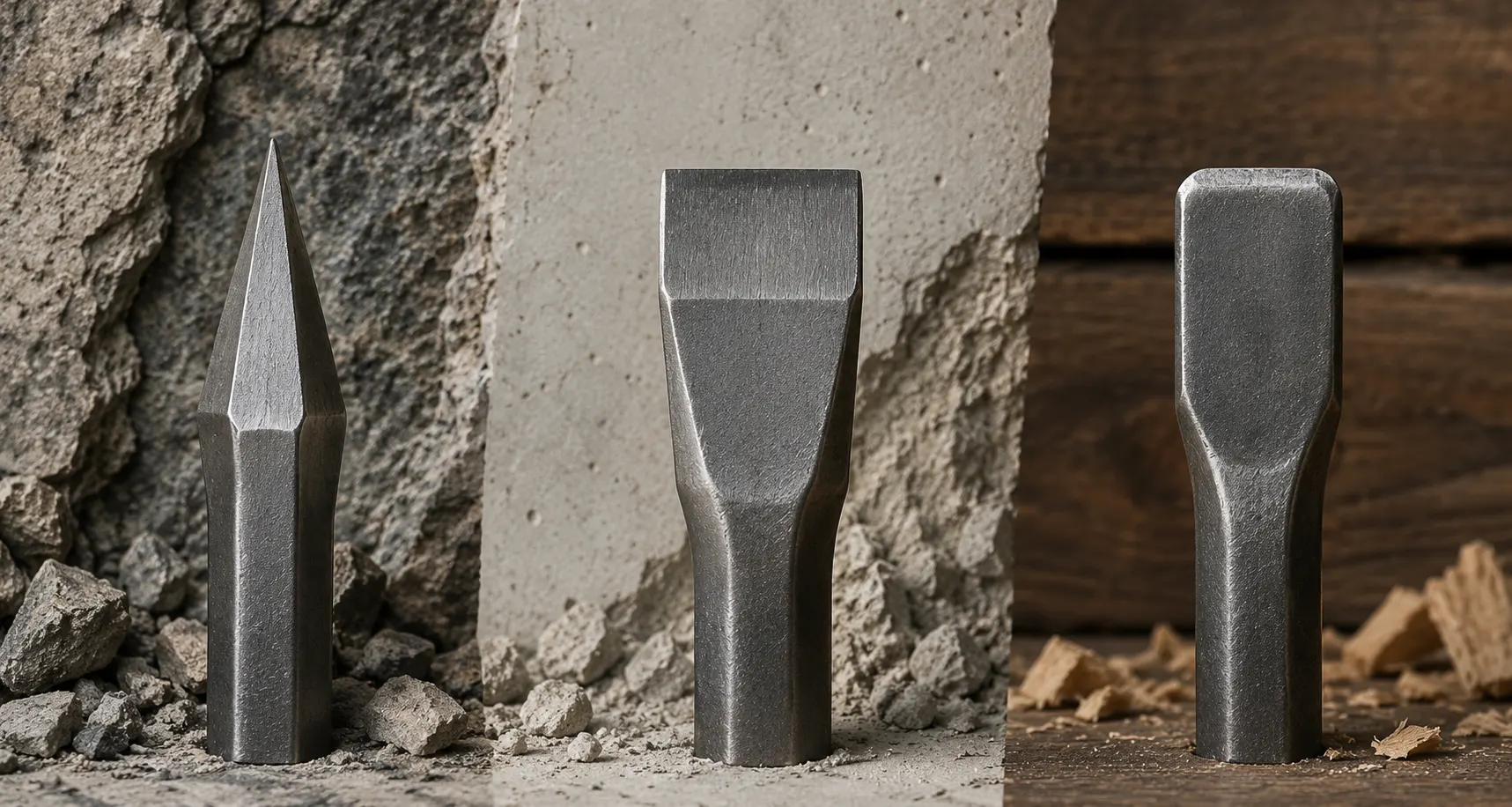
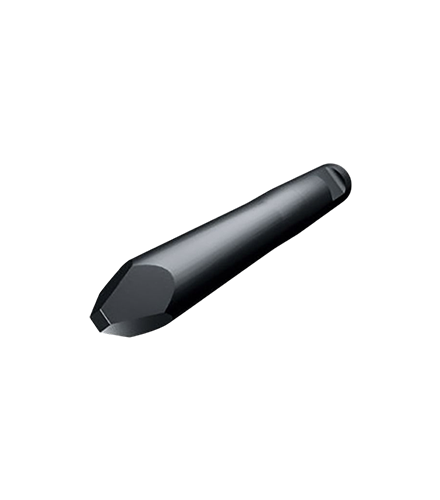
A moil point tool, also known as a rock breaker moil, is a pointed chisel designed for focused impact and deep penetration. It is commonly used for breaking extra-hard rock, reinforced concrete, and bedrock surfaces where surface impact alone might not be that much effective.
The Working Principle:
The working of a moil point tool starts from how it is mounted inside the hydraulic breaker.
When the breaker operates, the internal piston moves up and down at high speed and strikes the top of the moil tool repeatedly. This impact energy travels through the length of the tool and reaches the pointed tip.
At the tip:
- The pointed shape reduces the contact area with the surface
- This increases the impact pressure at a single point
- The energy is focused instead of being spread out
Because of this concentration of force, the tool is able to penetrate hard material instead of just hitting the surface.
DOZCO manufactures rock breaker tools in a wide range of sizes, with chisel diameters typically ranging from 40 mm to 240 mm. This allows you to match the tool accurately with different breaker models be it in light, medium, and heavy-duty machines.
What is a Flat Chisel Tool?
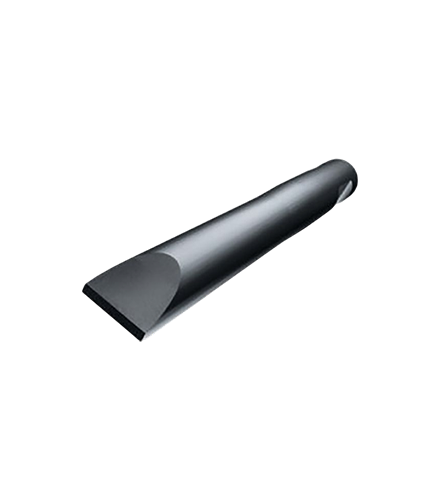
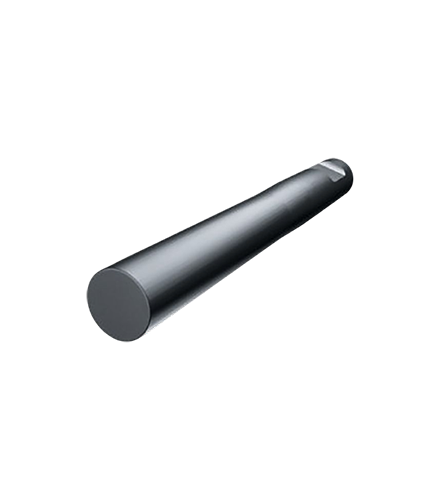
A flat chisel tool is a straight-edged breaker tool designed to apply impact over a wider surface instead of concentrating it at a single point. It is mainly used for applications where controlled breaking, cutting, or material separation is required, such as concrete, asphalt, or layered surfaces.
The Working Principle:
The working of a flat chisel begins with its installation inside the hydraulic breaker, where it is held in position by the tool retaining system and guided through bushes.
During operation, the breaker’s internal piston moves rapidly and strikes the head of the chisel in repeated cycles. The impact energy travels through the tool body and reaches the flat edge that is in contact with the material.
At the edge:
- The flat profile increases the contact area with the surface
- This reduces penetration and instead spreads the impact force across a line
- The energy is distributed along the edge rather than focused at a single point
Because of this, the flat chisel does not drive into the material. Instead, it breaks and separates it along the surface, making it suitable for cutting, trimming, and removing material in a controlled manner.
What is a Blunt Tool?
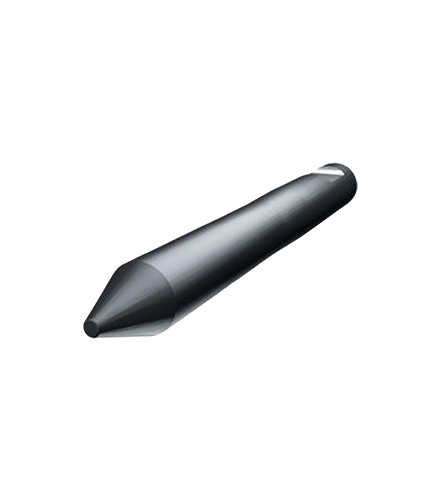
A blunt tool is a breaker tool with a flat or slightly rounded end, designed to hit a wider surface area instead of focusing on one point. It is mainly used when the material needs to be broken down or crushed or split apart, not penetrated.
This type of tool works best when the material is already cracked or loosened, so the impact can break it efficiently without unnecessary resistance.
The Working Principle:
When the blunt tool is attached to the breaker, it becomes the point that hits the material every time the machine strikes.
Rather than going inside the material like a pointed tool, the blunt tool:
- Hits a wider area at once
- Spreads the force across the surface
- Presses and breaks the material from the top
Due to this reason, it does not create deep cracks on its own. Instead, it uses existing cracks or weak spots and breaks the material into smaller pieces.
Moil Point vs Flat Chisel vs Blunt Tool: Technical Comparison
| Parameter | Moil Point | Flat Chisel | Blunt Tool |
|---|---|---|---|
| Tool Geometry | Conical / pointed tip | Straight cutting edge | Flat or convex end |
| Contact Area | Very small (point contact) | Linear contact | Large surface contact |
| Energy Transfer Type | Highly concentrated | Distributed along edge | Distributed across surface |
| Breaking Mechanism | Penetration + crack initiation | Shearing + splitting | Surface compression + crack propagation |
| Stress Type on Material | High localized stress | Linear stress distribution | Compressive stress over area |
| Best Material Condition | Hard, dense, uncracked rock | Layered or semi-hard material | Pre-cracked / fractured material |
| Stage of Operation | Primary breaking | Controlled / secondary breaking | Secondary / sizing |
| Penetration Ability | High | Moderate | Very low |
| Tool Wear Pattern | Tip rounding | Edge wear | Face flattening |
Final Thoughts
On many job sites, contractors use rock breaker tools interchangeably without considering their specific application or compatibility with the machine. This way they end up damaging the tool really faster than normal.
At DOZCO, we address this gap by designing OEM-compatible rock breaker tools for precise applications. With over 40 years of experience, we use high-grade materials, controlled heat treatment, and multi-stage quality checks which make sure the rock breaker attachments you use are of the highest quality.
Frequently Asked Questions
What are the 4 types of chisels?
The four common types of chisels used in hydraulic rock breakers are moil point chisels, flat chisels, blunt tools, and conical chisels. Each type is designed for specific applications such as breaking hard rock, trenching, demolition, or crushing oversized materials.
What is the difference between a point chisel and a flat chisel?
A point chisel concentrates impact force on a small area, making it ideal for breaking hard rock and concrete. A flat chisel spreads the impact across a wider surface, making it suitable for trenching, asphalt cutting, scaling, and controlled demolition work.
What Different Types of Chisels for Hydraulic Rock Breakers?
The main types of chisels for hydraulic rock breakers include moil point chisels, flat chisels, blunt tools, and pyramid or conical tools. The right choice depends on the material hardness, breaking application, and required precision.
How To Choose The Right Demolition Bit?
Choose the right demolition bit based on the material and application. Use a moil point for hard rock and concentrated breaking, a flat chisel for trenching and surface cutting, and a blunt tool for secondary breaking or crushing large rocks with lower wear.
How do I choose the right rock breaker tool?
You can choose the right tool based on the material and type of work. Use a moil point for hard rock, a flat chisel for cutting or concrete, and a blunt tool for breaking loose or cracked material.
How can I extend the life of my rock breaker tools?
You can extend the life of your rock breaker tools by:
- Keeping it properly lubricated
- Operating it at a 90° angle to the material
- Avoiding blank firing
- Regularly inspecting the tool for tip or edge wear
Why is my rock breaker tool not breaking efficiently even when it is new?
This usually happens due to incorrect tool selection. DOZCO manufactures OEM-compatible rock breaker tools which suit every rock breaking application.