

 ">
">

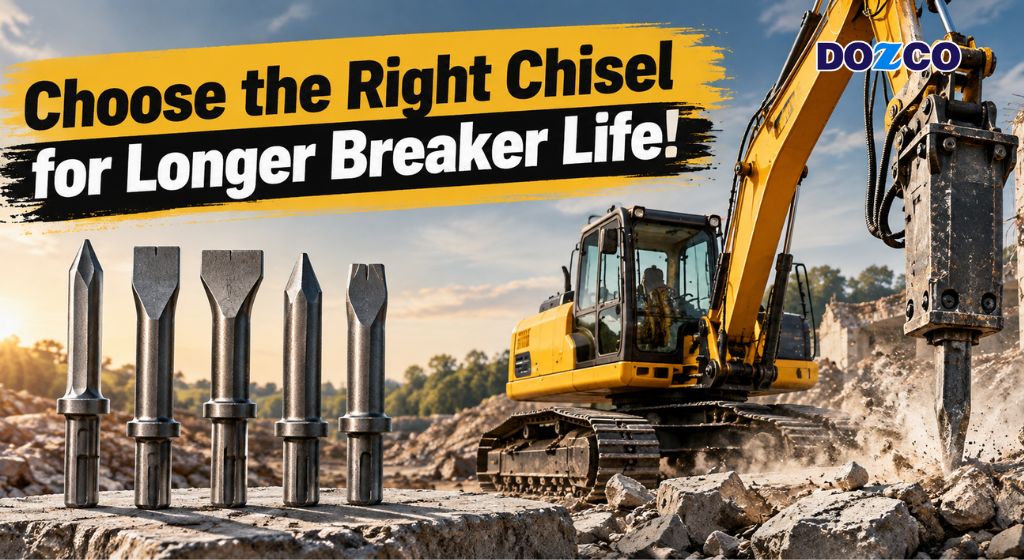
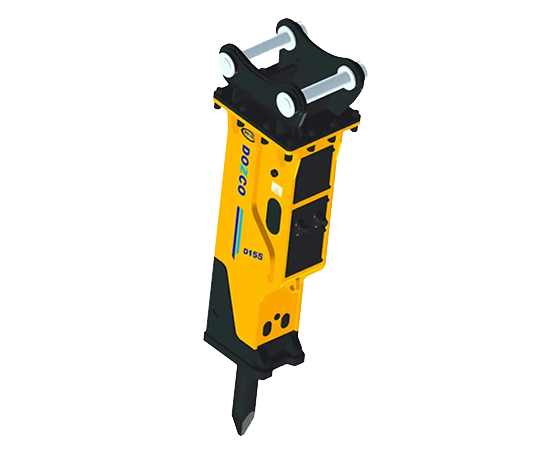
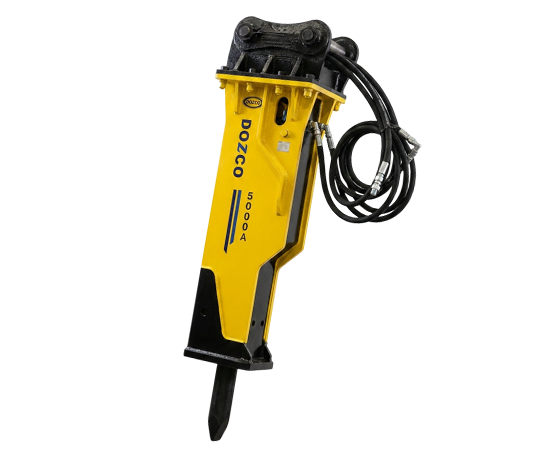
A rock breaker does the breaking, but the chisel takes the impact into the material. Its profile determines how that force is applied to rock, concrete, pavement or a block. Using the wrong tool can mean poor penetration, faster wear or unnecessary stress on the breaker.
The choice becomes more important as the material and application change. A tool used for trenching does not perform the same job as one used for quarry breaking, just as a pointed moil tool and a blunt tool are not designed to work in the same way.
In this blog, we look at the main hydraulic rock breaker chisels types, what causes a chisel to lose productivity, how to select the right tool, and the operating conditions that affect its service life.
What Does a Chisel Do?
The chisel sits between the hydraulic breaker and the material. The breaker generates the impact, and the tool transfers that force through its working end.
Its shape determines where and how that force is concentrated. That is why choosing a chisel for rock breaker work starts with the material and the type of breaking required.
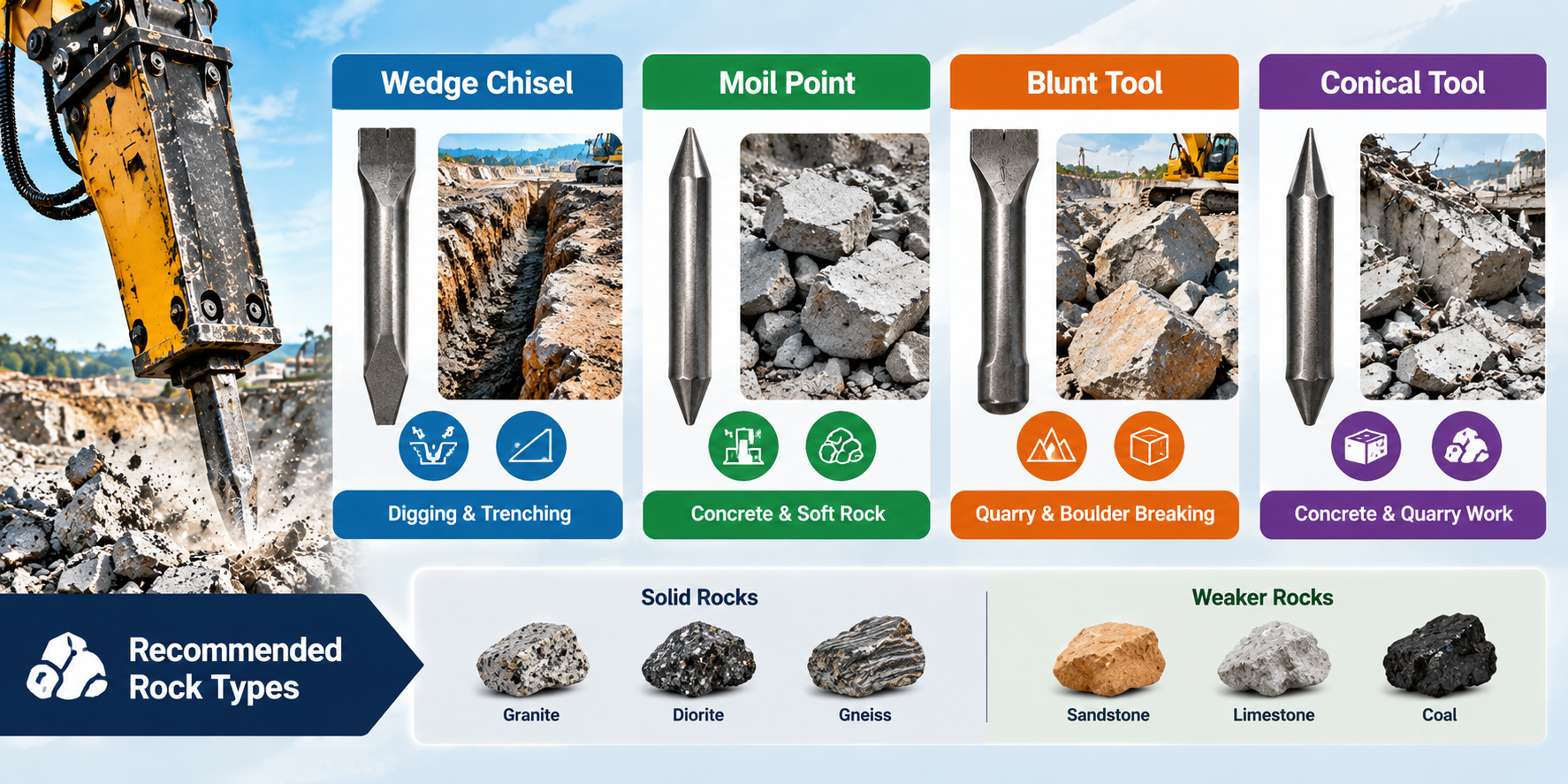
Types of Chisels:
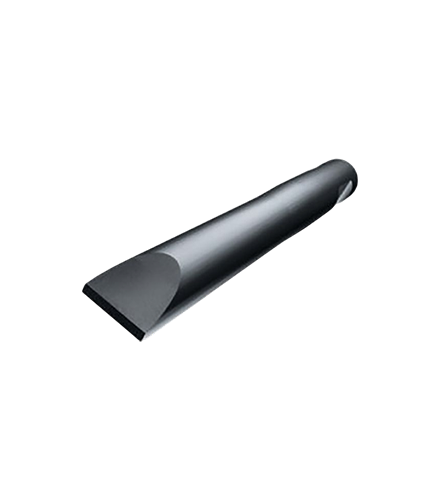
Wedge Chisel
A wedge tool is used for digging and narrow trenching in soft to medium stratified rock. It is also suited to slope and finishing work. There are four common types of rock breaker tools:
Moil Point
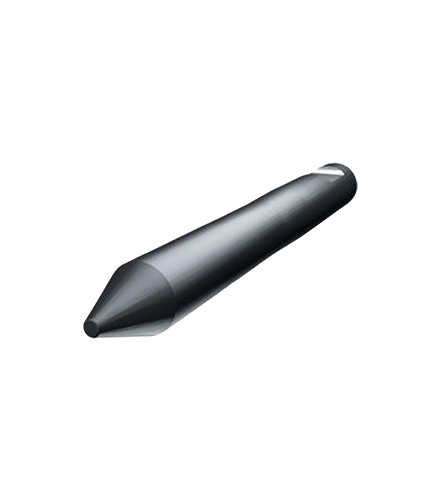
A moil point is designed around penetration. It is used for fine and medium concrete demolition, soft non-stratified rock and secondary mining of soft to medium-hard blocks.
Blunt Tool
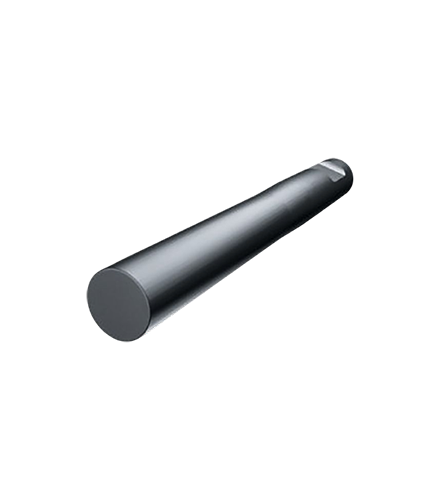
A blunt tool is used where the objective is to break or reduce blocks rather than drive a narrow point deep into the material. Its applications include quarry work, boulder breaking, concrete and slabs.
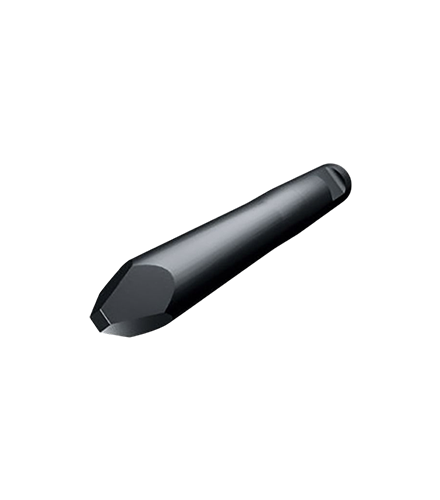
Conical Tool
A conical or pyramid tool is designed for nonabrasive materials where a high penetration rate is useful. Concrete is one of its main applications, along with primary and secondary quarry breaking.
These four profiles cover different working conditions. Solid rocks such as granite, diorite and gneiss are recommended for blunt and wedge tools, while weaker rocks such as sandstone, limestone and coal can also be worked with a moil point.
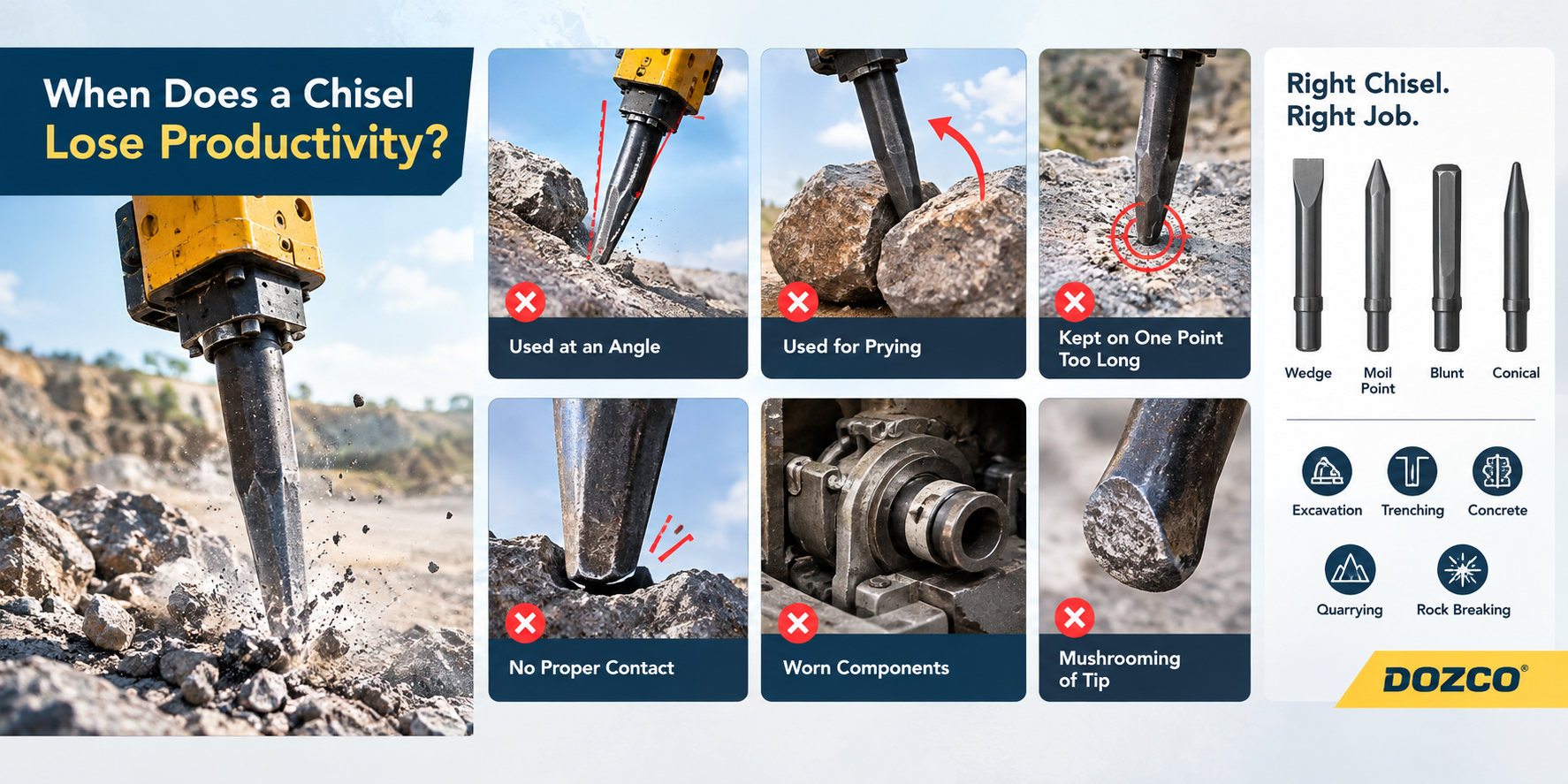
When Does a Chisel Lose Productivity?
A chisel can lose productivity well before it breaks. Changes in the way the tool penetrates, the time needed to break the same material, or the amount of wear at the tip can indicate that something is wrong.
The Chisel Is Used at an Angle
The breaker should work with the chisel properly aligned against the material. Working at an angle creates side loading and prevents the impact force from being transferred efficiently into the material.
Repeated angled impacts can also contribute to uneven wear and tool damage.
The Chisel Is Used for Prying
A breaker chisel is designed to withstand impact, not to act as a lever. Prying, bending, pushing or pulling the tool while it is engaged puts additional stress through the working section.
This can lead to bending or breakage and reduces the useful working life of the tool.
The Breaker Is Kept on One Point Too Long
A breaker does not become more productive simply by continuing to hit the same point. Once the material stops responding effectively, continued impact can generate unnecessary heat and accelerate tool wear.
The Tool Does Not Have Proper Contact
The chisel needs firm contact with the material before the breaker is activated. Poor contact can result in blank firing or a hollow strike, where the piston and tool experience an abnormal impact.
This can damage the chisel as well as components inside the breaker.
The Breaker Components Are Worn
A chisel does not work in isolation. Worn bushes, a worn retainer pin, or excessive wear in the front head can affect how the tool is supported during operation.
The result can be uneven loading, abnormal wear, and eventual tool failure.
The Tool Tip Starts Mushrooming
Mushrooming happens when the chisel tip becomes wider and deformed under repeated impact. This can occur when the tool is used on hard rock for too long or when excessive impact is applied at one point. As the tip changes shape, breaking performance can drop and the tool can wear faster.
At DOZCO, we see correct tool selection and correct operation as two parts of the same equation. Our range includes different working profiles for excavation, trenching, concrete, quarrying and rock breaking, so the tool can be matched to the material and application rather than being used as a one-profile-fits-all solution.
DOZCO Warranty Terms: Why Choose DOZCO Rock Breaker Tools?
Most operators worry about what happens when a rock breaker tool fails. Repair and replacement costs can add up quickly, and a warranty claim is only useful when the failure is covered.
DOZCO’s warranty terms are one of the things that set our rock breaker tools apart. We distinguish between failures caused by manufacturing defects and damage resulting from operating conditions.
You can make a warranty claim for your rock breaker tool under the following conditions:
Fatigue Starts Inside the Tool
A fatigue point that originates from inside the tool material, rather than from the outer surface, can be accepted as a warranty claim. This type of failure is generally associated with a material defect.
Manufacturing Defect
Certain internal defects caused during the steel-making process can lead to failure after heat treatment. The warranty terms identify breakage patterns associated with internal air bubbles and related material defects as accepted cases.
The Tool Bends Due to Heat-Treatment Issues
If the tool bends because of inadequate heat treatment while its hardness and toughness characteristics indicate a material-related issue, the failure can qualify for warranty acceptance.
**NOTE: Warranty claims do not apply to damage caused by operator error, improper handling, incorrect breaker operation, misalignment, excessive side loading, or any other operator-induced or man-made damage.
Wrapping Up
The selection process of a hydraulic rock breaker chisel is ultimately a matter of matching the working tool to the job and knowing what can shorten its service life. The profile, material, operating conditions, and condition of the breaker all have a bearing on how the tool performs in the field.
If you are still using the wrong rock-breaking tool for your job site, STOP! Contact us today and let our team help you choose the right tool for your breaker and application.
FAQs
How do I choose the right chisel for a hydraulic rock breaker?
Choose the chisel based on the material and application. Wedge, moil point, blunt, and conical tools are designed for different breaking conditions, so the same profile may not be suitable for every job.
What is the difference between a moil point and a chisel?
A moil point is one type of working tool used with a hydraulic breaker. Its pointed profile is suited to applications where penetration is important, while “chisel” is commonly used as a broader term for breaker working tools.
What causes a rock breaker chisel to wear quickly?
Incorrect alignment, excessive side loading, prying, blank firing, poor contact with the material, prolonged impact at one point, and worn breaker components can all contribute to premature chisel wear or failure.
Does DOZCO provide warranty coverage for rock breaker tools?
Yes. DOZCO accepts warranty claims for certain manufacturing and material-related defects, including internal fatigue and specific steel-making or heat-treatment defects.
Any damage caused by incorrect operation or operator-induced conditions is excluded.