

 ">
">

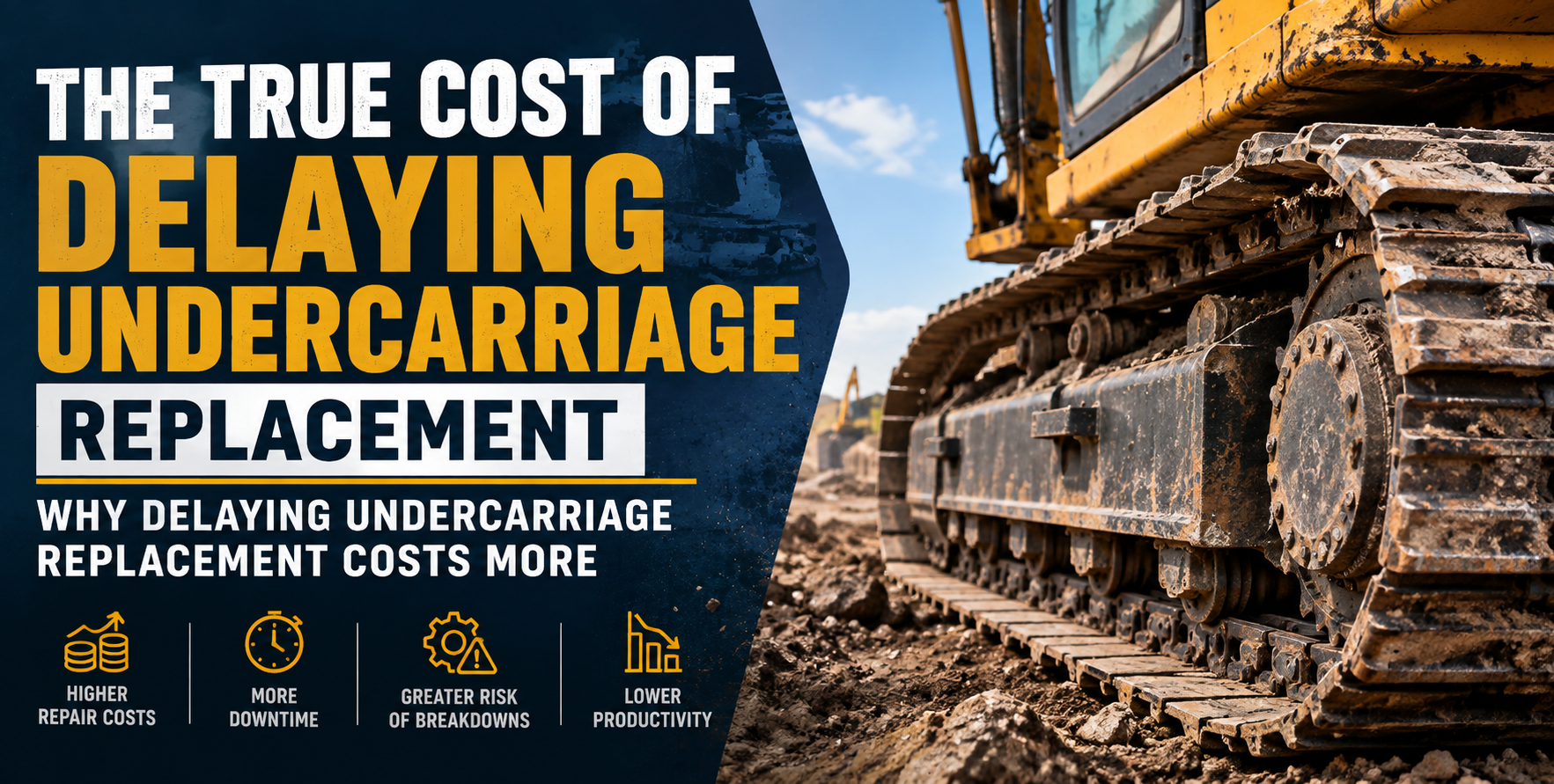
On most job sites, Undercarriage wear doesn’t become a concern until something starts going wrong. The machine feels heavier to move, the tracks aren’t functioning that smooth, as a result of which maintenance costs start creeping up. But by the time these signs show up, the damage has already been built for a while now.
In places like Australia, where machines mostly have to work in dry, dusty ground and high temperatures, this wear builds up faster than expected. Fine dust gets into moving parts, heat builds up through constant operation, and together they slowly start affecting how the undercarriage performs.
It’s not one big failure, rather it’s a gradual process. And if you don’t understand what’s causing it, it becomes difficult to take the precautionary measures to control it.
This is why it’s important to look closely at how dust and heat actually affect excavator undercarriage parts, and what that means for day-to-day operation on site.
What’s Really Happening Underneath the Machine
The undercarriage is the most load-intensive part of the excavator. It supports the full machine weight and enables controlled movement across different ground conditions.
Components such as track chains, rollers, idlers, sprockets, and track shoes operate as a single system. During operation, they remain in constant contact with both the ground and each other, handling load transfer, friction, and repeated impact.
For this system to function efficiently, certain conditions must remain stable. Track tension needs to be correctly set for the working surface, sealed joints must retain lubrication and prevent contamination, and rollers and idlers must rotate freely without obstruction.
When these conditions are maintained, the system remains balanced. Lubrication controls friction, components stay aligned, and wear progresses at a predictable rate.
However, this balance is sensitive to operating conditions. When dust enters the system or heat builds during operation, lubrication efficiency reduces and contact stresses increase. This leads to higher friction, unstable component interaction, and faster wear across critical undercarriage parts.
Over time, this directly impacts machine performance, increases maintenance frequency, and raises operating costs.
How Dust Damages Excavator Undercarriage Parts
Dust is a constant presence on most job sites, especially in dry and abrasive conditions. Here are some common things that happen on a dusty construction site:
Abrasive wear at pin and bushing joints
Pin and bushing joints are among the most critical load-bearing components in the undercarriage system. They are also the most vulnerable to contamination in dusty conditions.
These joints are designed to retain internal grease while keeping external particles out. However, on sites with fine abrasive material, such as mining and quarrying environments across Australia, dust gradually breaks the resistance power of the seals—especially when the seals are already worn or maintenance intervals are extended.
Once the joint gets contaminated, every movement of the track chain causes the pin and bushing surfaces to wear against each other. This leads to pitch elongation, where the distance between link pins increases as internal material wears down.
As this wear progresses, the track chain no longer engages the sprocket correctly. This places additional stress on the bushings, accelerates sprocket tooth wear, and creates a cycle of increasing damage across the system.
Roller and idler seal failure
Rollers and idlers depend on sealed lubrication to work properly. These seals keep the lubricant inside and prevent dust and debris from entering the component.
In dusty conditions, fine particles collect around the seal area and slowly wear it down. Once the seal is damaged, lubricant starts leaking out and contaminants begin to enter.
From that point, the internal parts run without proper protection. Friction increases and wear speeds up. One of the first visible signs is oil leakage at the ends of the roller or idler. Even if it looks minor, it usually means the seal has already failed and internal damage has started.
Soil packing and its effect on track tension
In many working conditions, especially where dust mixes with moisture, material starts to build up inside the undercarriage.
This buildup affects the system in two main ways:
- First, it restricts normal movement of components, leading to uneven load distribution across the track system.
- Second, it changes track tension without any manual adjustment.
In such cases, the undercarriage often behaves like it is over-tensioned. This increases contact stress on pins, bushings, links, and sprocket teeth, causing them to wear faster than normal.
That’s why keeping the undercarriage clean is not just a routine task. It directly helps maintain correct track tension and reduces unnecessary wear on critical components.
How Heat Damages Excavator Undercarriage Parts
Heat in the undercarriage system comes from two main sources. The first is internal friction, generated wherever components move against each other—such as in pin and bushing joints, roller assemblies, and sprocket contact areas.
The second source is external. In high-temperature environments, ground heat transfers directly into the undercarriage through continuous contact with the surface.
Let us see what kind of damage heat causes to your excavator undercarriage parts.
Lubrication loses its effectiveness
As temperature increases, lubricants lose viscosity and their ability to maintain a stable protective film between metal surfaces. This reduces their capacity to absorb friction and dissipate heat. As a result, moving components experience more direct contact, leading to higher friction and faster wear within joints, rollers, and contact zones.
Seal hardening
Continuous exposure to heat causes seals to gradually lose their flexibility and resilience. Once hardened, these seals can no longer maintain a tight barrier, making it easier for lubrication to escape and for contaminants to enter. This weakens the internal protection of components and increases the risk of internal wear and damage.
Dry joints
When lubrication is lost due to seal failure or excessive heat, pin and bushing joints start operating without proper protection. Without this lubrication layer, metal surfaces come into direct contact, increasing friction within the joint.
This higher friction generates additional heat during movement, which further accelerates wear on the internal surfaces.
As a result, the track chain starts losing its efficiency and their service life also gets shortened.
Uneven heat buildup across components
Heat does not distribute evenly throughout the undercarriage. Areas that carry higher loads, such as sprocket contact zones and idler regions, tend to retain more heat during operation. This uneven distribution creates localized stress points, where certain components wear faster than others.
DOZCO Undercarriage Parts Are Made for Such Australian Conditions
At DOZCO, we have been manufacturing excavator and dozer undercarriage parts since 1983, supporting the mining, construction, and earthmoving industries across Australia for over four decades now. All our parts are OEM-compatible with an assurance given on fitment and interchangeability.
Our undercarriage parts are manufactured using virgin Indian steel with advanced heat treatment applied to critical wear surfaces. Heat-treated components resist abrasive wear more effectively and maintain their geometry longer in the kind of high-dust and high-heat conditions that Australian sites are constantly exposed to.
Moreover, our roller and idler assemblies are built with lifetime seals, because seal integrity is the most important factor in keeping contamination and heat out of the joint. Every component is tested at each stage of manufacturing to OEM standards, ensuring that the parts arriving on site are built to perform in the conditions they will actually face.
DOZCO is ISO 9001:2015 certified and supplies warranty-backed undercarriage parts compatible with a wide range of excavators and dozers operating across Melbourne, Sydney, Perth, and throughout Australia.
Wrapping Up
Dust and heat are part of everyday conditions on most Australian job sites. They don’t damage undercarriage parts all at once, but slowly increase wear as the machine keeps working.
Simple things like maintaining the right track tension, cleaning the undercarriage, avoiding unnecessary high-speed movement, and checking the machine regularly can make a big difference. When you do these things properly and use good-quality parts, the undercarriage lasts longer and performs more reliably project after project.
Frequently Asked Questions
How can I tell if dust has already started affecting the undercarriage?
Ans. You’ll usually notice small changes first, like rough track movement, unusual noise, or slight oil leakage from rollers and idlers. These signs often mean dust has already entered and wear has begun.
Does heat really make that much difference to undercarriage wear?
Ans. It absolutely does! Heat reduces the effectiveness of lubrication and can harden seals over time. This increases friction between components and speeds up overall wear.
Can wrong track tension increase damage in dusty conditions?
Ans. Yes, it can. When the track is too tight, it puts extra pressure on key components. If dust is already present, this added stress makes the wear process even faster.
Is cleaning the undercarriage really necessary that often?
Ans. In dusty or mixed soil conditions, yes. Material buildup can affect movement and change track tension. Regular cleaning helps keep everything working as it should.
Why are seals so important in undercarriage parts?
Ans. Seals protect the internal components by keeping grease intact and the dust out. Once they start failing, contamination increases and the internal wear also takes place at a faster rate.