

 ">
">

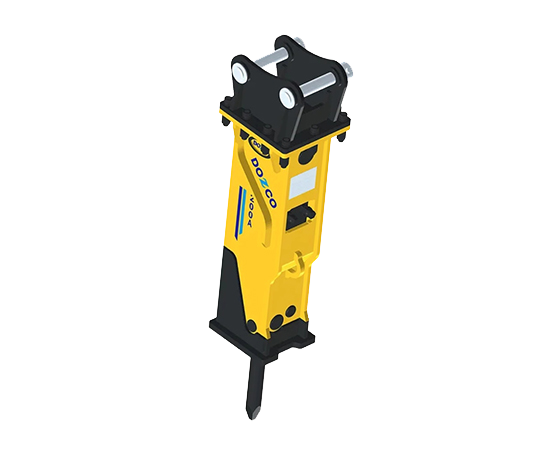
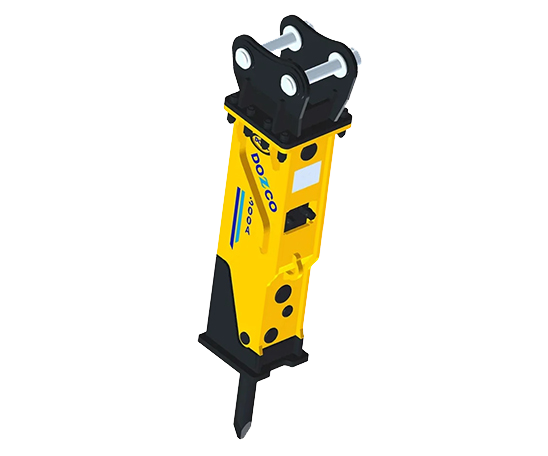
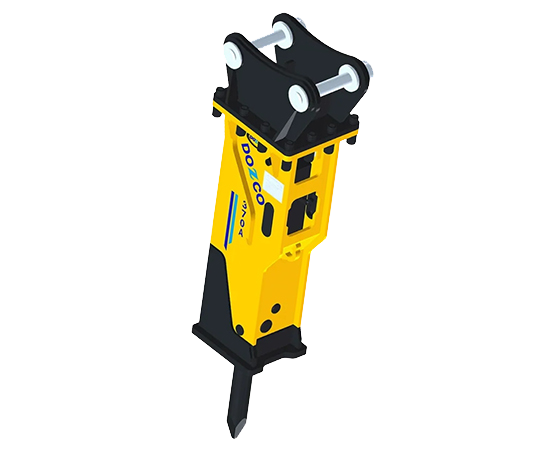
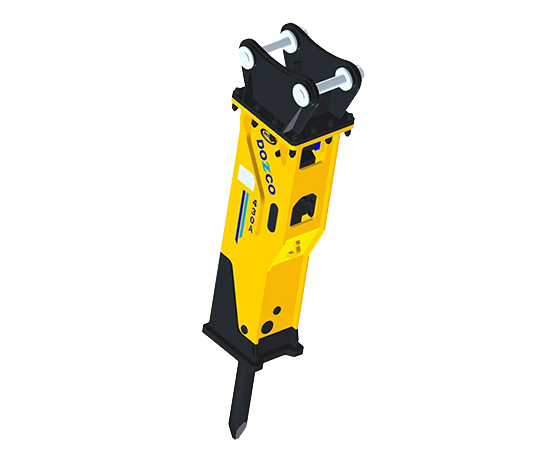
Rock Breakers are used across demolition, quarrying, and infrastructure projects. When a breaker attachment stops performing the way it should, the first reaction is to suspect a mechanical failure. However, in many cases the problem starts much earlier, with the way the equipment is being used on site. Attachments such as a hydraulic Rock Breaker operate under extreme impact loads, and even small operating mistakes can place unnecessary stress on internal components.
In our 40+ years of experience, DOZCO has seen that most failures in a hydraulic hammer are not caused by manufacturing defects. Instead, they usually occur when the attachment is operated beyond its intended working conditions.
Operators sometimes treat a Rock Breaker like a general-purpose attachment. When this happens, the breaker has to work in conditions that it was never designed to handle. This leads to unnecessary wear, reduced breaking efficiency, and unexpected downtime.
So, here is an article that explains the common operator mistakes that can damage a hydraulic breaker and how they affect equipment performance.
How Do Hydraulic Breakers Transfer Impact Energy?
To understand why operating mistakes can damage equipment, it is important to first understand how a hydraulic Rock Breaker generates and transfers impact energy.
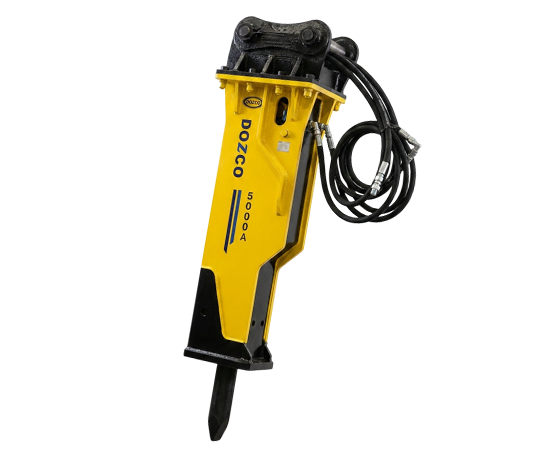
A hydraulic breaker uses pressurized oil supplied by the excavator’s auxiliary hydraulic circuit. This hydraulic oil powers the piston inside the breaker cylinder. As the piston accelerates, it strikes the tool steel with a high impact force. The energy from this impact then travels through the tool and transfers directly into the rock or concrete surface, allowing the material to fracture.
During this process, several internal components work together to manage the repeated impact loads. Parts such as the piston, tool bushings, front head, and retaining systems guide the tool movement and absorb continuous shock and vibration generated during breaking operations.
For the breaker to operate efficiently, certain operating conditions must remain stable:
- The excavator must supply correct hydraulic oil pressure and flow to maintain uniform piston movement
- The tool must remain in firm contact with the material surface so that impact energy transfers efficiently
- The breaker must remain properly aligned with the material so that the force travels directly through the tool
If these conditions are not maintained, the impact energy cannot transfer effectively into the material. Instead, part of the energy travels back into the breaker structure, which increases wear on critical internal components such as:
- Tool bushings
- Retaining pins
- Piston and cylinder assembly
- Front head housing
- Accumulator components
Common Hydraulic Breaker Operator Mistakes We See in the Field
While working with contractors across demolition, mining, and quarrying sites, we have repeatedly observed that most hydraulic breaker failures are linked to operating habits rather than mechanical defects.
Below are some of the most common operator mistakes that lead to premature wear and equipment damage.
1. Insufficient Tool Lubrication
The tool steel in a hydraulic breaker moves continuously within the front head bushings during operation. This repeated motion generates friction between the tool and the guiding surfaces.
Proper lubrication minimises friction and prevents direct metal-to-metal contact.
When lubrication is insufficient, the following issues can occur:
- Premature wear of tool bushings
- Tool seizure inside the front head
- Increase in operating temperature
- Damage to retaining pins
In dusty demolition environments, the problem becomes more severe, as abrasive particles can enter the tool area and accelerate wear in the absence of proper lubrication.
At DOZCO, we emphasize on correct greasing practices. As a routine practice, we recommend greasing the breaker at regular intervals, normally after every 2 hours of operation through the front head grease nipple. Always keep in mind that your greasing schedule is also based on the site conditions.
2. Blank Firing the Breaker
Blank firing occurs when the hydraulic hammer strikes without sufficient resistance from the material. In normal operation, the rock or concrete absorbs the impact energy generated by the piston. However, when the tool is not firmly pressed against the material, the impact energy has nowhere to go.
This situation usually occurs when:
- The tool loses contact with the surface during operation
- The rock or concrete has already fractured but hammering continues
- The breaker is activated before the tool touches the material
When blank firing happens, the impact energy travels back through the tool into the breaker body instead of transferring into the material. This creates strong internal shock loads.
Repeated blank firing can lead to:
- Damage to the piston surface
- Cracks in the front head assembly
- Accelerated wear of tool bushings
- Stress on tie rods and other housing components
For example, if an operator continues hammering after the rock has already broken, the tool momentarily loses resistance. Even a few seconds of blank firing under these conditions can place severe load on the internal parts of the hydraulic rock breaker.
To control such no-load operating conditions, DOZCO breakers are equipped with an Anti-Blank Firing (ABF) system. The ABF system is designed to detect the absence of sufficient resistance at the tool tip and restrict hammering when proper contact is not maintained.
3. Applying Side Load on the Tool
A rock breaker is engineered to apply impact force in a vertical direction. The tool must remain aligned with the material surface so that the force travels straight into the rock or concrete.
However, operators sometimes apply sideways pressure while trying to pry rocks or move broken material. This introduces lateral forces that the breaker structure is not designed to handle.
Side loading commonly occurs when:
- The breaker is used to shift rocks or debris
- The excavator arm moves sideways while the breaker is engaged
- The operator drags the tool across the material surface
As a result, the breaker may experience:
- Bent or damaged tool bits
- Rapid wear of tool bushings
- Cracks in the lower housing
- Misalignment of internal components
To avoid this, we always recommend keeping the tool as straight as possible—ideally at 90 degrees to the surface. Start breaking from the edges and move inward, instead of focusing on one spot.
If the material doesn’t break within a few seconds, it’s better to reposition the tool rather than continue hammering in the same place. This keeps the load controlled and helps protect the breaker from unnecessary stress.
4. Continuous Hammering in One Position
Another situation we often observe on job sites is operators hammering the same spot for an extended duration. This usually happens when the material does not break after a few impact cycles, and the operator continues striking the same location in an attempt to force a fracture.
However, this approach rarely improves breaking performance. When the material does not fracture after repeated impacts, it generally indicates that the energy is not being transferred effectively into the material.
Prolonged hammering in one position can lead to:
- Heat buildup inside the breaker housing
- Faster wear of the tool steel
- Fluctuations in hydraulic pressure
In such cases, slightly repositioning the breaker and creating multiple impact points helps improve energy transfer and overall efficiency.
As a standard operating practice, DOZCO recommends avoiding continuous hammering at one spot for more than 30 seconds. This will cause overheating. That is why we suggest you to reposition the tool so that you do not compromise on work efficiency.
5. Incorrect Hydraulic Flow
Every hydraulic rock breaker is engineered to operate within a defined oil flow (LPM) and pressure (bar) range, based on its internal piston design and energy transfer cycle. Deviation from these parameters leads to improper breaker performance and component stress.
Incorrect conditions typically occur when the breaker is not matched with the excavator’s hydraulic capacity or when flow and pressure settings are not calibrated as per the breaker specifications.
When oil flow exceeds the recommended range, the breaker cycles at a higher frequency. This results in incomplete piston stroke, reducing effective impact energy while increasing return shock and internal loading.
When oil flow is below the required range, the breaker operates with insufficient energy input, leading to:
- Low impact force
- Irregular or unstable piston movement
- Poor breaking efficiency
Similarly, incorrect pressure settings can affect impact consistency and place additional stress on seals, valves, and internal components.
At DOZCO, we recommend you to select the rock breaker based on the excavator’s carrier tonnage and hydraulic flow as this will prevent unnecessary stress on internal components in the long run.
Why Choose DOZCO Hydraulic Breakers?
At DOZCO, we have been leaders in the manufacturing sector since 1983. With over four decades of experience, we have mastered the craft of engineering rock breakers, attachments, and spare parts. Our products are designed to be as reliable and durable as possible, setting the industry benchmark for both longevity and ease of operation.
Our hydraulic rock breakers are specifically engineered to handle high-impact loads and demanding ground conditions. Manufactured in ISO-certified facilities using high-strength materials and precision-machined components, they ensure dependable performance in even the most heavy-duty breaking applications.
Wrapping Up
A hydraulic breaker operates under extreme mechanical stress. When it is used properly, it performs well in demolition and quarry work.In many cases, issues like internal wear or reduced efficiency are not due to the equipment itself, but how it is handled on site.
At DOZCO, we manufacture hydraulic rock breakers with this in mind—focusing on designs that can handle demanding applications while maintaining stable performance under controlled operating conditions. This is where the difference is often seen over time, especially in terms of wear, downtime, and overall output.
Contractors who follow correct operating practices and carry out regular checks will gain more consistent performance, lower maintenance interruptions, and better long-term value from their breaker attachment.
Frequently Asked Questions
How Anti Blank Firing serves as an advantage?
Ans. Anti-Blank Firing (ABF) stops the breaker from hitting when the tool is not properly pressed against the material. This prevents impact force from going back into the machine, reduces stress on parts, and helps increase the life of the breaker.
Can side loading damage a hydraulic rock breaker?
Ans. Yes. Side loading occurs when the breaker is used at an angle instead of straight. This puts pressure on the tool and internal parts, which can lead to faster wear or breakage.
How often should a hydraulic breaker be lubricated?
Ans. A hydraulic breaker should be lubricated regularly during operation. In most cases, grease is applied every few hours to reduce friction and protect the tool and bushings.
Why does a hydraulic breaker stop performing properly during operation?
Ans. Performance issues can occur due to poor lubrication, wrong hydraulic settings, worn tools, or incorrect operating practices. Regular checks help prevent these problems.