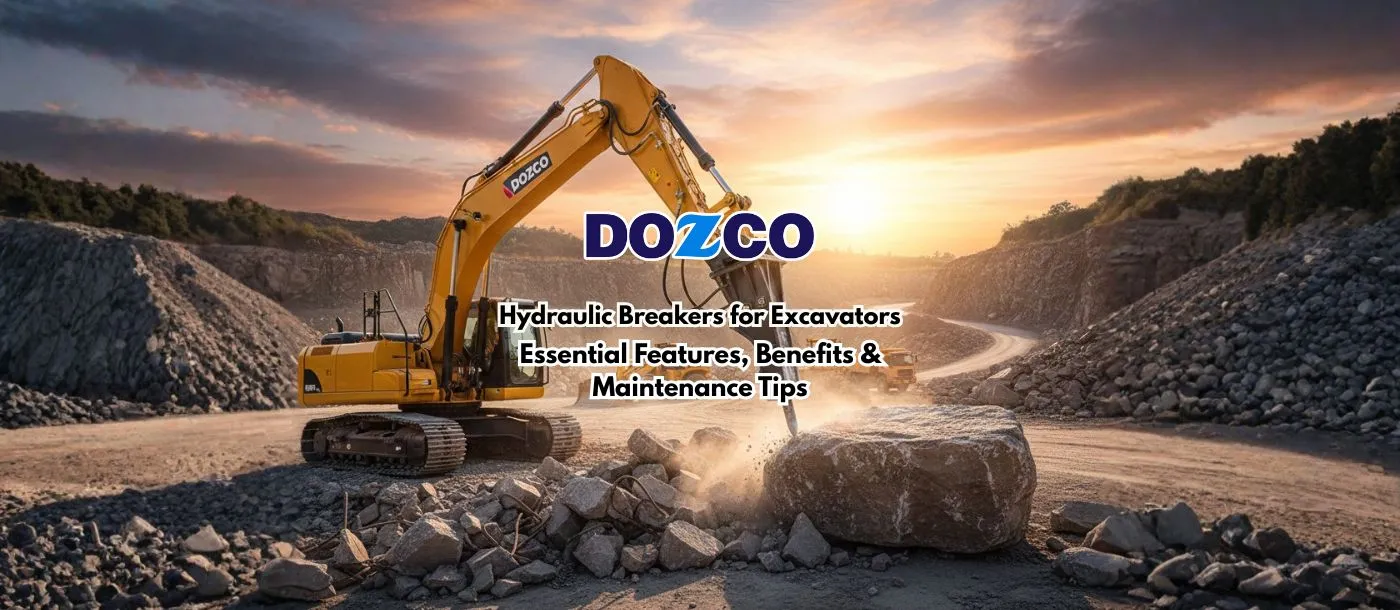

Hydraulic Breakers for Excavators: Essential Features, Benefits & Maintenance Tips
 ">
">
- Last Modified: 26 Feb 2026
-
Priyankar Das


Hydraulic breakers have become a core attachment for excavators across construction, mining, quarrying, and demolition sites. These powerful attachments break reinforced concrete, trench through rock, and reduce oversized boulders.
However, operators still have to deal with breakdowns, productivity losses, and warranty issues when using hydraulic breakers for excavators. Surprisingly, it is not always because the breaker is built with locally-sourced material. It’s due to a lack of knowledge about how to use its features and its maintenance schedule.
Hydraulic breakers can boost the productivity of a work site multiple times when used correctly and maintained well. It delivers consistent impact energy, protects the carrier machine, and keeps operating costs under control. In this article, we will explore the features of a hydraulic breaker, how these features help in harsh environments, and the maintenance tips to keep using the attachment for a long period of time.
Essential Features of Hydraulic Breakers
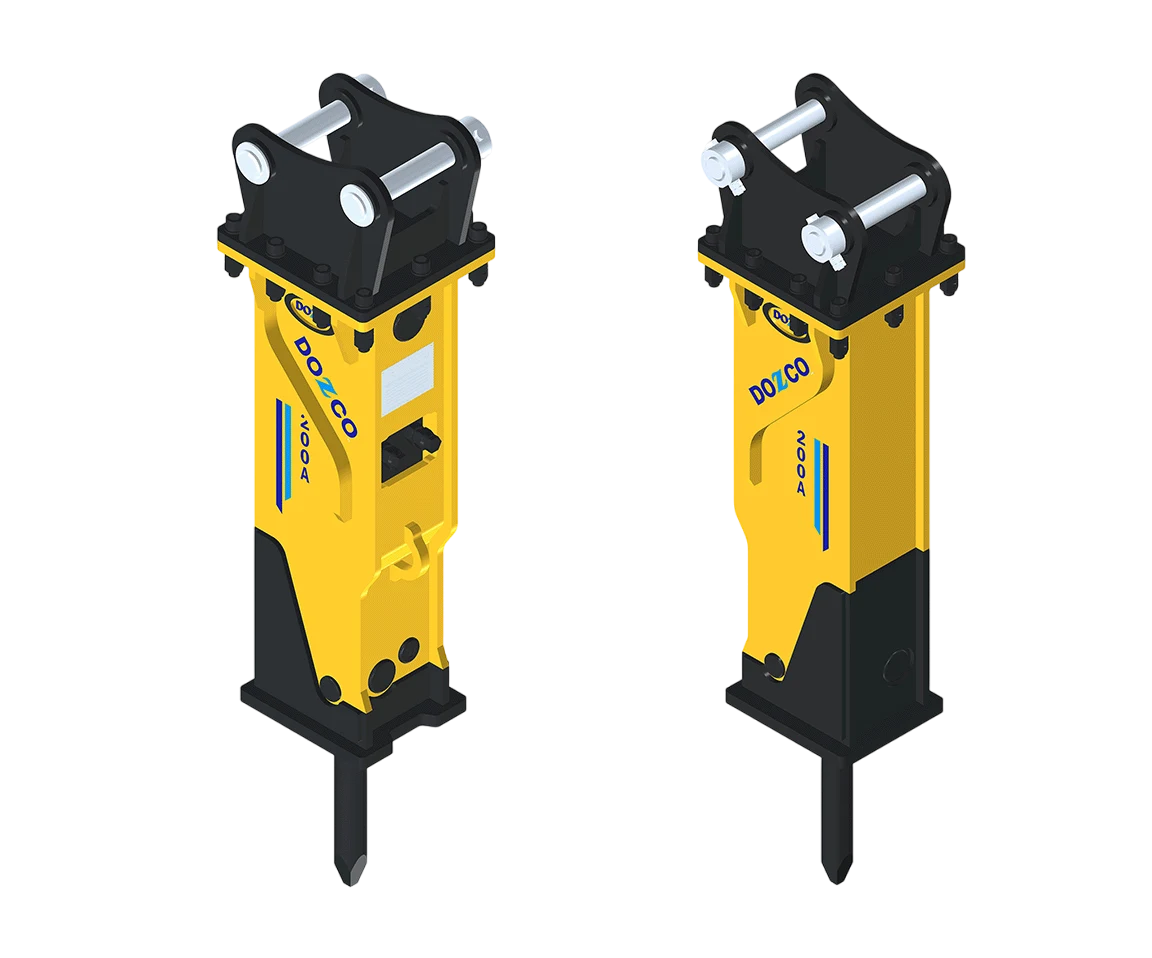
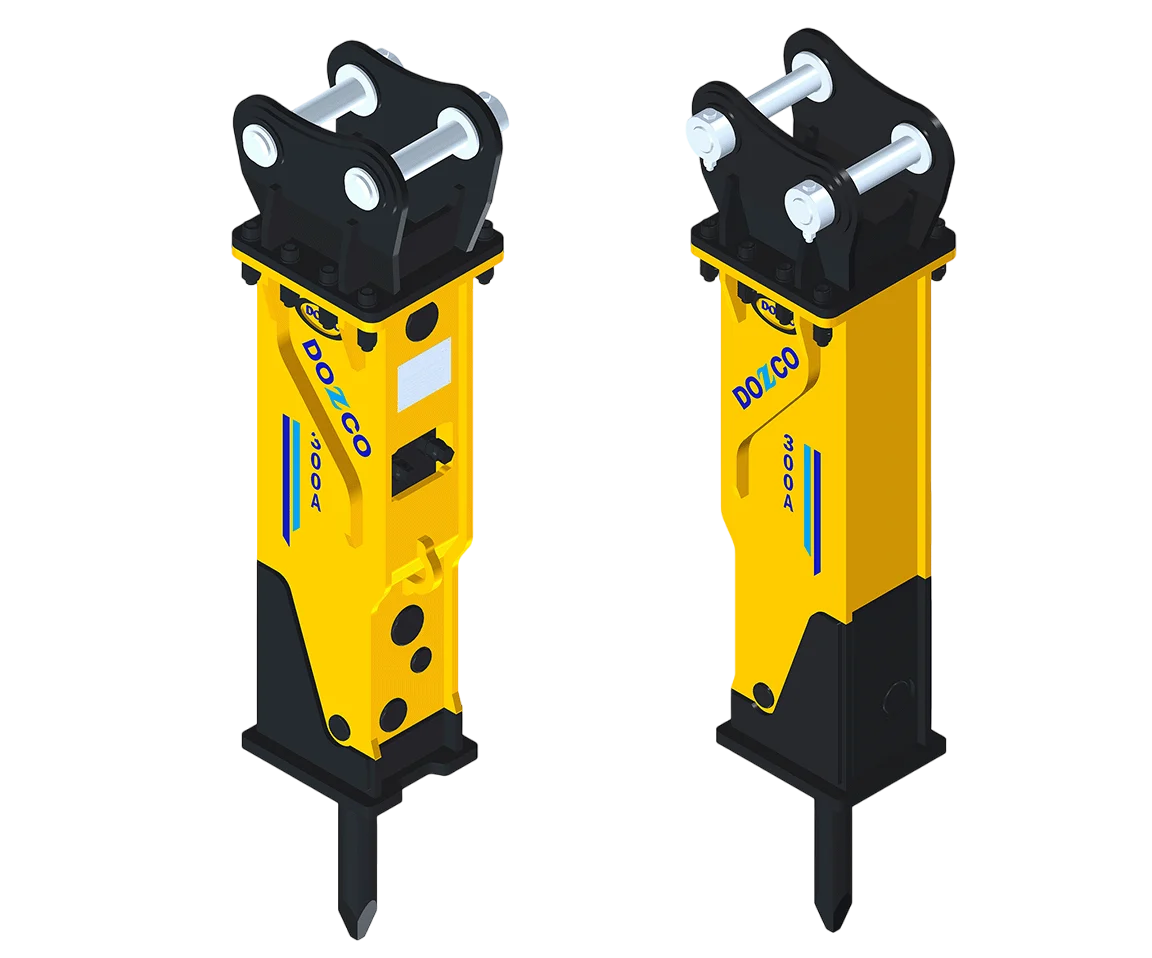
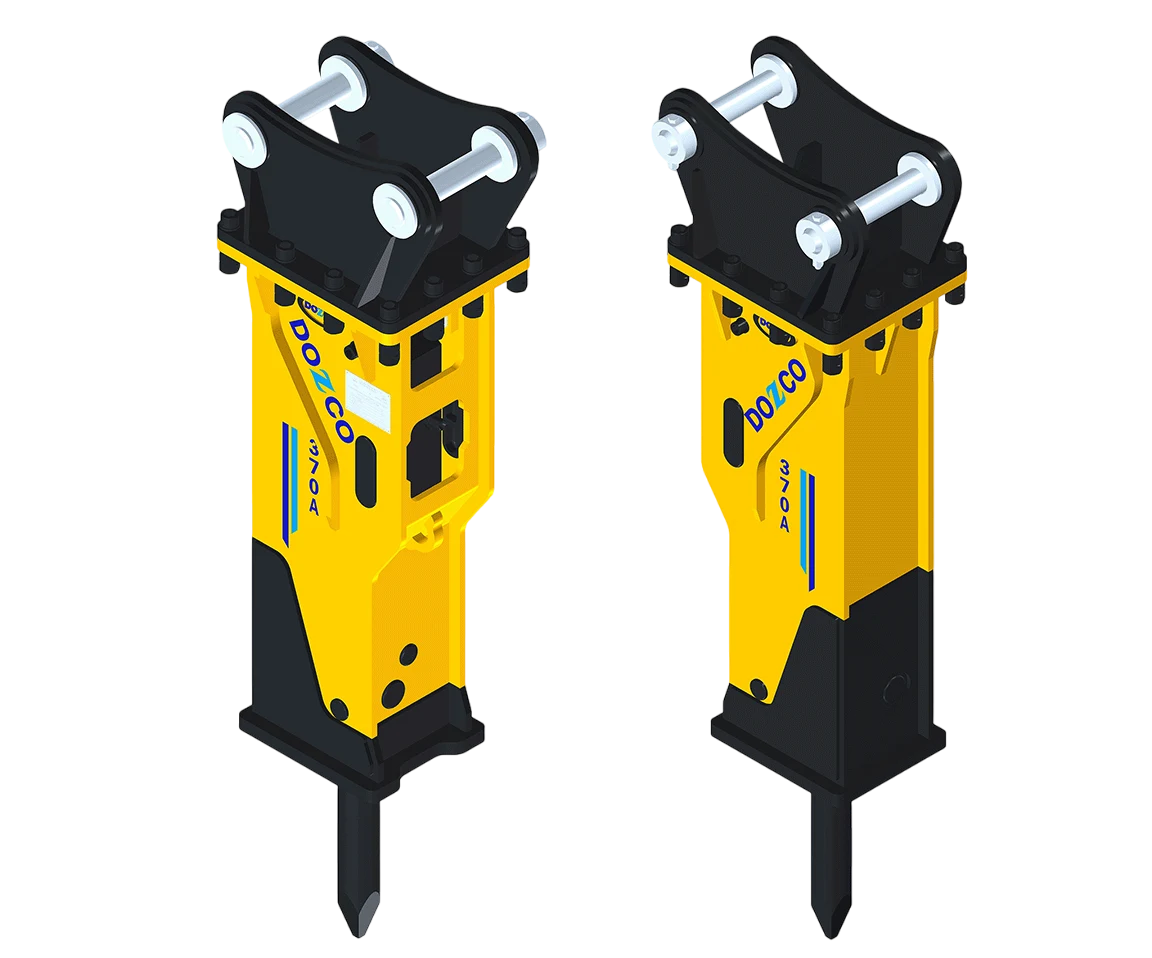
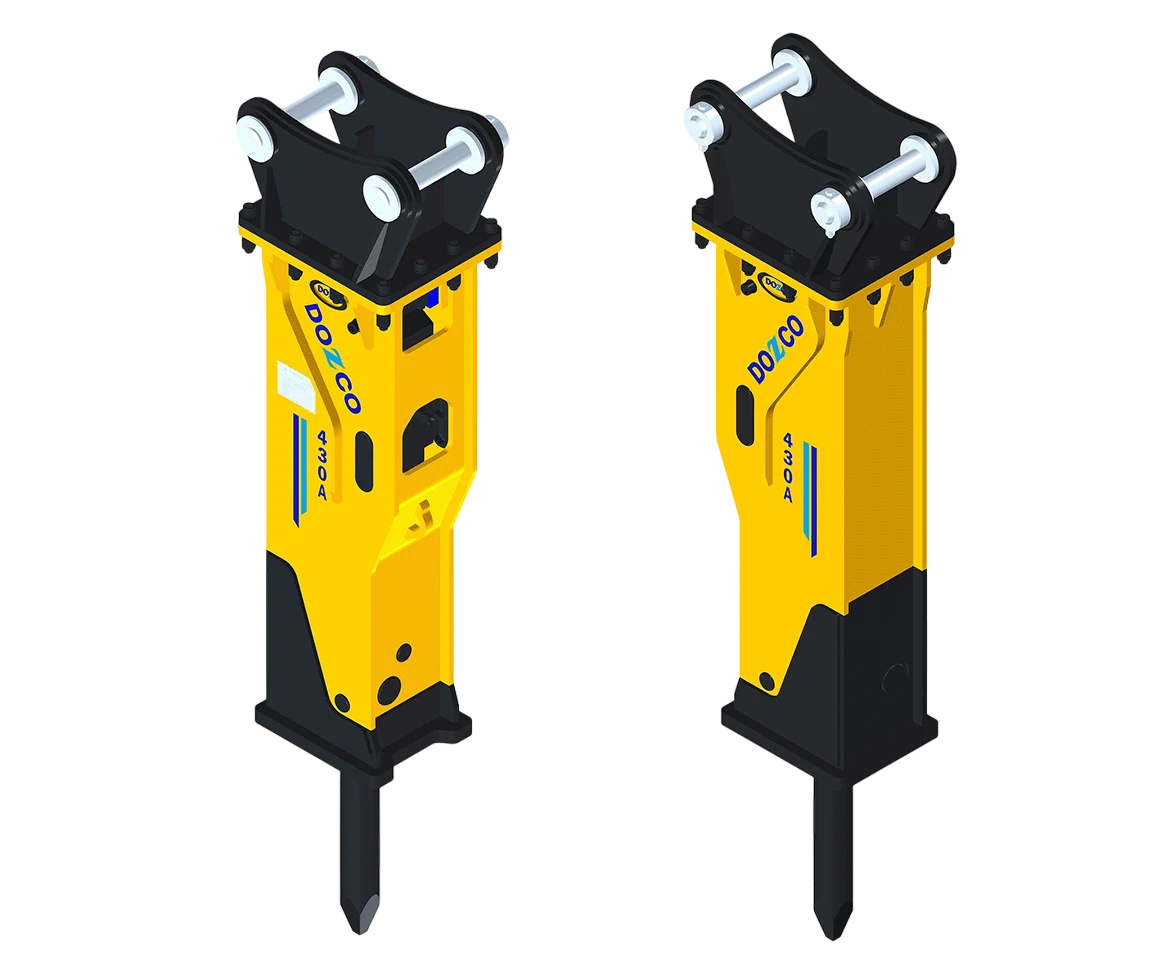
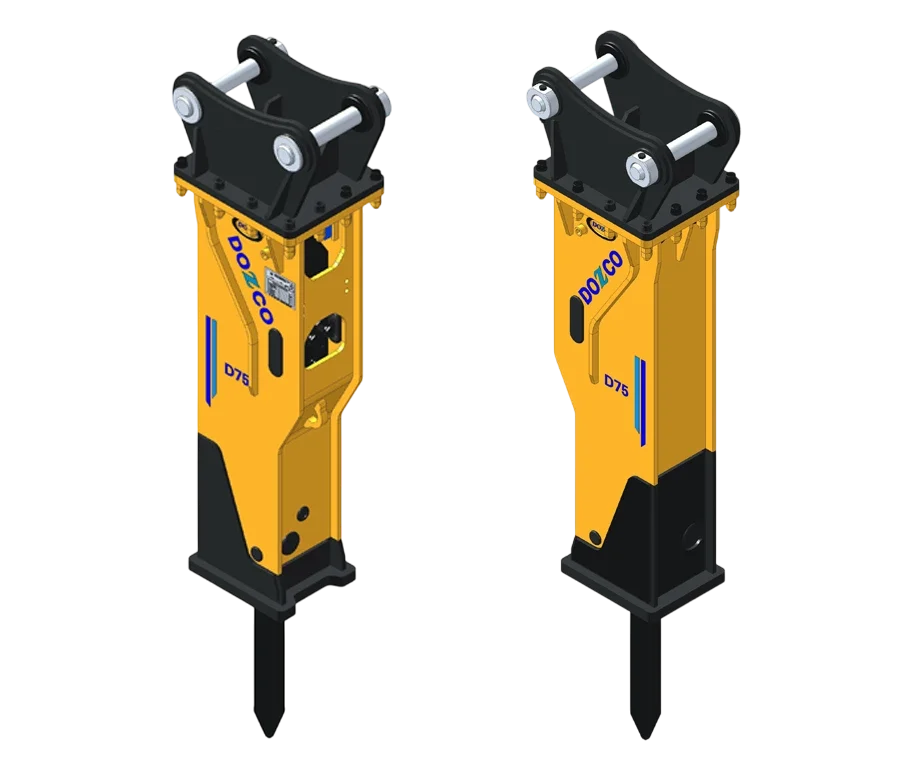
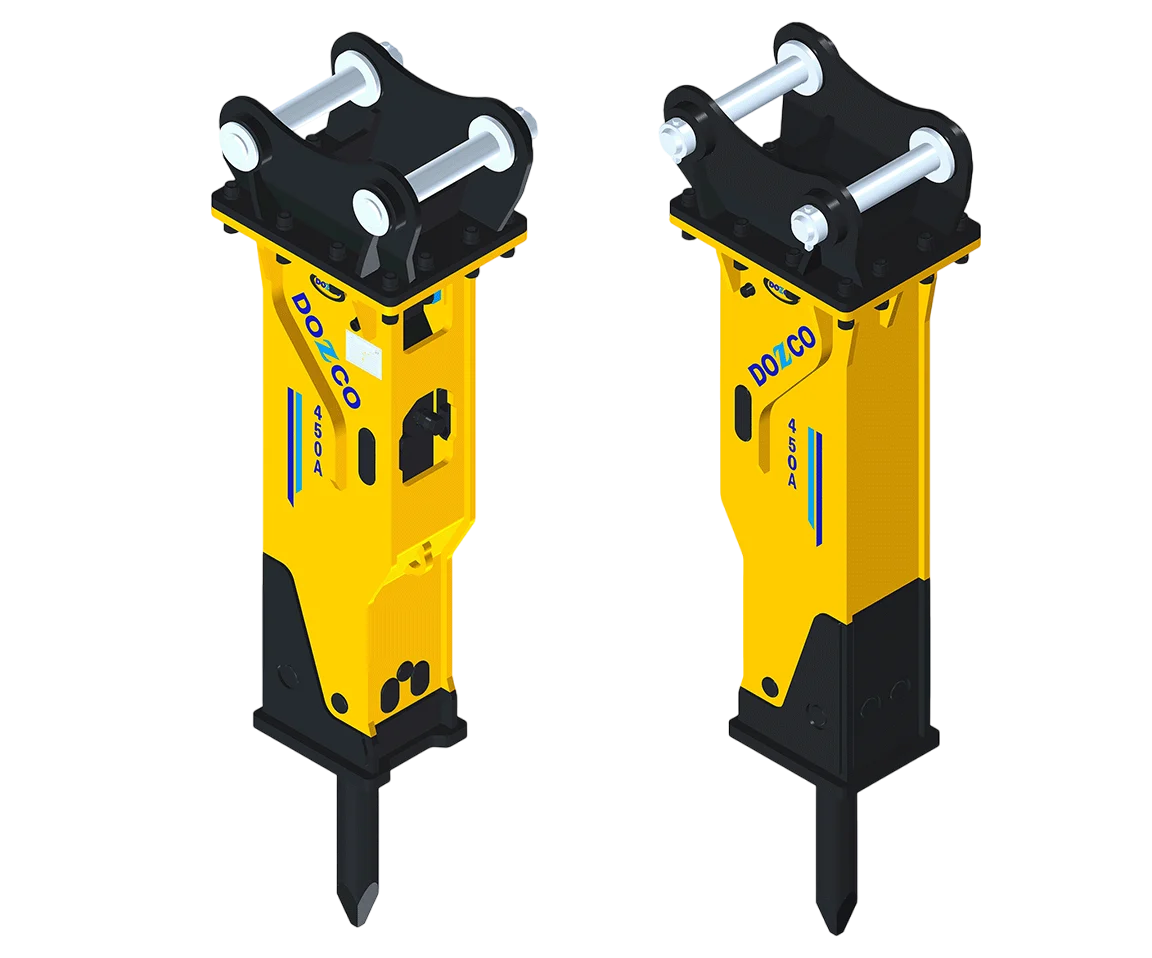
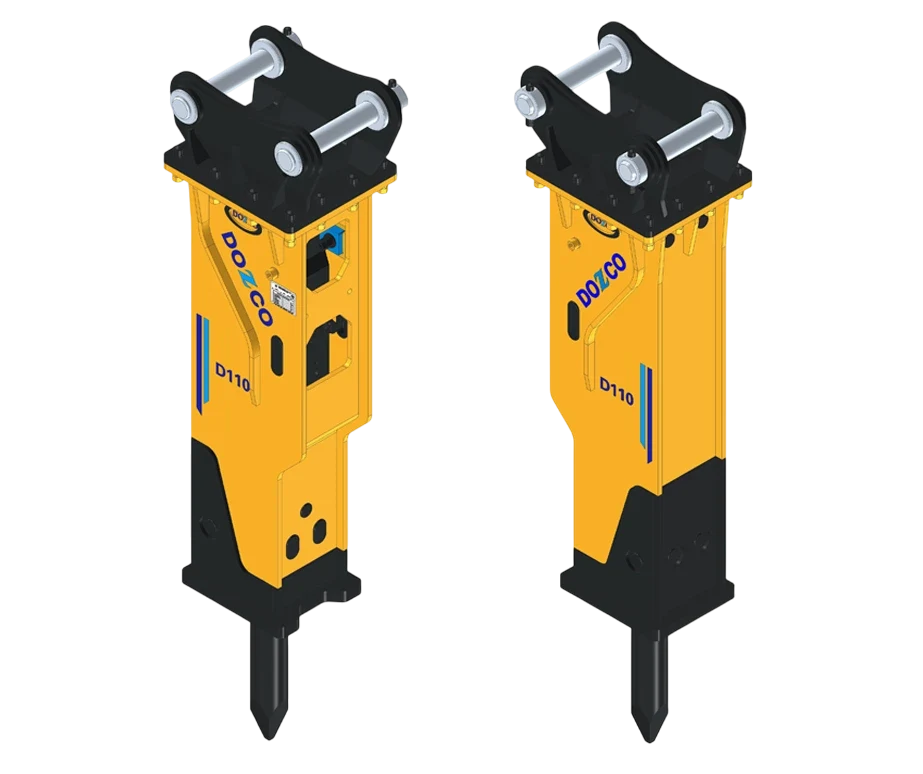
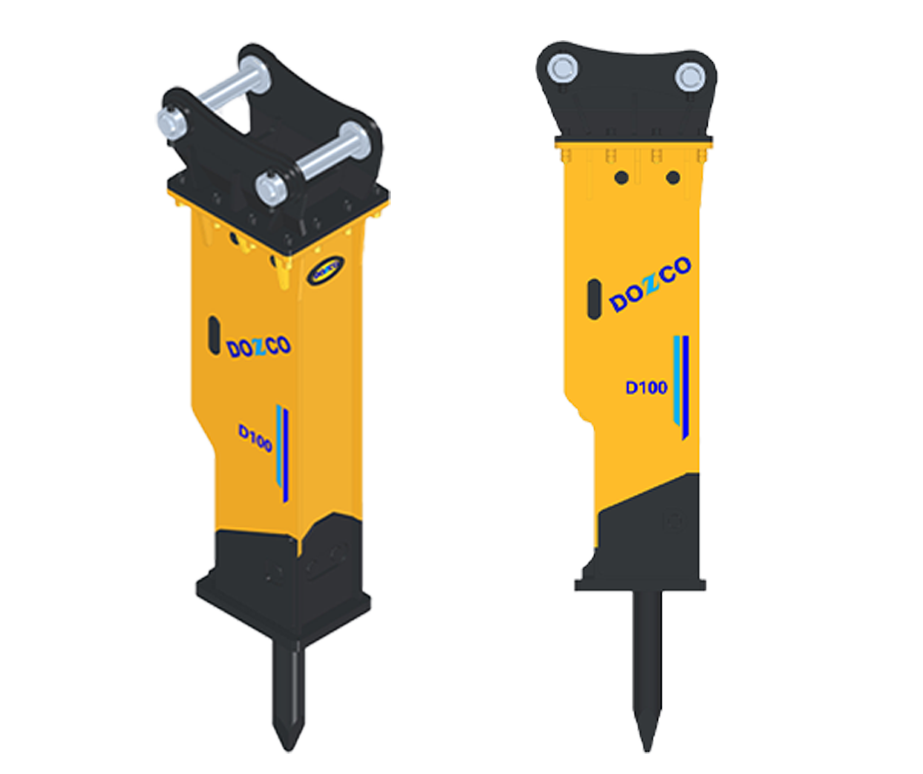
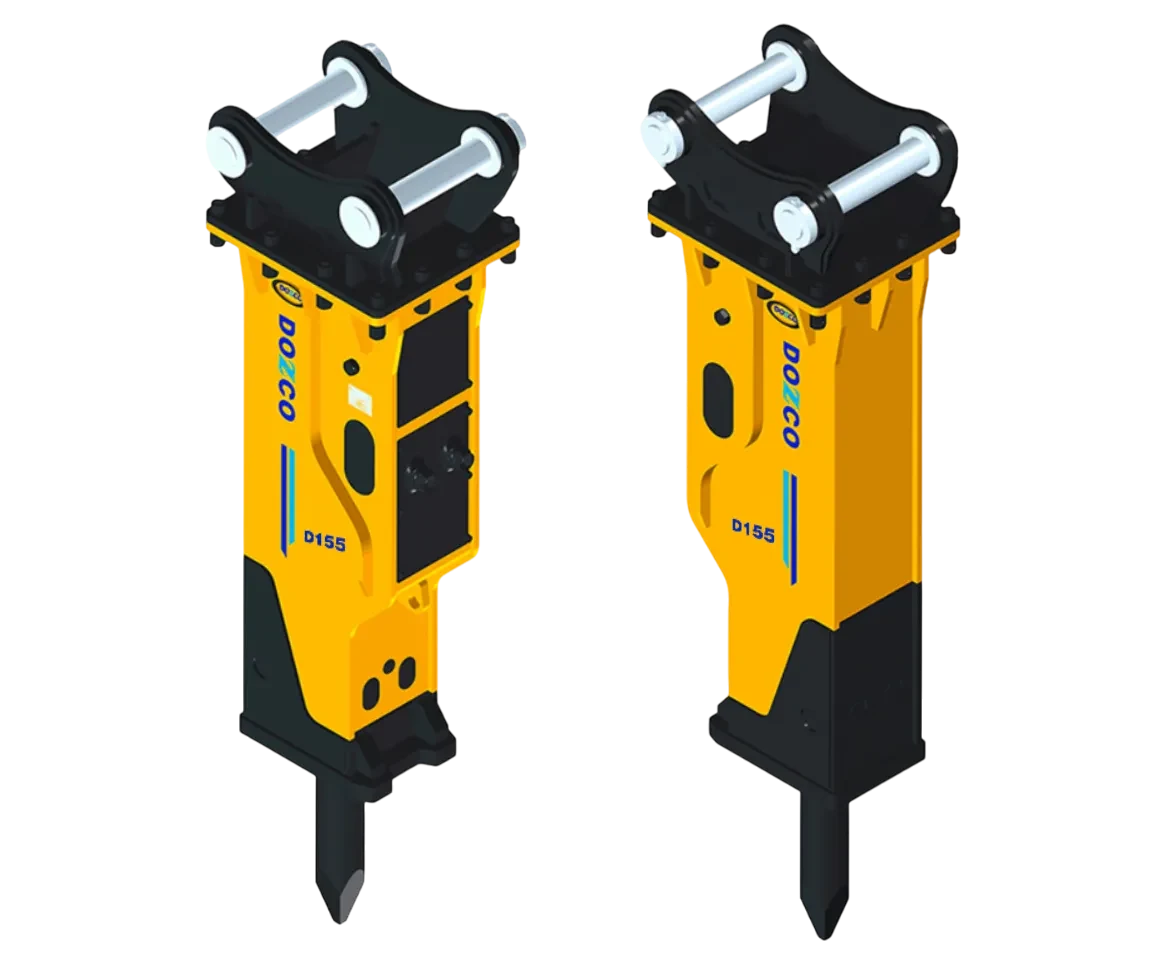
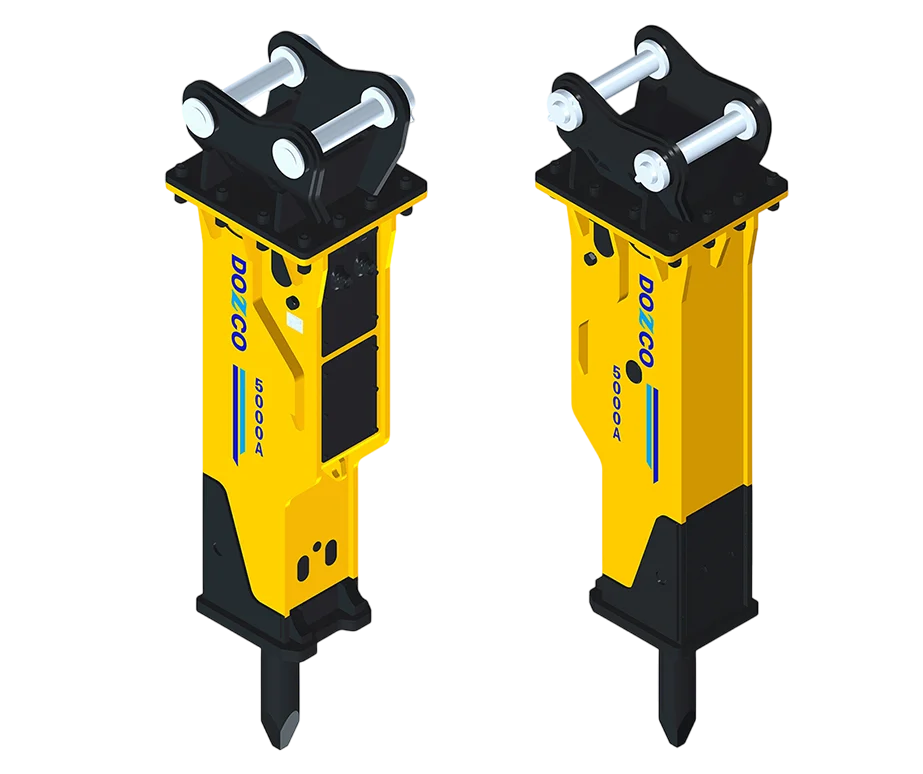
As a reliable manufacturer of hydraulic rock breakers, at DOZCO our attachments come with several features, including:
1. Anti-Blank Firing (ABF)
Anti-blank firing is one of the most critical features in a hydraulic breaker. When the tool is not firmly pressed against the material, ABF automatically stops hammering.
This prevents idle blows, which are a leading cause of:
- Piston damage
- Tool breakage
- Seal failure
- Cracks in the breaker body
2. Gas-Assisted Accumulator System
The accumulator system gives efficiency to the hydraulic hammer. It is filled with nitrogen gas and helps to balance the pressure fluctuations in the hydraulic circuit and recoil energy from each blow.
For tasks like quarrying and reinforced concrete breaking, the system ensures:
- Higher impact energy
- Smoother operation
- Reduced load on excavator pumps
- Lower hydraulic shock
3. Rigid Dampening System
Every time the rock breaker hits a hard surface, it causes vibration. This can be uncomfortable for operators. But that’s not the end of it. Repeated vibration directly impacts the excavator’s boom, arm, pins, and bushings. That is why modern hydraulic breakers for excavators come with a modern rigid damping system. It uses:
- Wider surface contact areas
- Dual bottom dampers
- O-ring locking mechanisms
DOZCO rock breakers are designed to absorb vibration before it transfers to the carrier machine, reducing fatigue damage and extending excavator service life.
4. 2-Stroke Control System
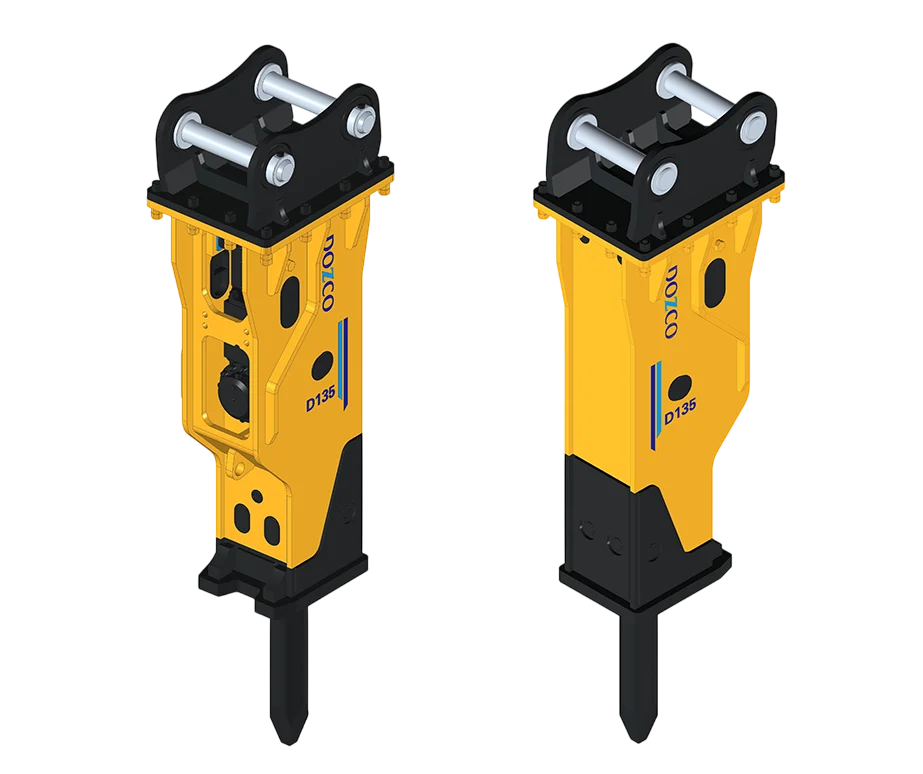
Since rock beakers are used on different surfaces, the type of impact also varies. DOZCO rock breakers, for instance D135 comes with a 2-stroke control system that allows operators to adjust breaker behaviour based on application. The long stroke allows high impact energy with fewer blows per minute to break hard rocks. The short stroke, on the other hand, offers lower impact energy and higher blow frequency. They are suitable for concrete, secondary breaking, and finishing work.
Key Benefits of Using a Well-Designed Hydraulic Breaker
Choosing a good-quality hydraulic rock breaker that comes with all these advanced features can help you in various ways:
Higher Productivity
Every project comes with a deadline. When you use a rock breaker with the right stroke, proper thrust force, and controlled impact energy, breaking hard surfaces becomes more precise and faster.
Lower Owning and Operating Costs
Features like ABF, accumulators, and vibration dampening reduce wear on both breaker and excavator components. This reduces breakdowns considerably. Operators and companies don’t have to worry about spending time and money on repairs and downtime.
Protection of the Carrier Machine
Breaking rocks needs high energy. So, if the blows are not precise, the impact can damage the excavator cylinders, hydraulic pumps, and structural components. A well-balanced breaker with pressure regulation and dampening protects the carrier throughout its working life.
Versatility Across Applications
From light demolition to heavy quarry work, hydraulic breakers are available across a wide carrier weight range. Proper matching ensures consistent performance without overloading the machine.
Maintenance Tips for Hydraulic Breakers
Maintenance is the key to longevity. No matter how powerful an attachment is or how durable it is made, without proper maintenance, the rock breaker starts to perform poorly. When wear and tear are neglected, it can lead to a sudden breakdown, and sometimes replacement is unavoidable. So, here are a few maintenance insights to increase the lifespan of the attachment:
1. Follow a Strict Greasing Schedule
Greasing is essential to avoid friction, which causes abnormal wear, bush damage, and tool failure. The tool shank and front head must be lubricated every 2–3 hours of operation. Here are a few tips:
- Always grease with ground pressure on the tool.
- Never grease when the tool is hanging free.
- Adjust frequency based on application and temperature.
2. Monitor Nitrogen Gas Pressure
If the gas pressure is not right, it can affect breaker performance. For instance, low pressure reduces impact energy. High pressure can increase internal stress.
So, make sure it’s within the typical ranges:
- Back head nitrogen: 14–16 bar
- Accumulator nitrogen: 55–60 bar
3. Inspect Rod Pins and Wear Bushes Regularly
Rod pins should be checked every 50 operating hours. Rotate or replace them before deformation becomes severe. Inspect the wear bushes weekly. Wear bushes must be inspected weekly.
4. Keep the Hydraulic System Clean
This is absolutely important. Dirt and dust contaminates the oil, which can damage valves, seals, and pistons. So, before installing, make sure to flush the hydraulic lines to remove contaminants.
Routine checks should include:
- Hose condition
- Stop valve operation
- Oil flow and pressure
- Leakage at connections
Final Thoughts
Using hydraulic breakers for excavators improves project efficiency considerably. However, it is a high-energy system that is used for one of the hardest jobs. Hence, the build quality, features, operation, and maintenance should be taken into account. Features such as anti-blank firing, gas-assisted accumulators, vibration dampening, and stroke control directly affect productivity and machine life.
At DOZCO, our rock breakers are made of high-quality steel and have exclusive features to ensure the attachment offers consistent performance. That being said, it is equally important to operate it following the right procedure and have a routine maintenance schedule to use rock breakers efficiently for a long time.
FAQs
What size hydraulic breaker should I use for my excavator?
The ideal size of a rock breaker usually depends on the excavator’s operating weight, oil flow, and pressure. When you choose the right size, it prevents power loss, overheating, and premature wear on both breaker and carrier. If you are unsure, please reach out.
How long does a hydraulic breaker usually last?
A hydraulic breaker can run for several thousand hours when you use it correctly and follow a proper maintenance schedule.
Can hydraulic breakers damage excavators?
Yes, improper use can strain pumps, cylinders, and structures. Features like dampening, accumulators, and anti-blank firing help control shock and protect the excavator.
How often should a hydraulic breaker be serviced?
We recommend checking the attachment daily to avoid any sudden breakdown. Greasing is required every 2–3 hours, while nitrogen pressure, rod pins, and wear bushes should be inspected weekly or at scheduled hour intervals.
What causes hydraulic breaker performance to drop?
It can occur due to a number of reasons, like low nitrogen pressure, insufficient greasing, contaminated hydraulic oil, worn bushes, or incorrect oil flow.
Are hydraulic breakers suitable for both mining and construction?
Yes. When properly matched, hydraulic breakers handle light demolition, trenching, quarrying, and mining, offering controlled breaking across varied materials and site conditions.
Popular Tags:
No tags for this postCategories
- All (17)
- Excavator Hammer (1)
- Excavator Spare Part (1)
- Idler Wheel (3)
- Rock Breakers (5)
- Track Link Assembly (2)
- Undercarriage (4)