
The Real Cost of Using Non-Genuine Excavator Spare Parts
 ">
">
- Last Modified: 21 Feb 2026
-
Priyankar Das


Excavators operate day in and day out on site. Naturally, the excavator components start to wear out over time. While frequent maintenance reduces wear to a certain extent, in some cases replacement is necessary.
When you are out in the market to purchase excavator spare parts, there are usually two options. One is the low-priced ones but with poor quality, and the other is high-quality components at a comparably higher price.
And it is tempting for operators and contractors to save upfront expenses by choosing the one that costs less. But these low-quality spare parts are not exactly “cheap.” In some cases, they are actually more expensive. Because when you use them, breakdowns become more frequent. You lose productive hours. Deadline stretches. And follow-on damage stacks up.
In this article, we are sharing a detailed breakdown of the real cost of the poor-quality parts for your heavy equipment:
Why Are the Hindsight of Using Non-genuine Parts
For many operators, spending a large sum upfront might seem expensive. That might be true. But your operational cost also matters. If you are using the excavator for heavy projects like construction, demolition, and mining, the demanding nature of these tasks puts strain on the equipment.
Non-genuine parts vary widely in traceability, quality control, metallurgy, and durability. You may feel convinced seeing the catalogues and photos. But that’s not how things work in the heavy-duty industry. You will be using those as alternatives to genuine Komatsu parts or Caterpillar spare parts. If the parts are not compatible, it can impact not just the undercarriage or engine, but the entire machine. Thus, each spare part should go through robust testing or consistent material properties to avoid failing prematurely. As this can lead to:
- Unscheduled downtime.
- More frequent replacements.
- Increased fuel consumption.
- Secondary damage to other components.
- Safety and compliance risks.
You might save $1,000 by purchasing a cheap counter product. But in the long run, you might end up losing $10,000 in downtime and repairs. That’s why it’s worth analysing parts on a lifecycle cost basis rather than a purchase cost basis, especially for parts like the engine and undercarriage.
Total Cost of Ownership (TCO)
You should always check the total cost of ownership before making any decision. Here’s an example of how you should calculate it:
| Component | Scenario A (Quality) | Scenario B (Non-Genuine) |
| Upfront Cost (AUD) | $10,000 | $6,000 |
| Lifespan (hours) | 5,000 | 3,000 |
| Unscheduled Downtime (hrs) | 50 | 200 |
| Downtime Cost @ $120/hr | $6,000 | $24,000 |
| Fuel Inefficiency Cost | $850 | $2,000 |
| Total Cost (5,000 hrs) | $16,850 | $32,000 |
| Cost per Hour | $3.37/hr | $6.40/hr |
Major Excavator Parts that Need Frequent Replacement
When an excavator is used for digging, earthmoving, or mining in a harsh environment, it needs power, stability and durability. The engine and hydraulic system are responsible for delivering an adequate amount of power. While the undercarriage keeps the machine stable. That is why you need to frequently replace the excavator undercarriage parts and engine parts.
Excavator Undercarriage System
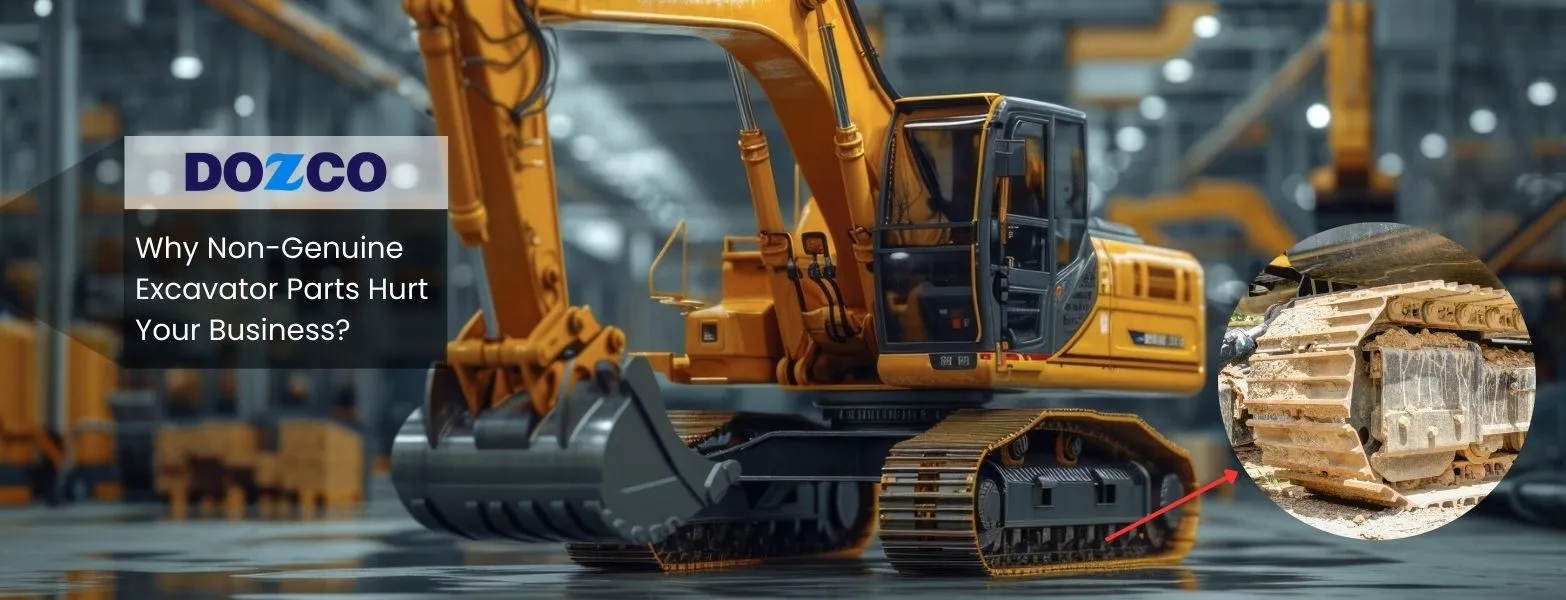
For tracked excavators, the undercarriage system withstands the entire weight of the machine. It deals with rough conditions day after day, including rocks, water, uneven terrain, abrasive soil, and heavy loads. Hence, each undercarriage spare part needs to be aligned properly in the system.
Key Undercarriage Parts of an Excavator
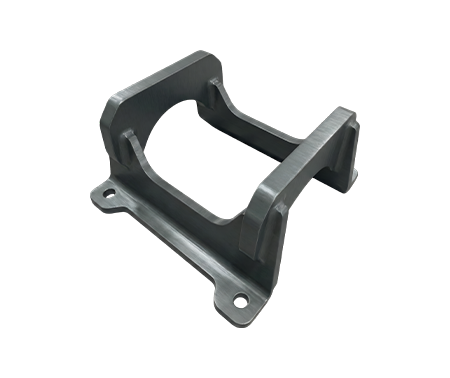
- Track chains.
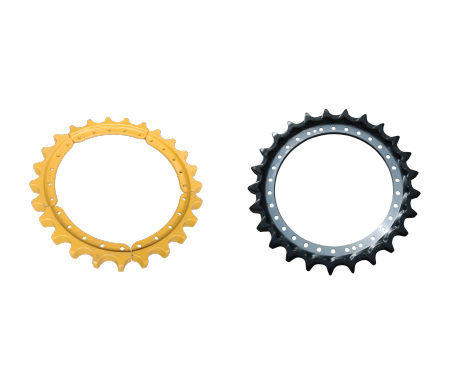
- Sprockets.
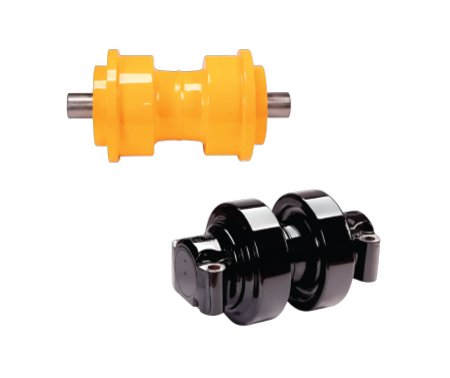
- Track rollers.
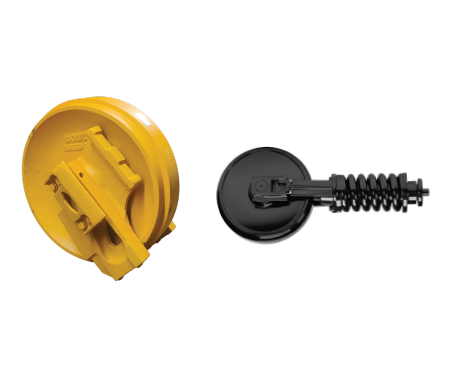
- Idlers.
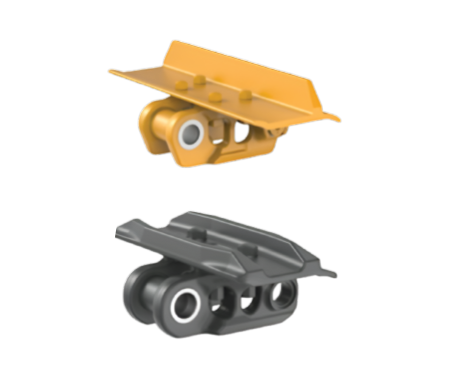
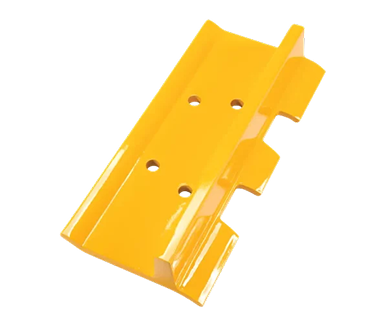
- Track shoes and segments.
- Pins and bushings.
Each of these parts wears at a different rate depending on soil type, operator style, and site conditions. When you utilize these spare parts beyond their wear limits, it increases fuel consumption and accelerates wear in adjacent components.
High-quality undercarriage parts keep machines rolling longer and more efficiently. At DOZCO, our undercarriage parts are ISO-certified and compatible with OEMs like CAT, Komatsu, Hitachi, and so on. They are designed for rugged Australian conditions, offering dimensional accuracy and durability you can depend on.
What Happens When You Use Low-Grade Undercarriage Parts
In an undercarriage system, each part is interconnected. When one component starts to malfunction, it affects the entire system. Poor quality parts don’t fit perfectly and wear unevenly. This leads to:
- Track tension issues.
- Frequent adjustments.
- Increased engine load.
- Shot pins and bushings.
The machines need frequent service calls and crew downtime.
Engine, Hydraulics, Final Drives
Engine parts or hydraulic kits also need replacement once they reach the end of their lifecycle or get damaged prematurely. Choosing poor-quality replacement parts causes stress on major systems.
If engine or hydraulic parts aren’t replaced according to OEM guidelines, this leads to
- Leaks,
- Heat-soak issues, and
- Unexpected breakdowns.
This often costs far more than the original part price tag. Besides, you might also end up losing the warranty coverage if you don’t use engine spare parts approved by OEMs.
How to Identify Non-genuine or Low-Quality Parts
It’s one thing to say “don’t buy cheap parts,” and another to prove when parts aren’t up to scratch. Here’s a practical checklist to vet suppliers and parts:
Before you buy
- Look for traceability documents, such as casting records and heat-treatment data.
- Make sure the material grade and testing procedures are compliant.
- Look into warranty terms in detail.
When the excavator spare parts arrive
- Check serial numbers against supplier documentation.
- Compare measurements to OEM specifications.
- Inspect finish quality, for instance, rough dye marks or uneven surfaces. These are often indications of poor-quality spare parts.
During Installation
- Ask whether the supplier offers a support team.
- Make sure correct fitment without force-fitting.
- Check part alignment and tension levels.
- Test under low load before full production cycles.
Final Analysis
Even though the non-genuine parts cost less upfront, you end up paying for higher downtime and a shorter life span. These inefficiencies put the cost per operating hour at nearly double the quality part option.
FAQs
What is an excavator spare part warranty?
An excavator spare part warranty covers manufacturing defects and premature failure for a defined period, provided the part is installed correctly and used under recommended operating conditions.
What undercarriage parts are covered under warranty?
Most warranties cover undercarriage parts like track chains, rollers, idlers, sprockets, and segments, but only against material or manufacturing defects, not normal wear and tear.
Is it better to use OEM or aftermarket excavator spare parts?
OEM parts from brands like Komatsu or Caterpillar ensure compatibility, while high-quality aftermarket parts can work well if they meet OEM specifications and testing standards.
What is the difference between genuine and non-genuine excavator parts?
Genuine parts are OEM-approved and tested for compatibility and durability, while non-genuine parts vary in quality, materials, and fitment, often leading to higher long-term operating costs.
Popular Tags:
No tags for this postCategories
- All (17)
- Excavator Hammer (1)
- Excavator Spare Part (1)
- Idler Wheel (3)
- Rock Breakers (5)
- Track Link Assembly (2)
- Undercarriage (4)